• Skip to main content
  • Skip to primary sidebar

Nibbling Nomad

July 1, 2025 Uncategorized

20 Best Things to do in Las Palmas

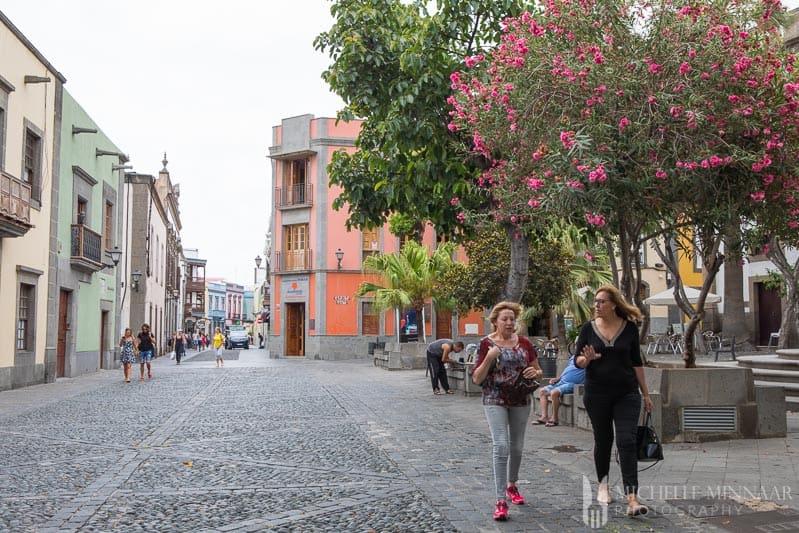
If you’re contemplating visiting Las Palmas on the stunning island of Gran Canaria, look no further. This list of 20 things to do in Las Palmas is the ultimate travel guide for Gran Canaria. It will help you plan your itinerary while you stay on the island. Plus, it will help you find the best attractions and top spots to visit in the city of Las Palmas. So, discover the city of Las Palmas with this ultimate guide of the 20 top things to do in Las Palmas. You’ll be able to visit all of these by foot, so you needn’t miss out on anything. Enjoy!
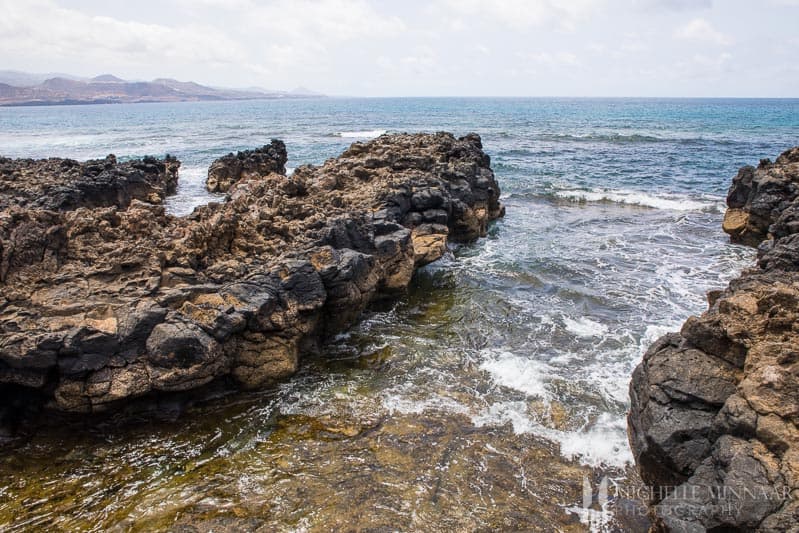
things to do in Las Palmas

First and foremost, before we begin, please note that Las Palmas is the name of the province as well as the city. Las Palmas Province, also known as the Province of Las Palmas encompasses the islands of Gran Canaria, Fuerteventura, Lanzarote and several minor islands. Whereas, Las Palmas de Gran Canaria is the full name of the capital city of Gran Canaria island. The Island of Gran Canaria is just one of the Canary Islands located off the coast of Northwestern Africa. The Canary Islands belong to Spain.

The city of Las Palmas ranks 9th on the list of largest cities of Spain. Not only is it a thriving capital with tons of things to see, it is also a popular stop for cruise ships as well as shoppers who wish to find duty-free items! The population of Las Palmas is roughly 400,000. Geographically speaking, you can find the city of Las Palmas in the northeastern corner of Gran Canaria. In fact, it’s only 150km or 93 miles away from the Moroccan coast!

The city was established in the year 1478 by Juan Rejon as Real de Las Palmas. A few years later, in 1492, Christopher Columbus actually anchored in a Las Palmas port, spending some time in the Canaries, prior to his first famous voyage to the Americas.

A century later, Las Palmas saw some violence in the notorious Battle of Las Palmas, which resulted from the Anglo-Spanish War on Gran Canaria. Although some of the city was destroyed, Las Palmas is rich in history, charming architecture and many cultural sites. The city has a lot of colourful houses with heavy Portuguese influence. Some say, it resembles Brazil’s favelas. Best of all, you can all visit these by foot!
best things to do in Las Palmas

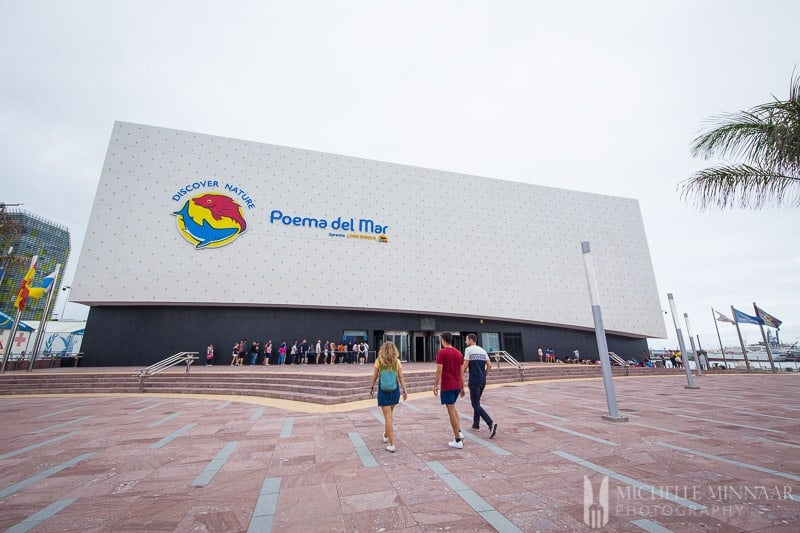
1. Poema del Mar

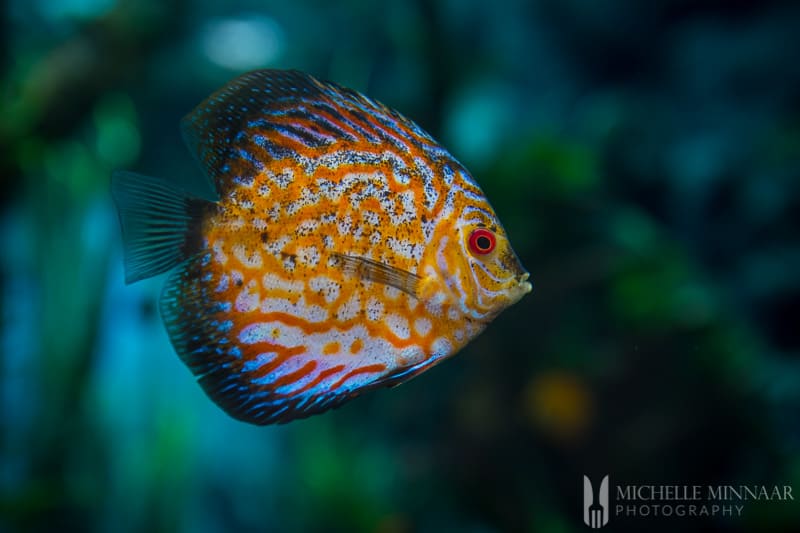
This is a must see! Poema del Mar, or ‘Poem of the Sea’ is a top-notch aquarium that is home to many marine species, exotic fish and plants. Most noteworthy, get really for an out of this world experience. It has the largest state-of-the-art fish tank in the world, an impressive fish tunnel and more.

Address: Muelle del Sanapú, 22, 35008 Las Palmas de Gran Canaria, Gran Canaria, Spain
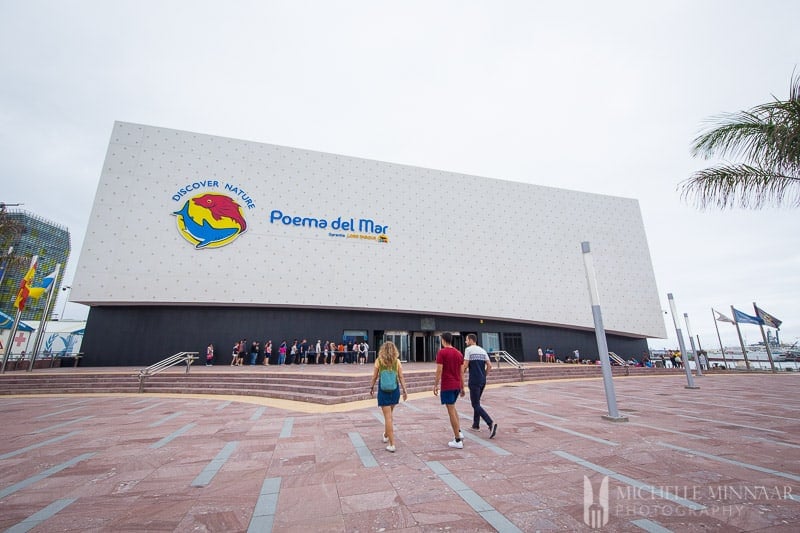
 Poema del Mar, an aquarium and one of the things to do in las palmas.

2. Mercado de Vegueta

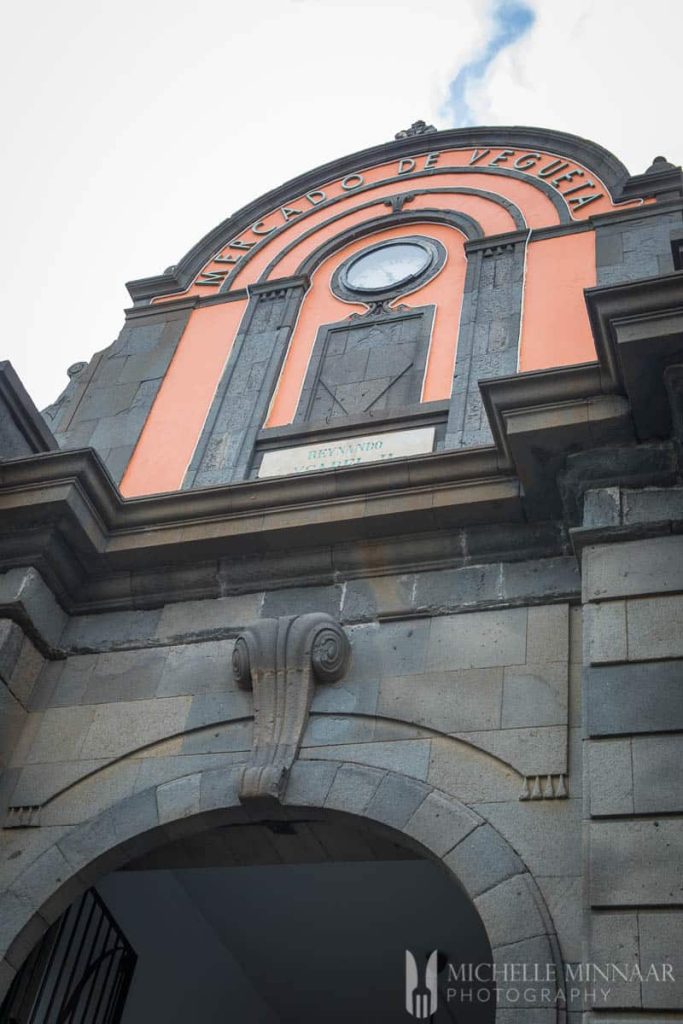
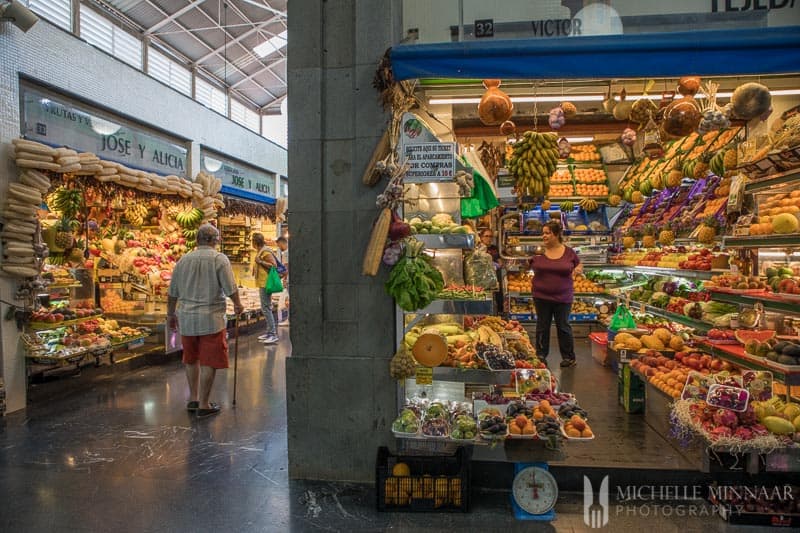
The Mercado de Vegueta is one of the most beautiful markets in Las Palmas. Visiting this market is one of the top foodie things to do in Las Palmas. You’ll come across many types of local cheeses, fresh produce, meats, fruits and fresh Atlantic fish.

The market is open from Monday to Saturday from 6:30 am to 2-3 pm, depending on the day. The market is closed on Sunday.

Address: mercado de vegueta, c/Mendizábal nº 1, 35001 Las Palmas de Gran Canaria, Gran Canaria, Spain
3. Montesdeoca

This is one of the best commercial streets in Las Palmas, packed with buzzing and thriving restaurants upon every footstep. It’s definitely worth taking a stroll down this busy street.

Address: Calle Montesdeoca, 35001 Las Palmas de Gran Canaria, Gran Canaria, Spain
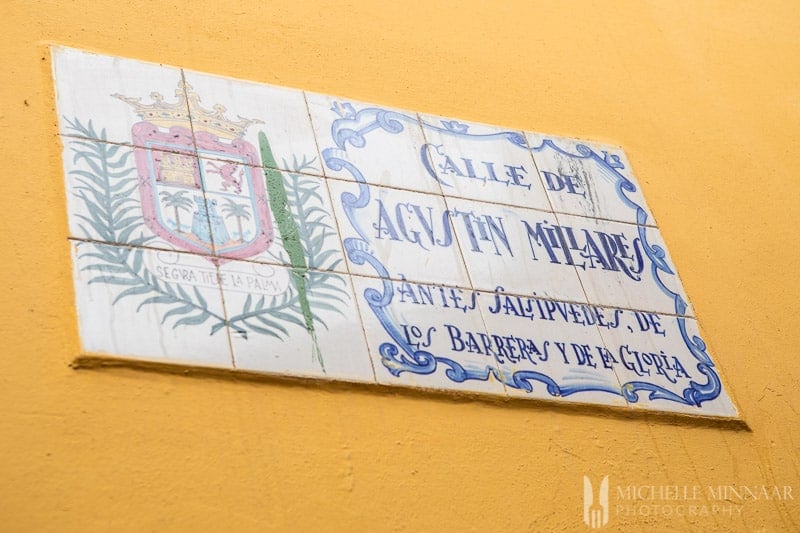
4. Mendizabal

Take a stroll down this historic street. The name suggests that the street is dangerous, however, this couldn’t be further from the truth. It is also home of the infamous Toriador Agustun Millares Torres.

Address: Calle Mendizábal, 35001 Las Palmas de Gran Canaria, Gran Canaria, Spain
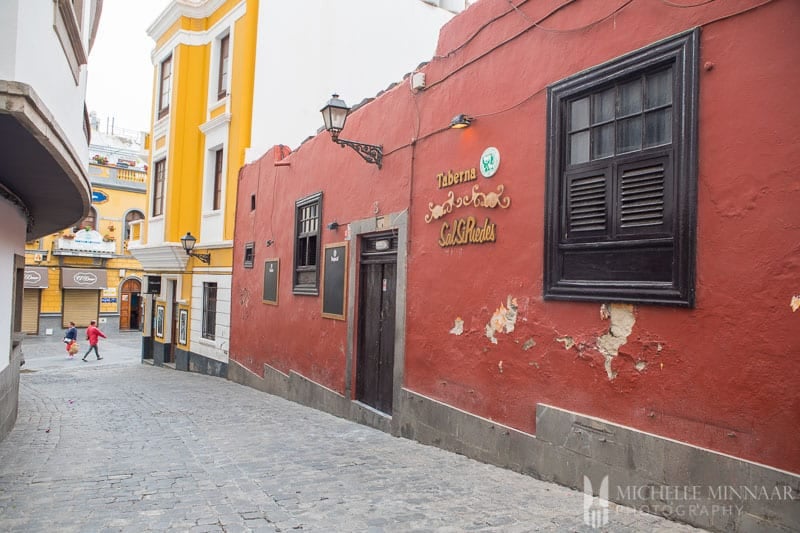
5. Cathedral Santa Ana

The Cathedral of Santa Ana, also known as Las Palmas Cathedral is a Roman Catholic cathedral. It is located in the Vegueta neighbourhood and is considered as one of Las Palmas’s top landmarks. The Cathedral was constructed in 1570 with Gothic and Romanesque styles. Until recently, (1819), this cathedral was the only one on the Canary Islands!  The most beautiful part though is the scenic square in front of the Cathedral. Make sure that visiting this cathedral is on your list of things to do in Gran Canaria.

Address: Plaza Sta. Ana 13, 35001 Las Palmas de Gran Canaria, Gran Canaria, Spain

6. Old Town Hall

The Las Palmas Town Hall is another one of the city’s popular landmarks. It is a 19th century building located on the Plaza of Santa Ana next to the cathedral. Locals refer to the Las Palmas Town Hall as Ayuntamiento de Las Palmas de Gran Canaria.

Address: La Naval 229, 35001 Las Palmas de Gran Canaria, Gran Canaria, Spain

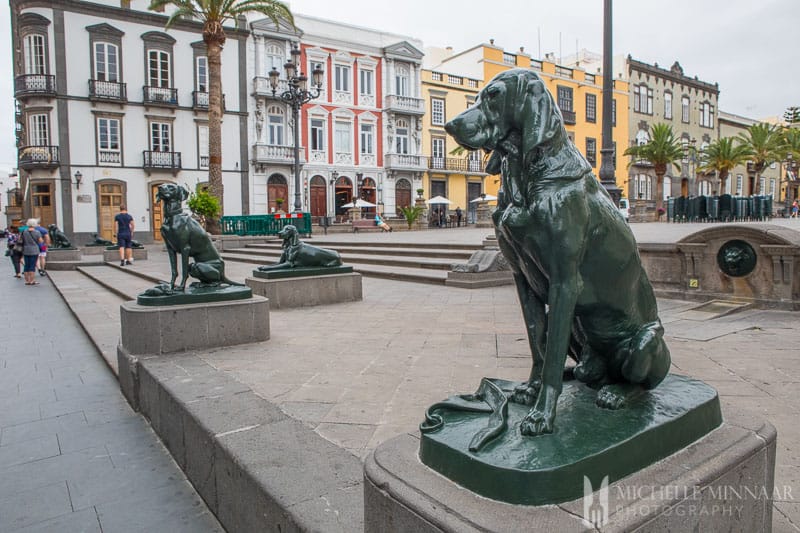
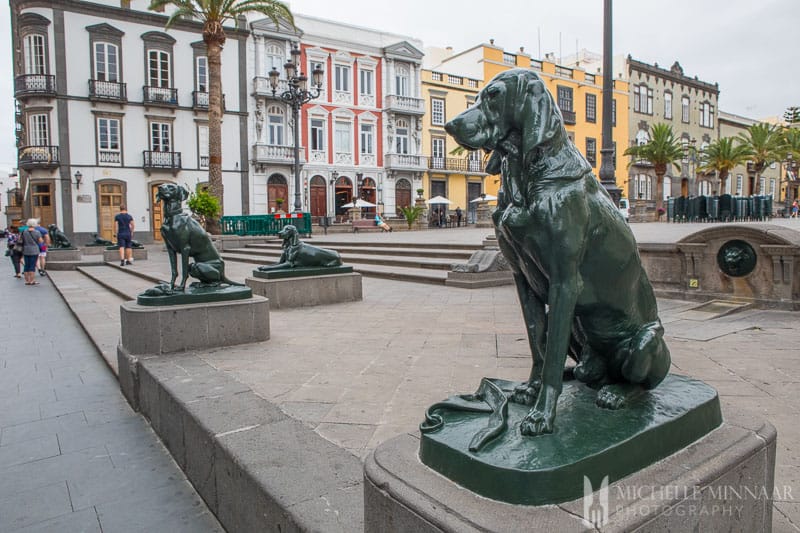
7. Dog Statues

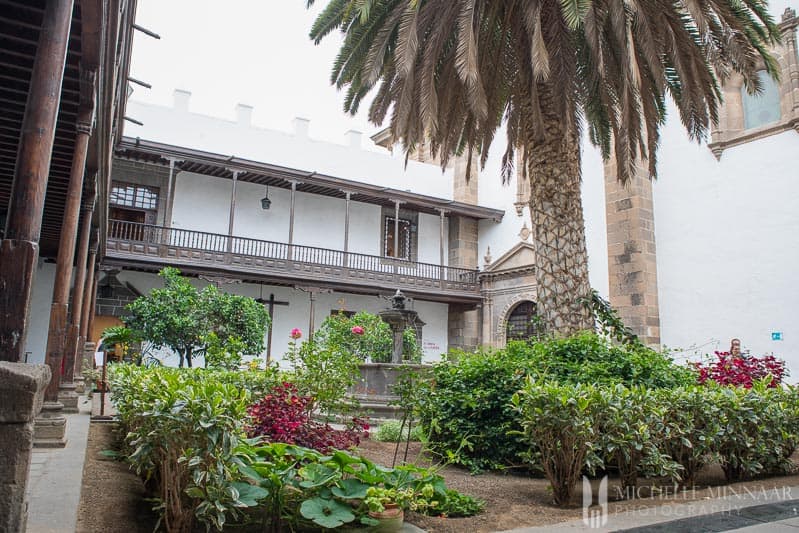
These dog statues are a monument to the guardians of Gran Canaria. They are also known as Los Perros de la Plaza de Santa Ana, located at the square in front of the cathedral. There, you’ll have a glimpse of the typical Canarian courtyard characteristics. The first floor of the surrounding buildings have a wooden balcony. The courtyard has a fountain in the middle and tall palm trees beside it. You can sit beside the dog statues on the benches and also enjoy the lovely potted flowers which surround you.

These cast iron dogs are life-sized and were donated to the City by James Miller (also known as Diego Miller).

Address: Plaza de Santa Ana 1, 35001 Las Palmas de Gran Canaria, Gran Canaria, Spain
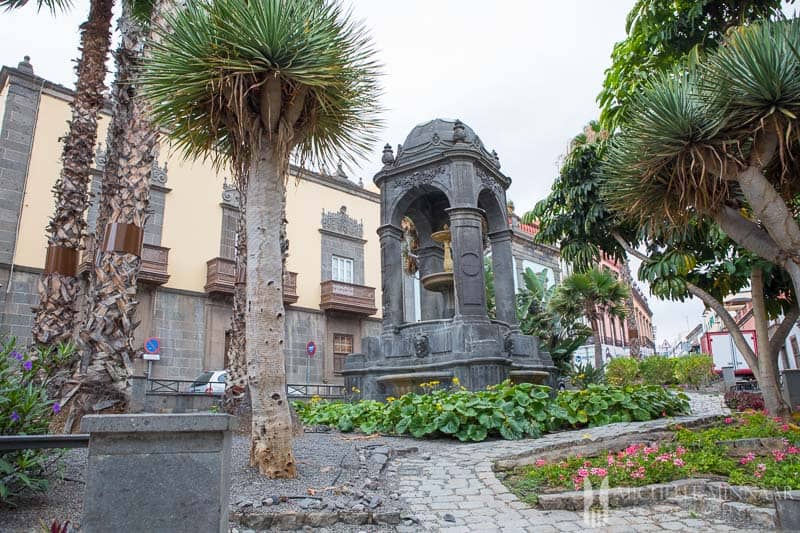
8. Espiritus Santa Square

This quiet and beautiful square is located in the Vegueta neighbourhood in the old town of Las Palmas. It is also known as Plaza del Espiritu Santo. This square is the starting point of the water supply network on the island of Gran Canaria. The fountain as outlined by Ponce de Leon remains one of the few fountains on the island with Spanish-style architecture.

The square dates back to the 17th century. In the past, this was the noble area of Las Palmas, where wealthy people built their manor houses. The more wealth a family had, the more status statements were made in housing.

Address: Plaza del Espíritu Santo, 35001 Las Palmas de Gran Canaria, Gran Canaria, Spain
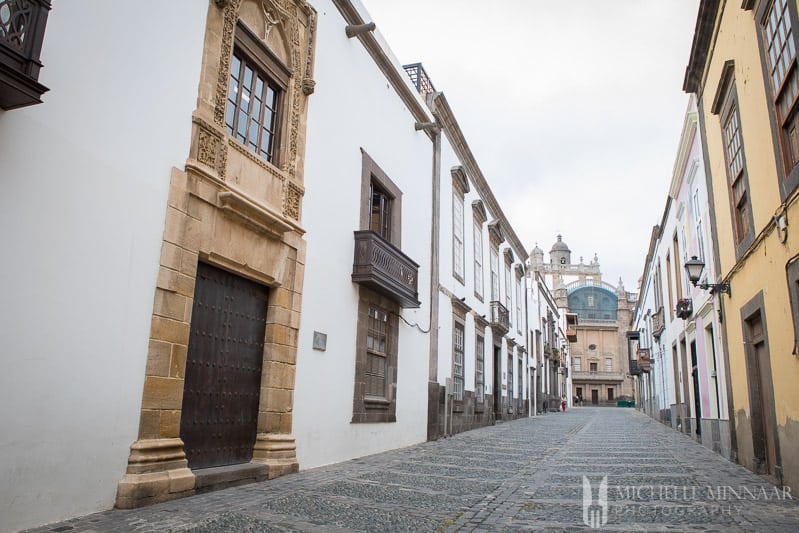
9. Gabinete Literario

Translated to Literary Cabinet, this is easily one of the most beautiful buildings in Las Palmas. It contains many decorative ornaments and exotic domes to catch the eye. The interior is rather modern, it includes a main staircase which leads to the Golden Hall (a former ballroom) decorated in the French style. In addition, artist Manuel González Méndez has painted the ceiling rather grandly in mythological themes. The Red Hall, also, is home to ceiling art and a collection of oil paintings from the early 20th century.

Address: Plaza de Cairasco, 1, 35002 Las Palmas de Gran Canaria, Gran Canaria, Spain
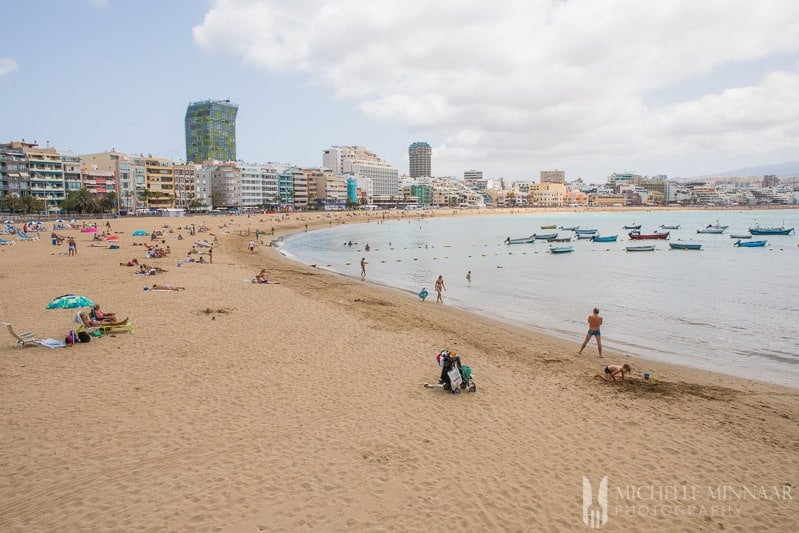
10. Playa de Las Alcaravaneras

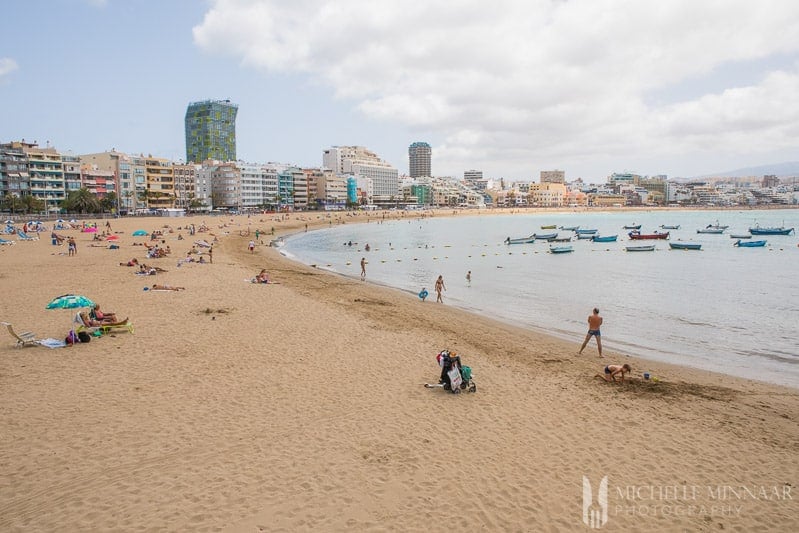
This is a golden sandy beach with an urban vibe. It is located in the middle of the port which is home to many sailboats. There are lots of sports facilities on the beach, the waters are generally calmer – perfect for paddle boarding. A handy tip though, I wouldn’t recommend going to the beach on a windy day.

Address: Playa de las Alcaravaneras, Las Palmas de Gran Canaria, Gran Canaria, Spain
11. Las Canteras

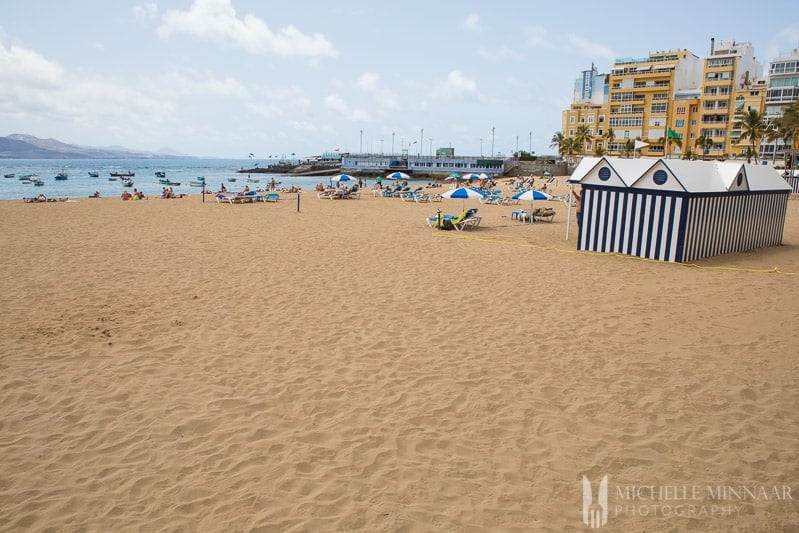
The popular Las Canteras beach is known for its long and scenic promenade. Along your stroll, you can discover various types of street art and hidden landmarks while learning about the former residents. The sandstone from the reef was used on some of the buildings in the old town, especially by nobility and wealthy families.

Address: Playa de las Canteras, Las Palmas de Gran Canaria, Gran Canaria, Spain
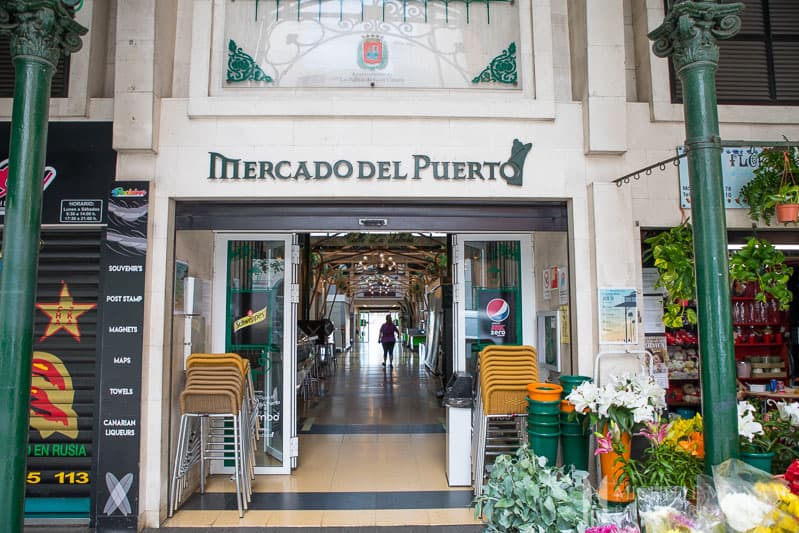
12. Mercado del Puerto

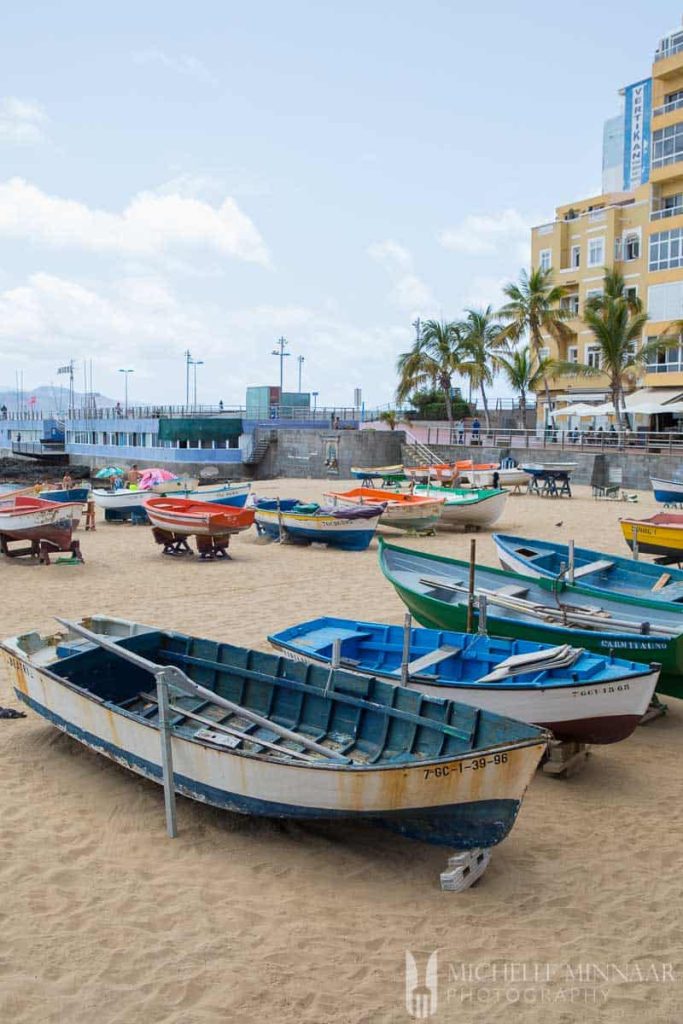
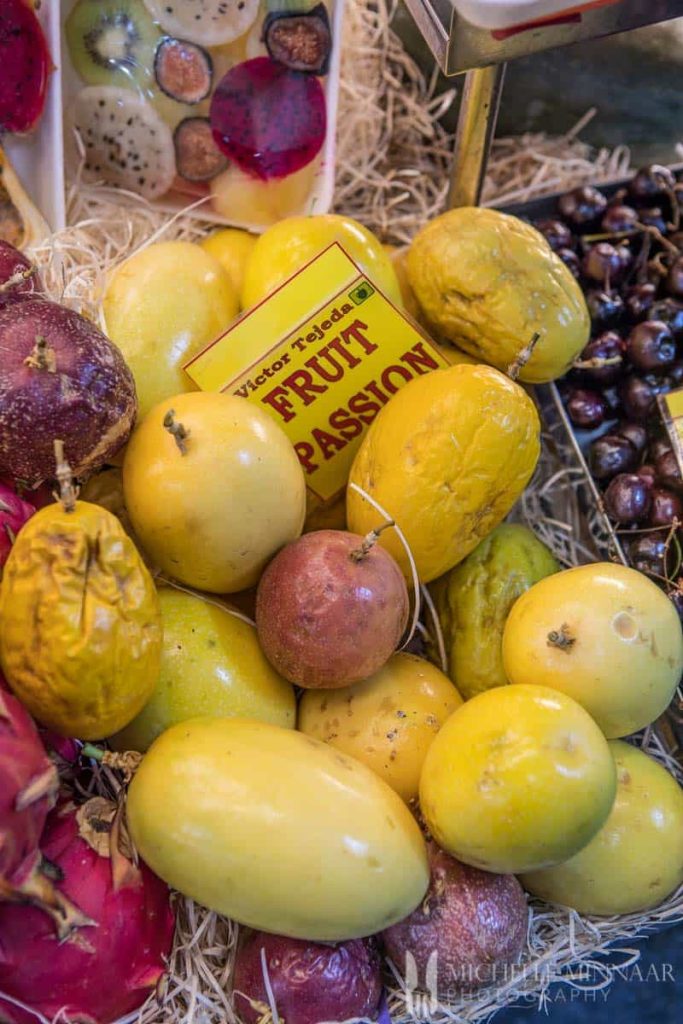
An old market offers a variety of tastes from around the world! Lots of options to eat and drink. An excellent place to eat pintxos and tapas. It includes fresh fruit, vegetables, local cheeses and other produce.

Address: nº76, Calle Albareda, 35008 Las Palmas de Gran Canaria, Gran Canaria, Spain
13. Museo Elder de la Ciencia y la Technologia

Excellent idea for an educational activity. Don’t hesitate to visit the Science and Technology Museum!

Address: ML Muelle Santa Catalina s/n, 35008 Las Palmas de Gran Canaria, Gran Canaria, Spain
14. Playa de Confital

This beach offers scenic views of the mountains and has flowing, golden sands! Great during the summer.

Address: Calle Rodrigo de Manrique 8, 35009 Las Palmas de Gran Canaria, Gran Canaria, Spain
15. Caldera de Bandama

Make sure you don’t miss out on this hike trip on a stunning volcano. An absolute must see for nature lovers! The climb is fantastic – and what a view from the top!

Address: Santa Brigida, 35300 Las Palmas de Gran Canaria, Gran Canaria, Spain
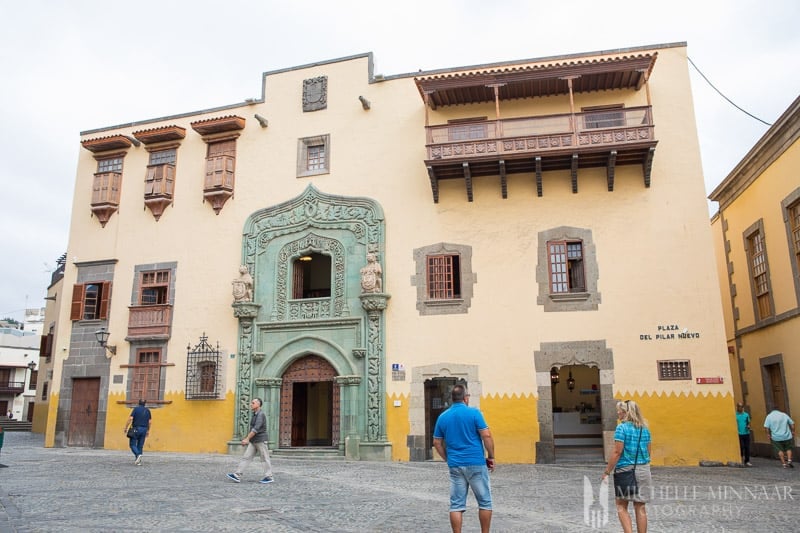
16. Canarian Museum

A memorable museum with a unique exposition on the prehispanic archaeology of the Guanche people! You’ll have the chance to learn about the indigenous people of the Canaries. In addition, the museum has numerous skulls on display.

Address: Calle Doctor Verneau 2, 35001 Las Palmas de Gran Canaria, Gran Canaria, Spain
17. Casa Museo Perez Galdos

This is the house of the very famous Spanish dramatist, Benito Perez Galdos. He was one of the main contributors and representatives of literary realism in Spain.

Address: Calle Cano 2 and 6, 35002 Las Palmas de Gran Canaria, Gran Canaria, Spain

18. Parque de Santa Catalina

Explore this local park. Don’t be scared if you come across street chickens running around!

Address: Porte Las Palmas, 35007 Las Palmas de Gran Canaria, Gran Canaria, Spain
July 1, 2025 Uncategorized

Siam Park

Siam Park is a place where memories are made. Often called one of the best water parks in the world, it invites you to leave your worries — and your phone — behind. For one glorious day, you simply live in the moment.

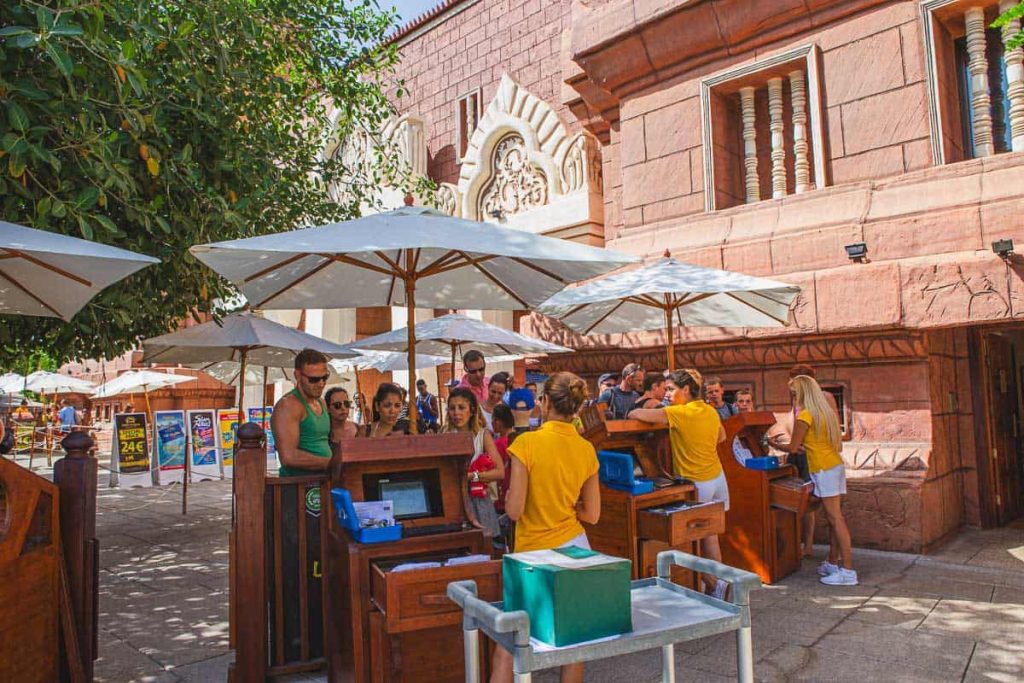
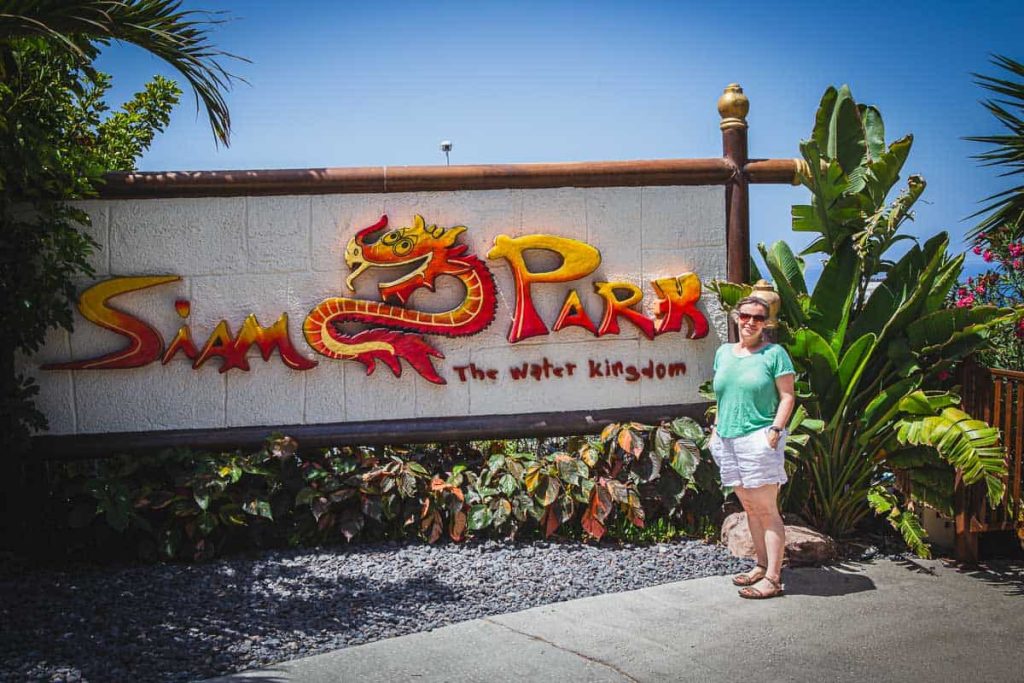
A woman standing next to Siam park entrance.

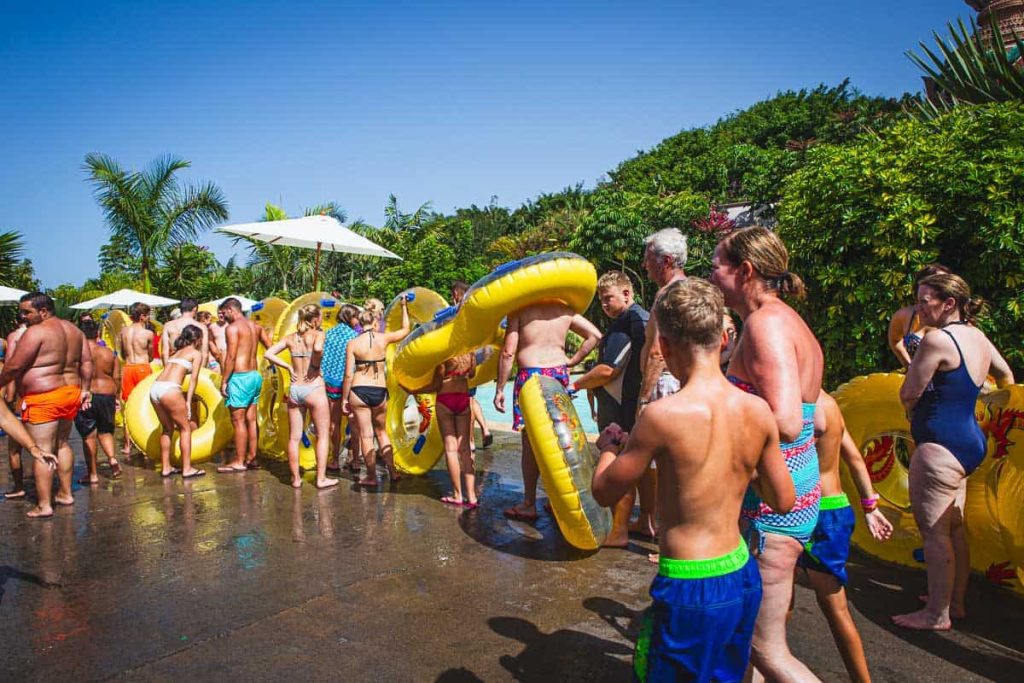
I recently revisited after years away, but this time was different. I brought my teenage son along for his first-ever water park experience. My son is autistic, and while he wasn’t keen on the idea at first, little did we know it would become a day we’d never forget.

We started gently, easing into things with the Mai Thai River, the park’s iconic lazy river. At first, he wasn’t impressed. “Why would I want my bum to get cold and wet?” he grumbled, arms crossed, clearly unimpressed by the idea of floating in chilly water.

Then, the magic happened. Bubbles fizzed up around us, and waterfalls cascaded over our heads. Slowly but surely, his resistance melted away. His face lit up as the quiet flow of the river transformed into an exciting journey through tunnels and bubbling rapids. It was the perfect introduction to the park.

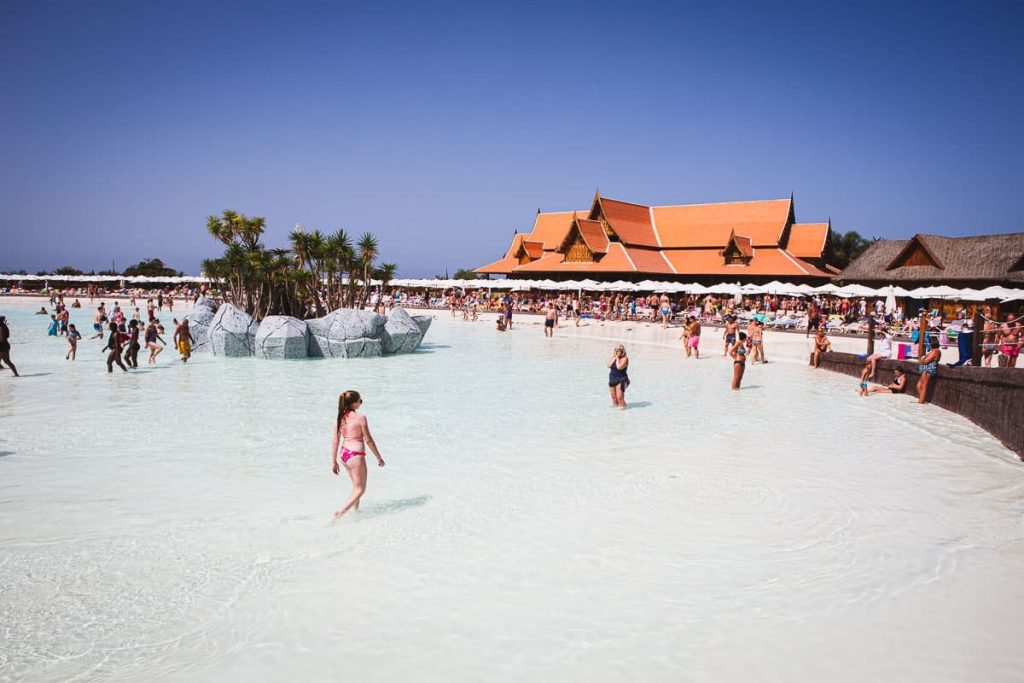
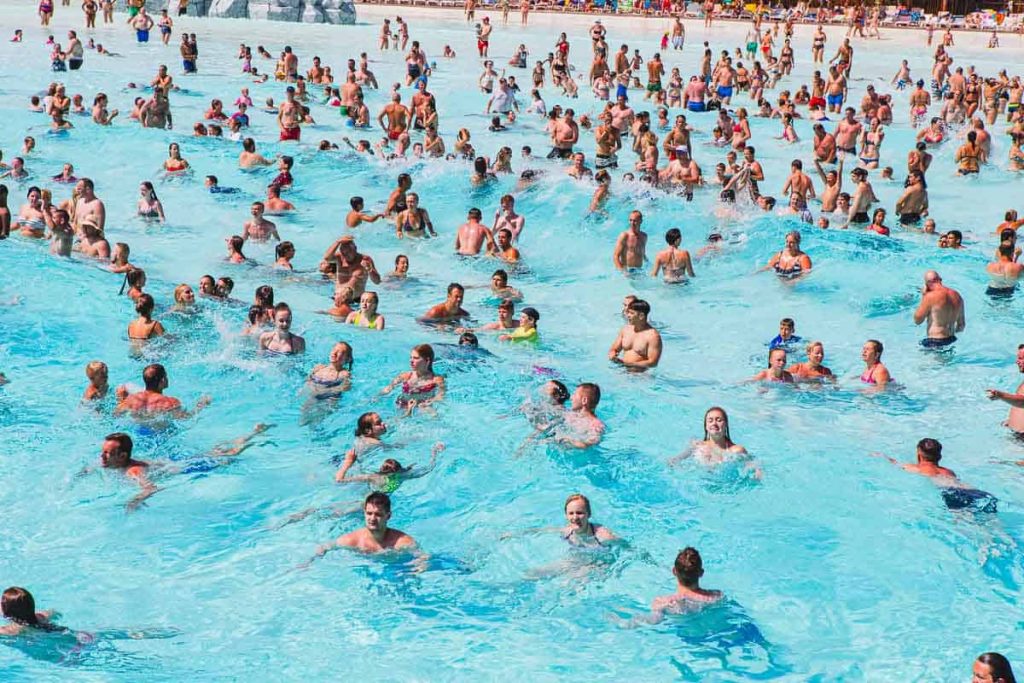
Next, we headed to Siam Beach, a man-made paradise with fine, soft sand. He had never experienced an artificial wave pool before, and as the anticipation built, his excitement was undeniable. When the waves finally came crashing in, his joy was electric.

He quickly made his way to the front, where the adrenaline junkies gathered to catch the biggest waves. I stayed further back, letting the water gently lap at my legs. Watching him dive headfirst into the experience was a moment of pure happiness for both of us.

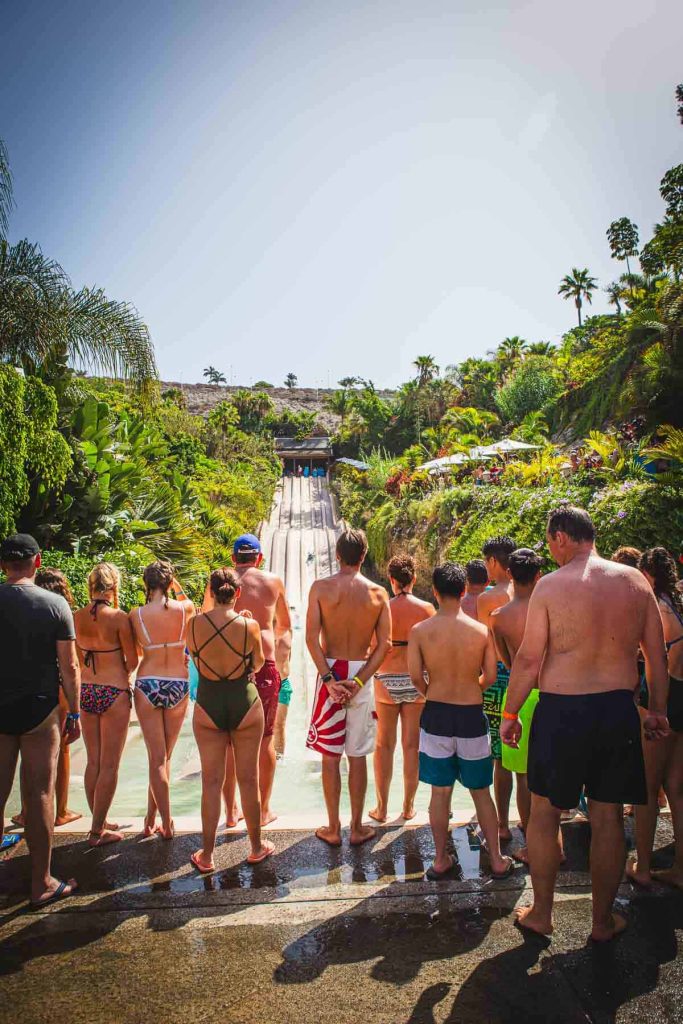
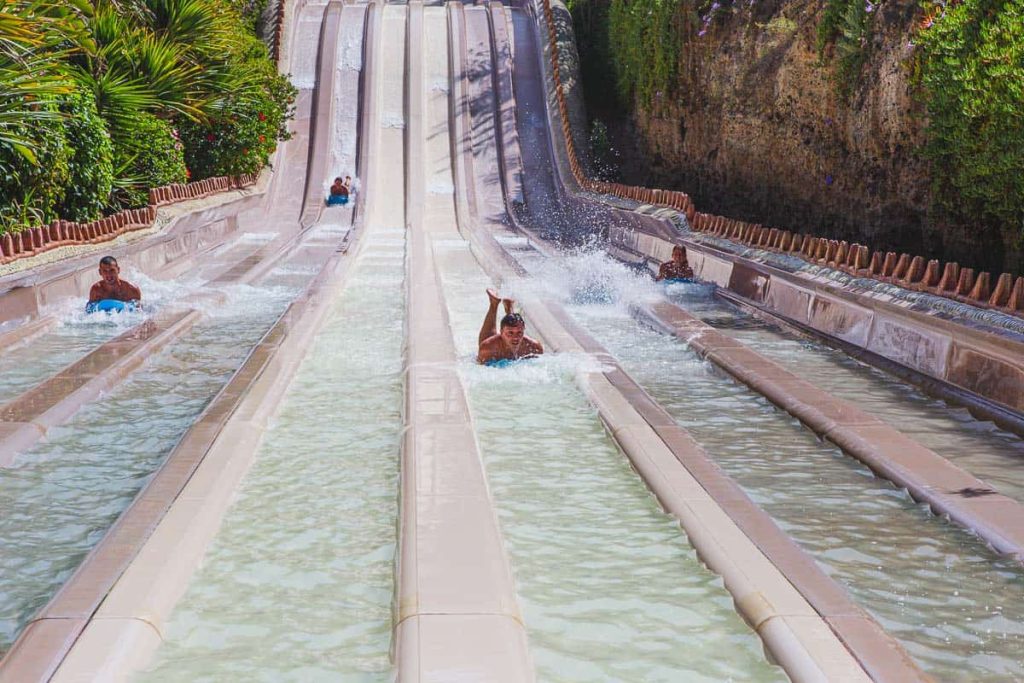
By then, he was ready for more thrills. Together, we tackled the Mekong Rapids and Patong Rapids. These group slides had us twisting, turning, and laughing all the way down. My son, who often hesitates with new experiences, was now sprinting up the stairs for another go — his determination and enthusiasm were contagious.

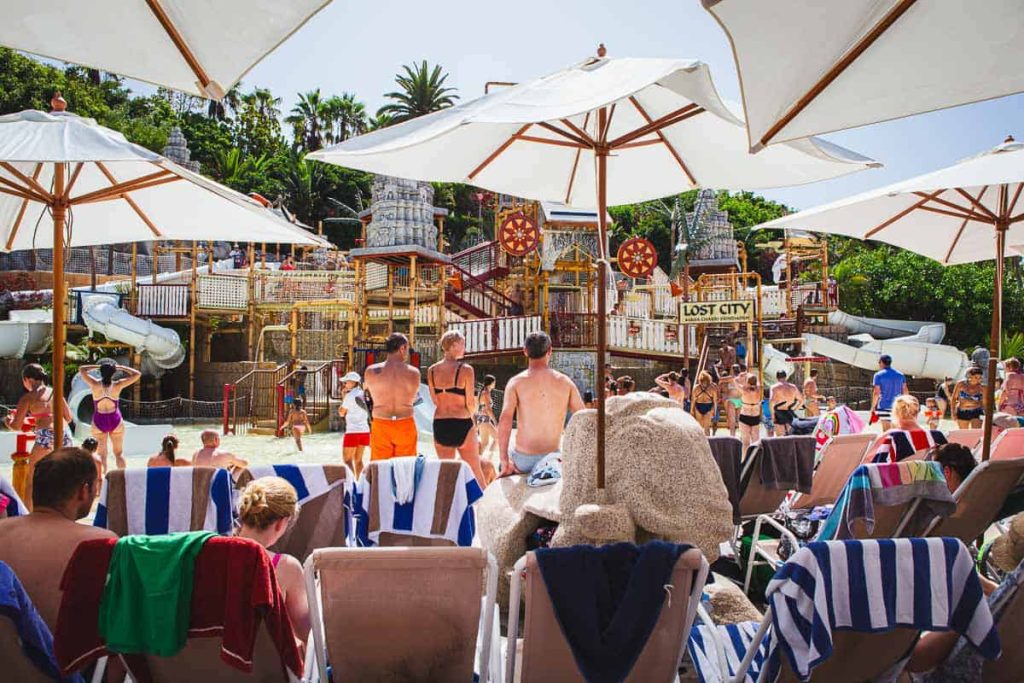
What struck me most was how inclusive Siam Park is. For families with younger children, there’s the Lost City, a vibrant play area with mini slides, water fountains, and splash zones. No one is left out here—there’s truly something for every age and ability.

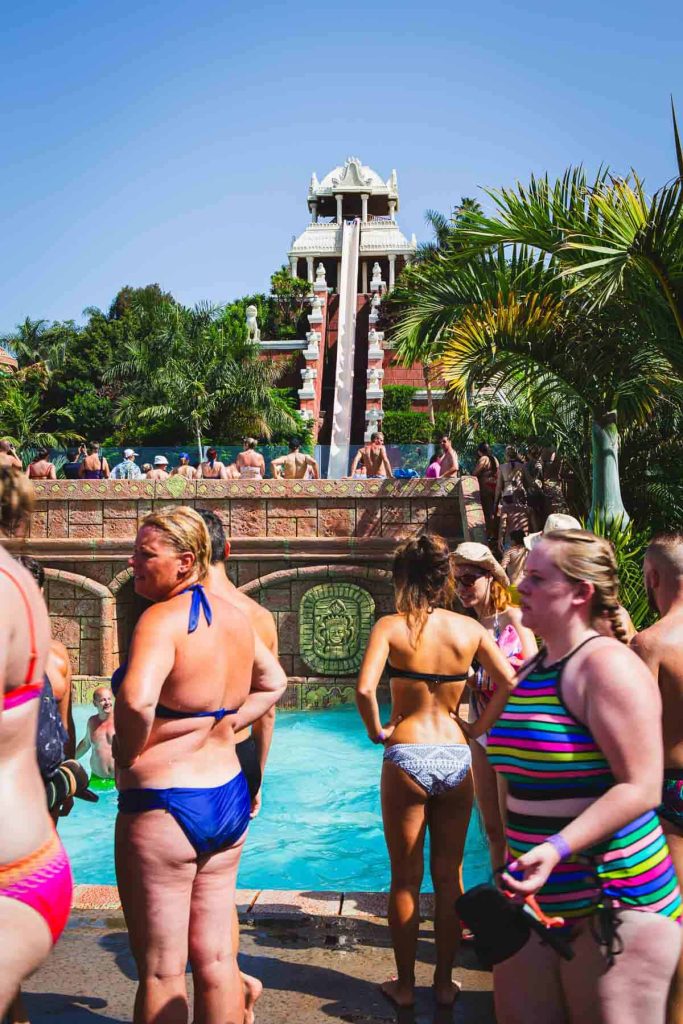
For thrill-seekers, the Tower of Power is a must-try. It’s a vertical 28-meter drop that takes you through a tank filled with sharks — a heart-stopping experience for the boldest visitors. Other rides like the Dragon, Kinnaree, and Singhaoffer their own unique twists for those chasing an adrenaline rush.

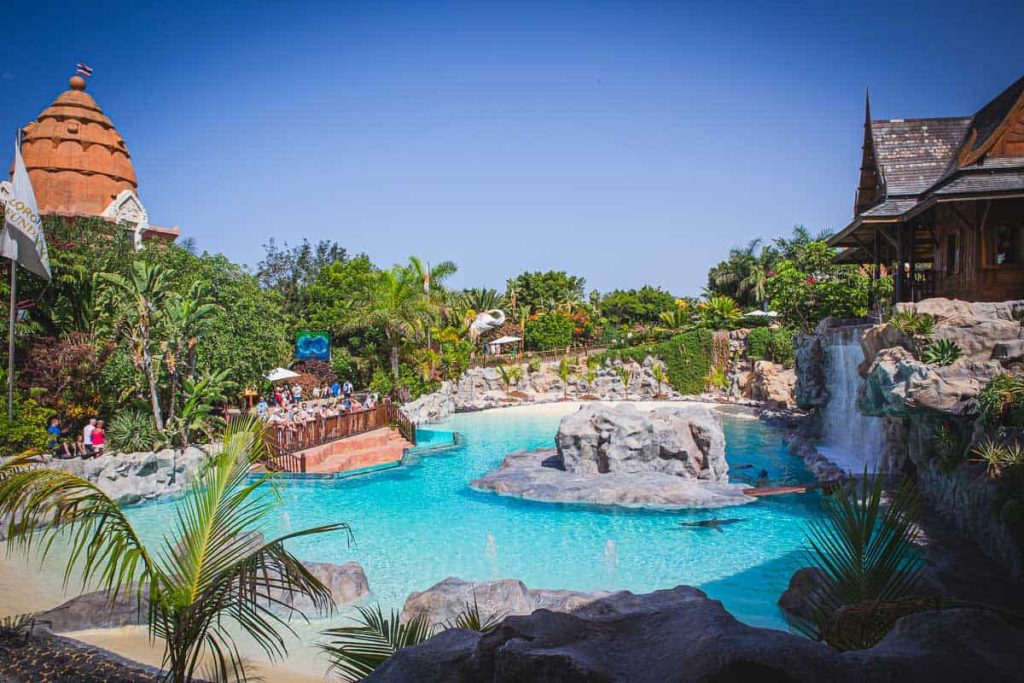
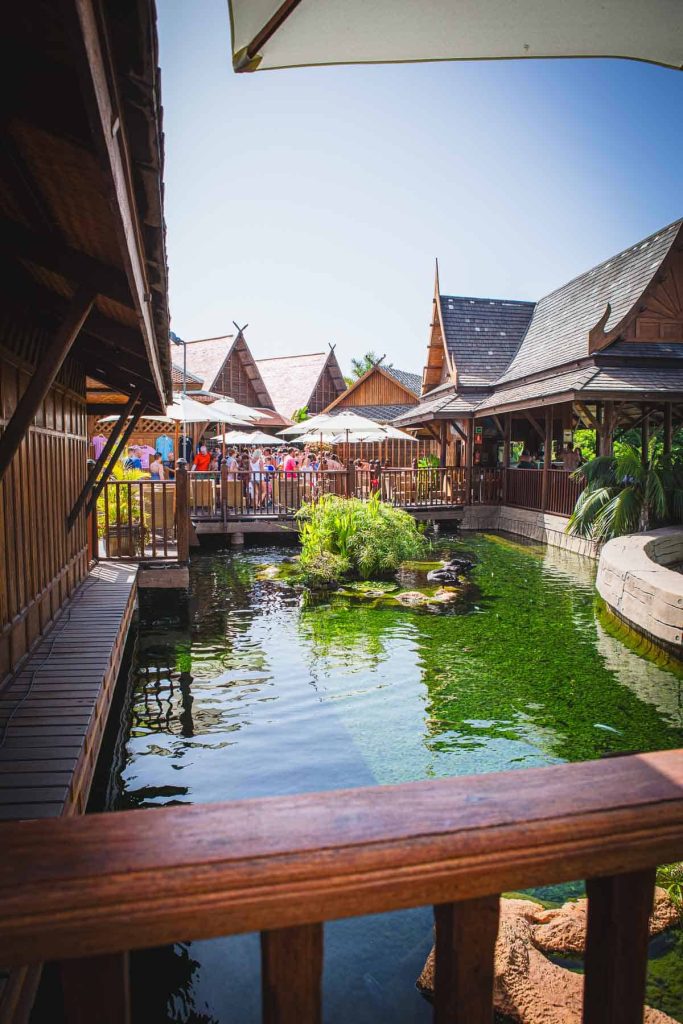
The park itself feels like a tropical oasis. Lush greenery surrounds you, and many of the rides are hidden among the foliage, adding a sense of adventure as you explore. Every corner feels like a new discovery waiting to happen.

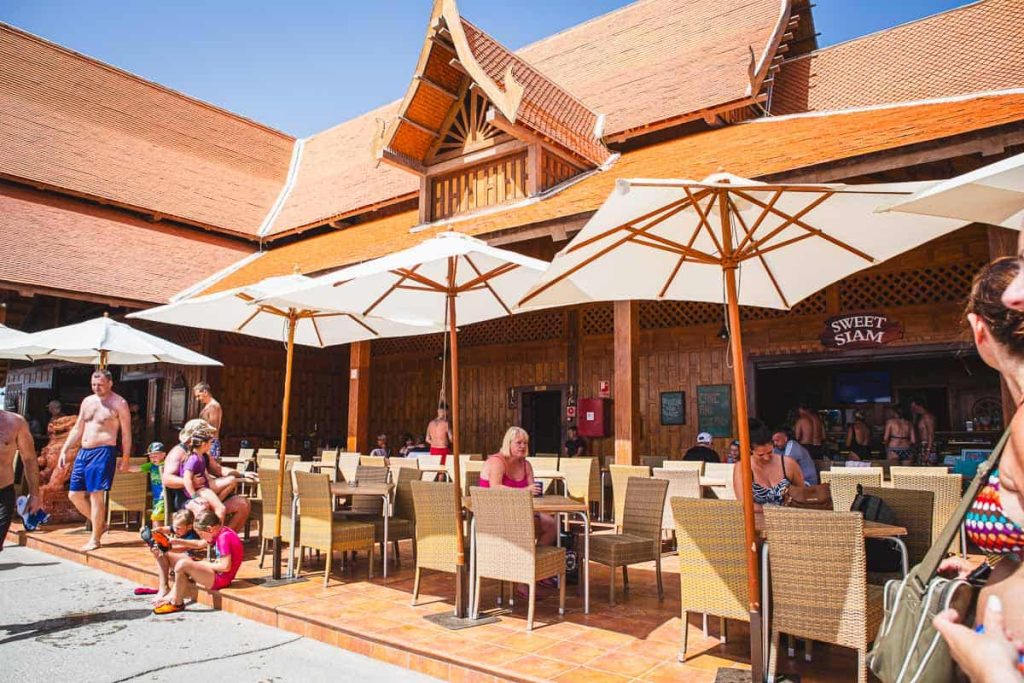
Although we didn’t stop for food this time, there are plenty of options for all tastes. From quick bites to sit-down meals, you’ll find fresh and satisfying options scattered throughout the park.

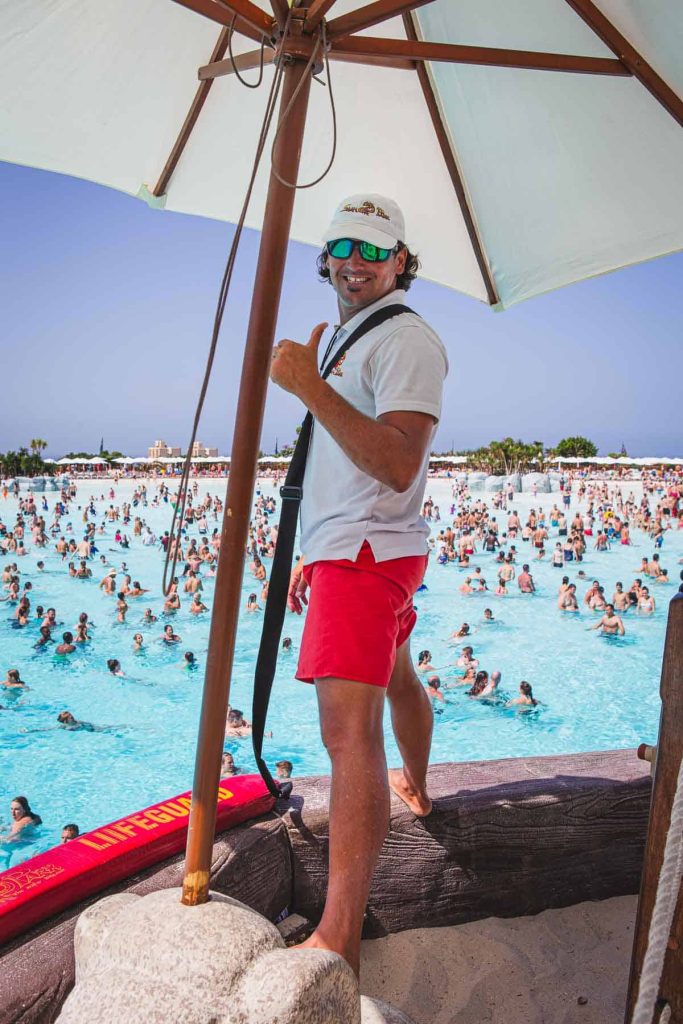
What really stood out to me was the thoughtfulness of the staff. Lifeguards were everywhere, ensuring everyone’s safety and creating a relaxed atmosphere. Their presence gave me the confidence to let my son explore, knowing he was in good hands.

By the end of the day, he didn’t want to leave. He had gone from hesitant and skeptical to a full-blown water park enthusiast. Watching him embrace the thrills and magic of Siam Park was worth every stair climbed and every ride braved.

Siam Park is more than just a water park. It’s a place where families reconnect, where fears are overcome, and where joy is contagious. If you’re looking for a day filled with laughter, adventure, and memories that last a lifetime, Siam Park delivers.

Siam Park
Av. Siam, s/n,
38660
Costa Adeje
Santa Cruz de Tenerife
Spain
Website

P.S. I was a guest of Siam Park.

July 1, 2025 Uncategorized

16 Best Things To Do in York

The city of York is probably one of the most beautiful cities in all of England. With its charming atmosphere, medieval streets and amazing history, there are plenty of things you can do during your visit. Whether it be going to museums, going on a historic promenade of the city, visiting one of the oldest cathedrals in Europe. Altogether, York has a lot to offer, so before you visit this amazing city out, make a list of best things to do in York so you don’t miss out on its top attractions.

Best things to do in York

York is one of the oldest cities in all of England, dating back to the Roman and Viking era. However, back then it was called Yorvik. In fact, at some point it used to be the capital of England. Since it is really old, it is also known as one of the most haunted cities in the world. Altogether, it is a historic walled city that is at the heart of river Ouse and which contains one of Europe’s largest cathedral – the York Minster. So, naturally, there are plenty of best things to do in York.

Today, York is home to about 200,000 people and is also home to two large universities, one of which is a top ten university in all of England and has gained international recognition. So, when you visit this lovely city, you’ll come across many students. Funnily enough, you’ll also find an alarmingly large population of ducks and geese who, by the way, are not too friendly in the spring.

History of York

York dates back to the Roman Era, 71 A.D. Back then, it was founded as Eboracum – its Latin name). The first settlement was a military fortress built by the Romans near the convergence point of the River Ouse and the River Foss. The fortress was home to roughly 6,000 Roman soldiers stationed in York, who apparently still haunts the city today. The headquarters of the fortress are actually under the foundations of the York Minster. Recent excavations underneath the Minster reveleaved many Roman streets and columns. It was only in 95 to 104 A.D. where the city became known as York, where it was scripted on wooden tablets at the Roman Fortress is Northumbria.

It was later ruled by three consecutive emperors: Emperor Hadrian, Septimus Severus and Constatinus I. Around 207 and 211 A.D., Emperor Severus made York the capital of Britannia Inferior. Simply put, York was the capital of England.  In 306 A.D., the son of Constantinus I became ruler of York, and became known as the Roman Emperor Constantine the Great. You can find his statue next to the York Minster.

post Roman era

After the decline of the Roman empire around the 5th century, York was resettled by Angles and was later ruled by King Edwin of Nothumbria by the 7th century. This King initiated the construction of the York Minster in 627. The initial structure was wooden but it was then rebuilt in stone by his son, Oswald. In the 9th century, Vikings (Danish army) commonly raided English villages. It was no later than 866, when Vikings raided the city of York. Ultimately, it become known as Jorvik. The Vikings occupied York until 954 A.D., but were then driven out by Kind Eadred who would then attempt to unify England once again.

After the Norman conquest, the people of York saw many a ruler, such as William the Conqueror, who was responsible for the destruction of many old original structures in his attempt to control rebellions in the North in mid-11th century. From the 12th century onward until the 16th century, York became a thriving city of trade and economic flourish. York was known for trading cloth, wax, oats, timber, furs and grains.

Around the times of the Tudors, between 16th and 18th centuries, York saw an economic decline due to the Dissolution of Monasteries under Henry VIII. It was around this time, that a lot of monastic houses, hospitals and churches were destroyed. This led to the slow up rise of Catholics in the area, which slowly started a religious conflict between Protestantism and Catholicism. In fact, Guy Fawkes, born in York, attempted to restore Catholicism by blowing up the Houses of Parliament with all Protestant representatives. Later on, York was besieged and yet again, many old houses were destroyed. We are very lucky, that York’s main structures still stand today!

Getting there with Loco2

I love taking trains. It means I can get some work done on my laptop while occasionally glancing at the beautiful English countryside. I made a booking really easily via Loco2. Loco2 covers over 20 countries, has over 37 operators and stops in more than 20,000 stations across Europe. The company was launched in 2012 by committed train travelers. What I love most is the story behind the name of the company. Loco2 means ‘Low CO2’ due to simplified booking processes. Almost a decade later, this amazing company is making a difference in modern travel by train!

From London to York it takes 2 hours. I arrived in a fairly larger train station, much bigger than one would expect. As soon as I walked out, I was only a 5-minute walk from the railway station, which I found super convenient.

Award-winning Loco2 is the only booking platform for domestic UK train travel that also covers continental Europe. Loco2 was the first booking platform to enable users to buy train tickets for domestic and international travel in and around the UK and Europe in a single transaction, with no booking fees, and still is today. It launched in 2012.

Best things to do in York

1. York Minster

This is an absolute must during your visit to York. In fact, this should be your first choice on the 16 best things to do in York list. This Anglo-Catholic Cathedral is not only beautiful but is also one of its kind. It is one of the largest cathedrals in Northern Europe and can proudly compete with that of the Notre Dame in Paris. Decorated by Gothic structures, it holds the largest expanse of medieval stained glass in the world.

That’s why once you are inside, you’ll be overwhelmed with vast structures and detailed glassworks. You’ll even have the chance to climb up a narrow flight of steep stairs and go to the top of the tower. Let me tell you, those stairs are a killer! Plus they are super narrow, so if you are claustrophobic, then it’s better to give them a miss.

When you get to the top, you feel like you deserve a medal. Breathing hard and soaked in sweat, you will soon realise it was totally worth it. With an awesome view, you’ll be able to spot the Yorkshire Moors and all of York for that matter. You’re best off going on a sunny day!

York Minster history

The cathedral dates back to Roman times, with actual roman structures from 71 A.D. still present underneath the streets of York. This used to be a Roman Fortress and some historians say, that excavators who frequently work on the Roman streets below the church are visited and haunted by Roman soldiers. Yikes!

As mentioned above, the church was first built as a wooden structure around 627 A.D. for the baptism of the King of Nothumbria. It was later rebuilt in stone. However, the church was destroyed in the 741 A.D. fire and had to be completely rebuilt. The new structure contained 30 altars. After many years of battle, the church was also very damaged during William the Conquerors’ ‘Harrying of the North’ were he sought to eliminate all thoughts of rebellion against his rule. The church was then rebuilt again in 1080 A.D. in the traditional Norman style and in the 12th century, the Minster took on Gothic structures. The Gothic style was ordered by Walter de Gray.

The church was built in several phases, and with time it grew larger and larger. For example, the north and south transepts were completed in the mid-13th century and the central tower was only completed in the 15th century. The cathedral was declared complete in the year 1472. However, in the year 1840, an accidental fire destroyed the roof, the nave, and the south-west tower. The cathedral was restored in 1858 and further renovations took place in the 20th century. Today, it is a majestic structure that stands proudly in the historical city of York. Definitely put it on your list of best things to do in York!

2. York shambles

The ‘Shambles’ is a medieval shopping street at the heart of the city. When you walk down this street, you feel like you are in the scenes of a Harry Potter sequel in Diagon Alley. The best time to get a picture is in the morning, when the street is completely empty. Otherwise, you’ll struggle to get a decent picture in the day with all the tourists and shoppers.

Back in the day, the Shambles were grounds for some of the most important economic activity in Northern England. Merchants used to trade goods heavily during the medieval times. As time progressed, the end of the ‘Shambles’ street was also known to many popular hangings. Some say that the street is most haunted in the morning by ghosts of the past.

I highly recommend you taking a stroll down this street. The shops are lovely and you’ll find lots of high quality and locally produced items, whether it be food or clothing. Today, the York Shambles is one of the most visited streets in all of Europe.

3. York City Walls

If you fancy a lovely walk with amazing views of the city, take a walk along the old city walls. The walls have been standing since Roman times, which have been originally built in 71 A.D. They surround the city and hold a few entries that still stand today. These include Bootham Bar, Monk Bar, Walmgate Bar, Micklegate Bar, Fishergate Bar and Victoria Bar. Funnily enough, the bars used to display speared heads on intruders and enemies on top as a warning sign to those who mean harm. In any case, in my opinion, when you climb up the city walls, you’ll have the best view of the York Minster.

4. Yorvik Viking Center

The Yorvik Museum is a fantastic way to understand how Vikings used to live in York. You’ll want to attend the 20 minute interactive ride that will take you through the ancient Viking streets of Yorvik. In fact, the ride even gives you a sense what old York used to smell like. It is a perfect way to educate your kids about Vikings. Once you are off the ride, you’ll find multiple Viking artifacts on display from jewelry, to axes, to shields and much more. Don’t miss out on this Viking adventure and put this on your list of things to in York.

5. Clifford’s Tower and York Castle Museum

York Castle, once known for its dark past with the Jewish massacre, today is a Museum that is home to multiple priceless artifacts. Next to the York Castle Museum stands the high Clifford Tower, built by Henry VII, which was used to imprison perpetrators in the past. Today, you can walk up the stairs and find amazing central views.

6. York Dungeon

Fancy to hear about York’s history from another point of view? The York Dungeon will give you an idea just how haunted the city actually is and you’ll find out all there is to know about the most haunted pubs in York. It is one of York’s funniest and scariest attractions. Mind you, the tour itself takes more than an hour, so if you are on a short visit, I’d leave this one out.

7. National York Railway Museum

If you love trains, you definitely need to put the National York Railway Museum on your list of best things to do in York. You’ll find iconic locomotives, as well as innovations that have shaped the modern railway as we know it today. Discover what station life was like in the past. It’s unfortunate that I didn’t bring my kids with me to York. They would have loved this museum!

8. York Theatre

A great idea if you fancy being a bit cultured. The York Theatre is right in the city center. It is a 2-minute walk from the York Minster – just to give you an idea of how central it actually is. They regularly feature modern and old plays and movies. So there is definitely something for everyone. Plus, the building itself is beautiful and is located just opposite the York Museum of Art. See below.

9. Other best things to do in York

Other best things to do in York include visiting St. Mary’s Abbey, Barley Hall, St. Helen’s Church, All Saint’s Church, The Bar Covenant, Shakespeare’s Rose Theatre. You can also visit the University of York which is home to the beautiful Heslington Hall. Oh, and don’t forget about taking part in the York Ghost Walk! You can have a guided tour of the city center and learn all their s to know about York’s tragedies and hauntings.

Best things to do in York for Foodies

Visiting York is not only about sightseeing, it’s also about discovering the amazing local Northern cuisine. Being a foodie myself, here are my top recommendations that you simply must include on your list of things to in York. Luckily for me, I came to York on a weekend when there was a food festival. Naturally, I was thrilled!

10. The York Roast Company

11. Betty’s Tea Room

Another must when you are in York. Betty’s Tea Room is a fabulous way to experience a top notch old English tea room. Admittedly, I’ve been there twice for coffee and breakfast. It did not disappoint. In fact, I don’t think I’ve ever had better Eggs Benedict in my life! There are two Betty’s Tea Rooms, one is hidden near the Minster and more local, and the larger team room is more commercial with beautiful glass windows. Service is excellent and the food is mouthwatering. It is the perfect place to enjoy a scone or a cake from the trolley with an afternoon tea. Nonetheless, I highly recommend it for breakfast. Make sure you get there at 9 am, because if you come later the wait for getting a table is roughly one hour.

12. York Fudge

Do you have a sweet tooth? Try the locally made fudge located in the York Shambles. You can even watch how they make it. The best part is, that there are many flavours, so you can choose to take with you a box with many varieties. I took one for my kids and they loved it!

13. York Chocolatiers

Right next to York Fudge, you’ve got Northern England’s most famous chocolatiers. Their shop is also located in one of the oldest houses in the York Shambles. It is said to be haunted at night.

14. King’s Arms

One of my favourite pubs in York is located directly at the river. There are two things I love about this pub. First, the pub is flooded every single year when the river level rises. Second, the pub has the best local beer. The local cider from the Samuel Smith’s brewery is amongst the best in York. Have a peek inside!

15. The Golden Fleece

The Golden Fleece is one of the oldest and most haunted pubs in York. The pub is said to be haunted by seven ghosts! Once inside, you are in for a truly authentic experience with original structures. You’ll see that the floor is crooked, but nevertheless, the ambience is great and it is cosy inside. They also have amazing beer on tap! If you fancy staying at the Golden Fleece, you should think twice! It is said that every room is haunted by a specific ghost. Would you dare to stay in one of the most haunted buildings in all of England?

The York Pass

You might be thinking, how in the world am I going to manage all these attractions? Well, the solution to this problem is to get a really convenient York’ Visitor VIP pass. You’ll have access to almost all of the Museums, Minster (including the tower where generally visitors must pay extra), Railway Museum and much more. The best part is, that you also have access to a sightseeing bus that will take you on a historic tour around the city and provide you with interesting historical facts along the way.

In any case, I think if you don’t usually travel up North, you should definitely consider travelling to York. The city is special, filled with history and intriguing facts. Furthermore, as you saw, it is packed with delicious local cuisine.

You can find more information about York here . You can also purchase your York Passes here.

best things to do in york

P.S. I was a guest of Make It York. 

July 1, 2025 Uncategorized

25 Things To Do in Norwich

The city of Norwich has plenty to offer when it comes to tourist attractions. Undoubtedly, Norwich is one of the most beautiful cities in Norfolk with a rich history dating back to medieval times. In addition, this cathedral city has a lot in store regarding culinary experiences, with one trendy restaurant after another on every corner. Hence, Norwich is bursting with activities to experience and atmosphere to enjoy. This list of 25 things to do in Norwich mentions the activities and attractions you simply cannot miss out on. Also, among the top 25 things to do in Norwich, I’ll give you a list of restaurants which you must try during your stay. Enjoy!

Top 25 things to do in Norwich, UK

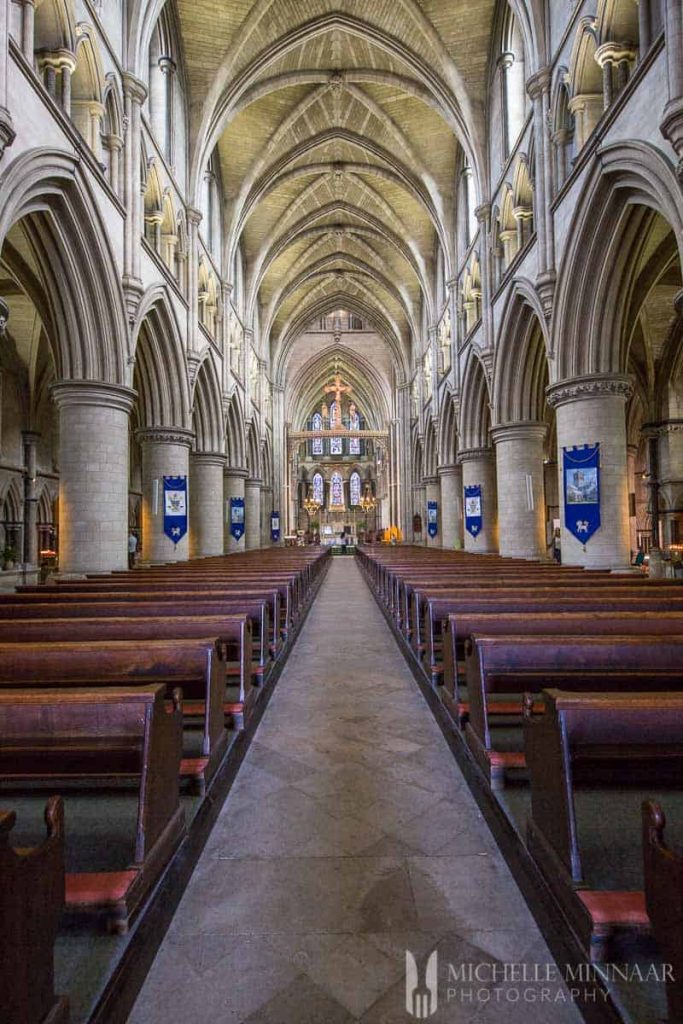
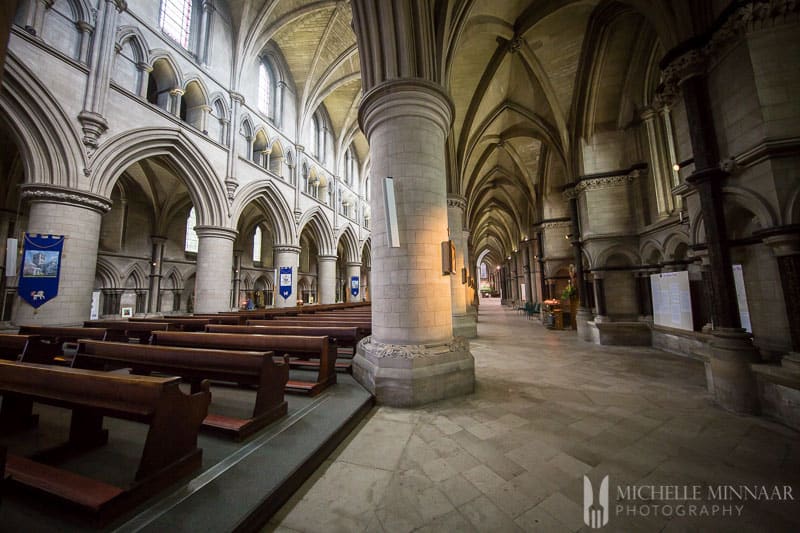
1.Norwich Cathedral

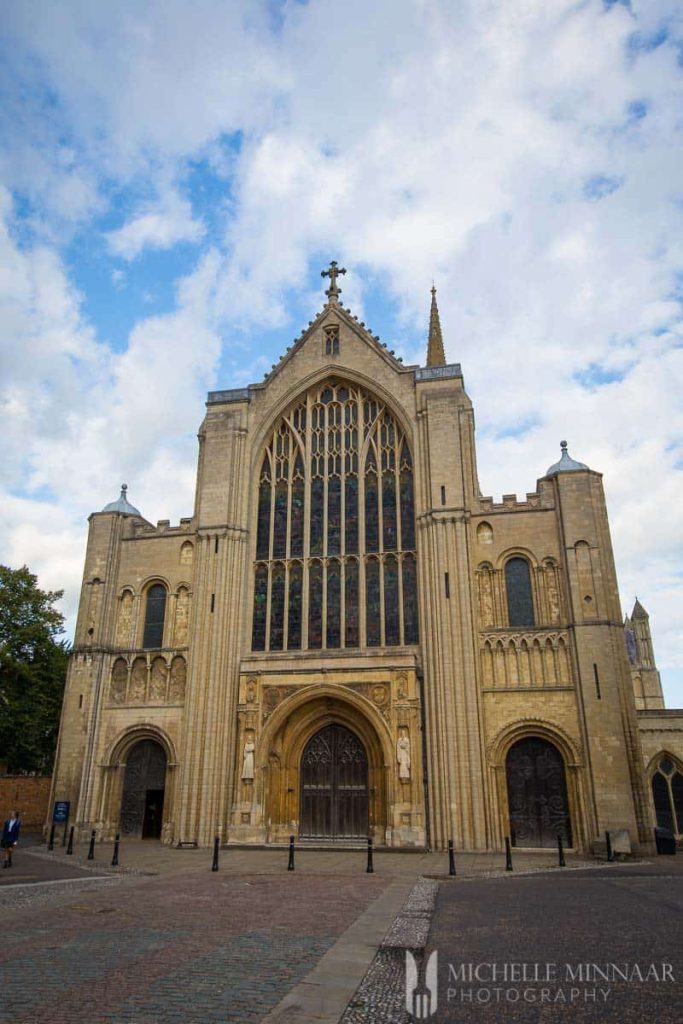
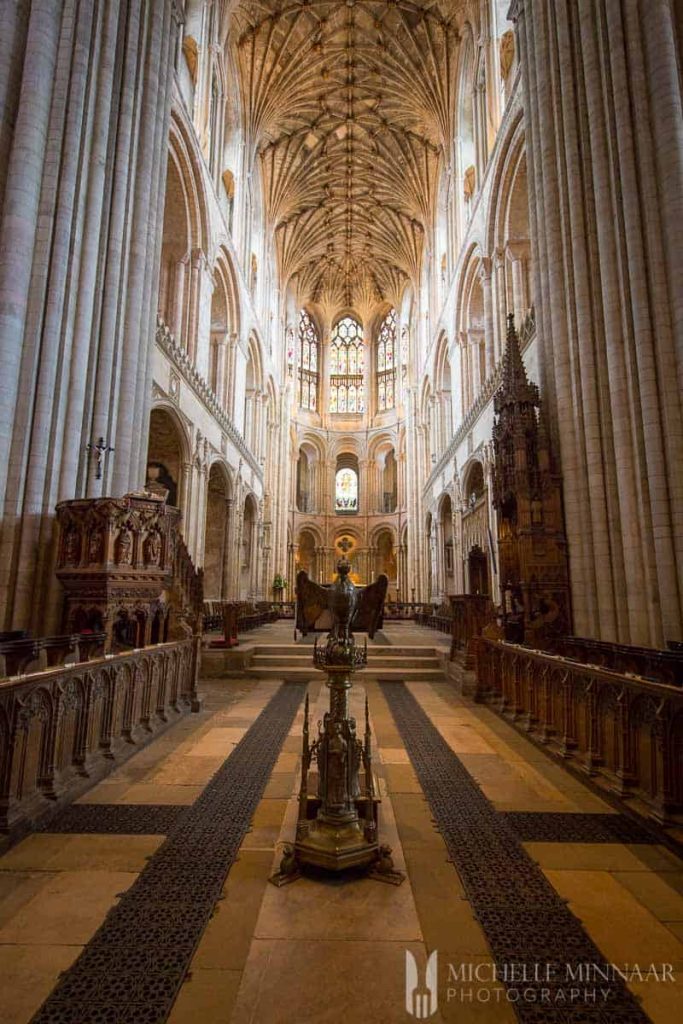
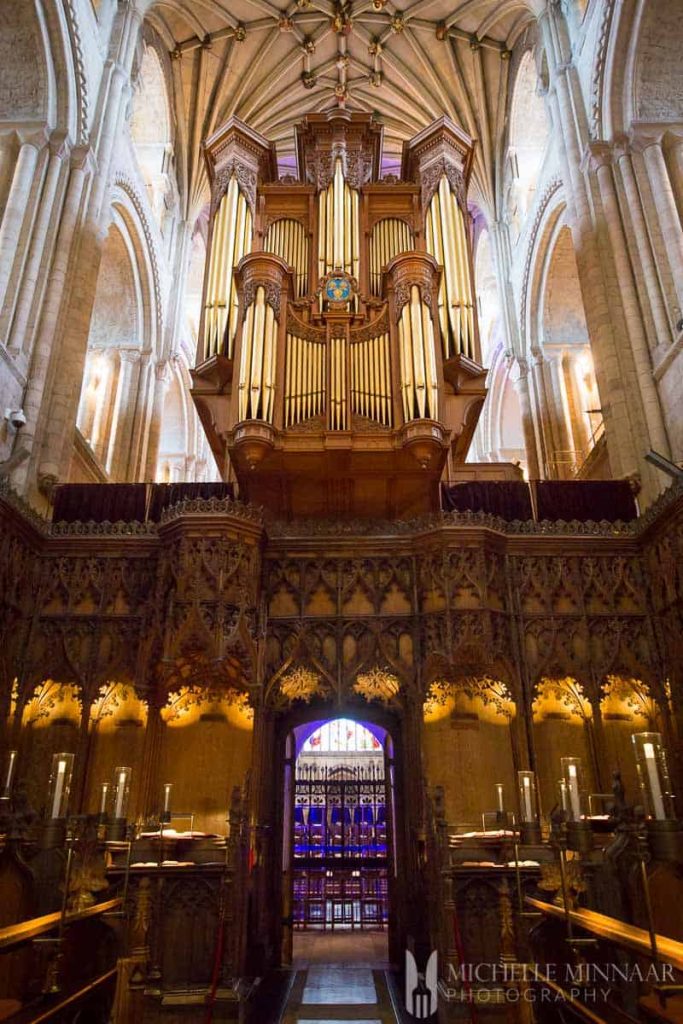
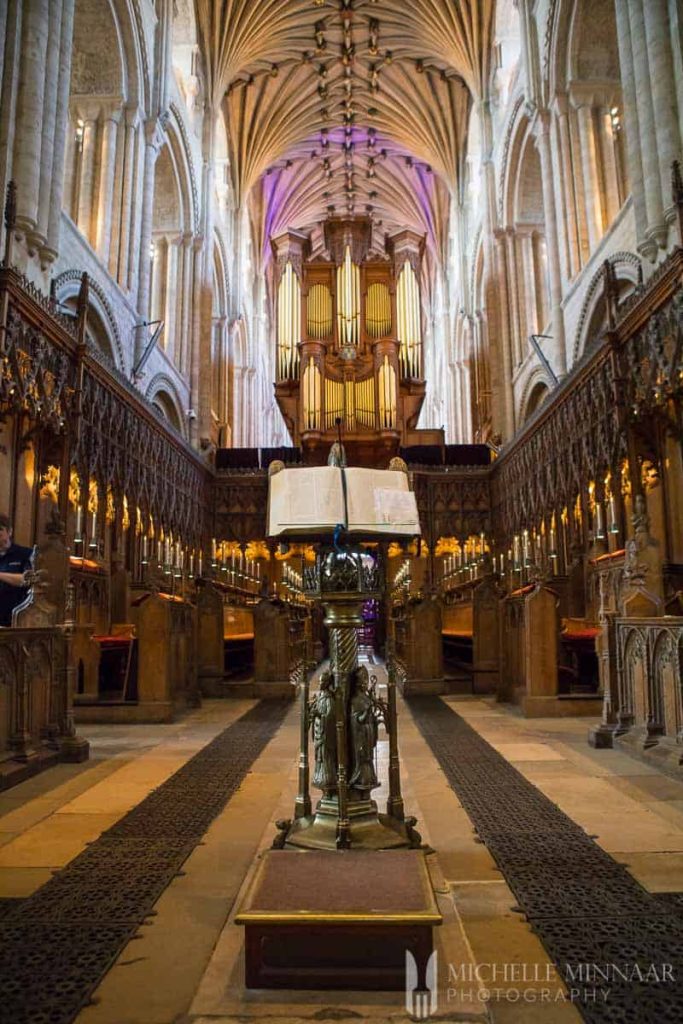
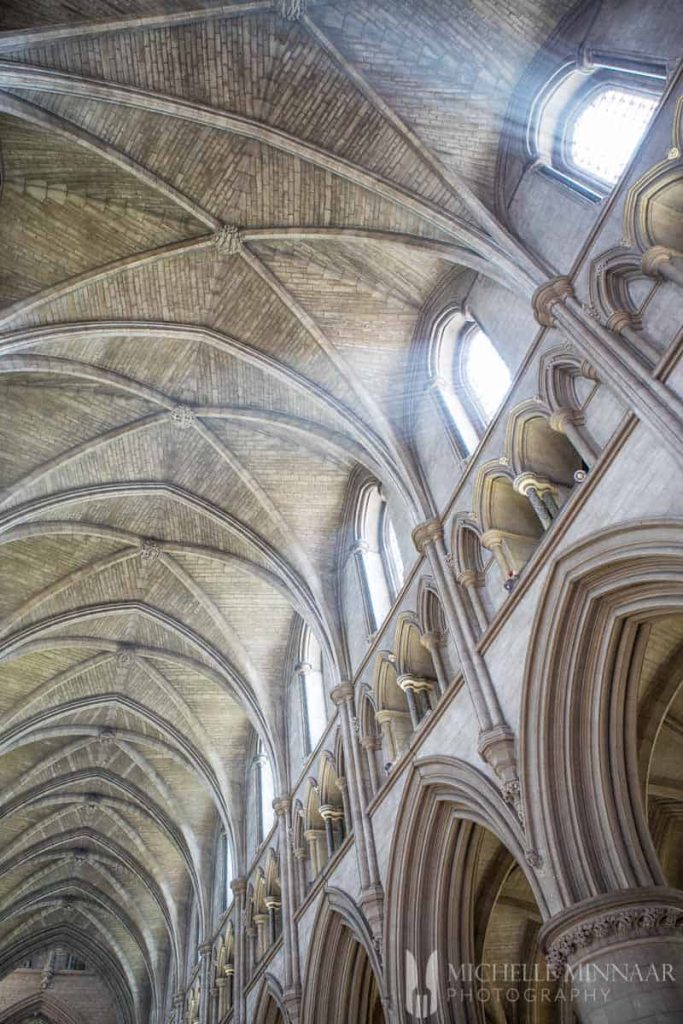
Norwich Cathedral is a stunning building with magnificent Norman architecture and should top your list of 25 things to do in Norwich. It proudly stands as one of Norfolk’s 12 heritage sites. Following the Norman Conquest, the construction of the Cathedral began in the late 11th century using limestone, which gave the structure its distinct cream colour. In fact, the base of the cathedral was so large, that two churches, as well as an entire Anglo-Saxon settlement, had to be demolished to make enough space for the construction. Even more surprising for the time, it took only 49 years to complete the Cathedral, which has a distinct Norman tower with a wooden spire that remains in place since its inception in the early 12th century.

Most noteworthy, Norwich Cathedral has a very special cloister (enclosed gallery) with more than 1,000 stone knobs (otherwise known as bosses). The square cloister is the 2nd largest in England and the Cathedral itself is one of the largest in Europe. The spire measures 315 ft and, astonishingly, lightning struck after the building’s completion in the 12th century, setting it on fire. This happened only 23 months after its completion – quite a disaster! To learn more about the history of the Cathedral and about Norman architecture, click right here.

If you want to check out another gorgeous cathedral city, then make sure you check out this list of things to do in York. The York Minster is amongst the grandest cathedrals in Northern Europe.

2.Norwich Lanes

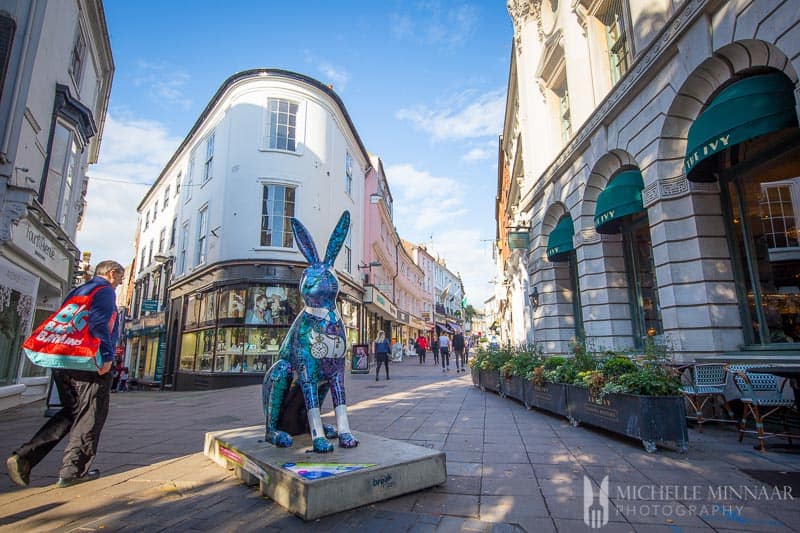
Norwich Lanes are at the top of the list of things to do in Norwich, and definitely create an exciting itinerary for your stay. The Norwich Lanes are famous for their independent and quirky retailers, contemporary cafés, local boutiques, trendy bars, buzzing restaurants and much more. With a backdrop of charming narrow alleyways, the Norwich Lanes offer an exciting walk. This is the place to get an authentic cup of coffee or get served a pint of real local ale, whichever tickles your fancy!

Start at Upper St Giles, which is a unique Georgian-style street. There, you’ll find many art shops including the Norwich Art Shop and the Studio Art Gallery. There are also many unique designer boutiques for you to browse through. Next, head for Upper and Lower Goat Lanes where you’ll find the best fish and chips in town at Grosvenor’s Fish Bar. Also, don’t miss out on what’s in store for you at these streets:

  • Pottergate
  • St John Maddermarket & Dove Street
  • London Street & Saint Andrew’s Hill
  • Bedford Street & Exchange Street
  • and of course the famous St Benedicts Street – which is home to one of the best upmarket restaurants, Benedicts.

These locations all combine to make up the Norwich Lanes. To learn more about the Norwich Lanes and discover the type of shops you’ll find there, click right here. Explore on foot and follow your nose – see where it takes you.

3.Norwich Castle Museum & Art Gallery

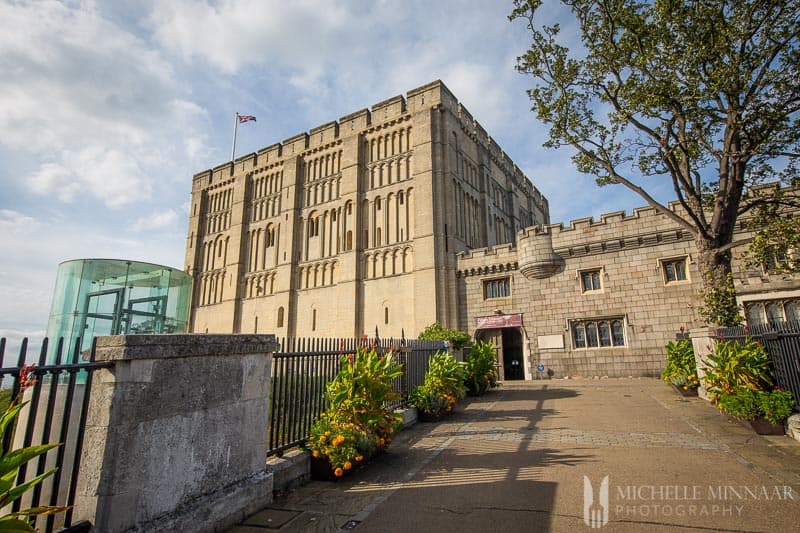
Norwich castle museum and art gallery, one of the things to do in Norwich.

Norwich Castle is a Norman fortification and a must-see attraction. Similarly to the Norwich Cathedral, it was also constructed in the 11th century in response to the Norman Conquest. Today, the museum houses a range of artefacts – Saxon gold hoards, exquisite jewellry, and much, much more.

Speaking of exhibitions, I had the opportunity to see the Paston Treasure: Riches and Rarities of the Known World. Indeed, this was a very rare opportunity to see five actual objects from The Paston Treasure (circa 1665), which are steeped in the history of more than three centuries, alongside superb paintings from many renowned artists. The exhibition provided a one-chance opportunity to view extraordinary pieces from the Metropolitan Museum of Art, New York, the Rijksmuseum, Amsterdam, Chicago Institute of Art, the Victoria and Albert Museum, and the Royal Collection.

4.Norwich Market

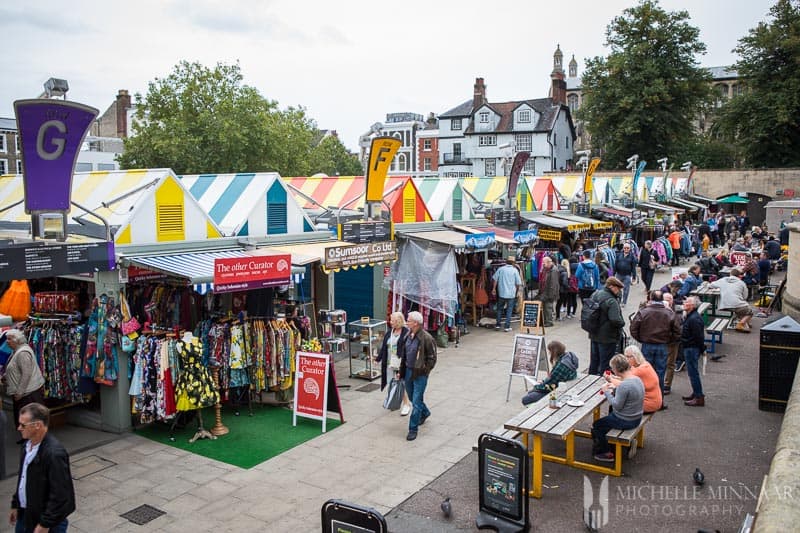
Norwich Market is certainly one of the largest open-air markets in the UK. This market is located at the heart of Norwich’s city centre on Gentleman’s Walk and is sure to charm you. It has a culturally rich heritage and is packed with stalls offering a range of foods from different cuisines and all kinds of wares and services.

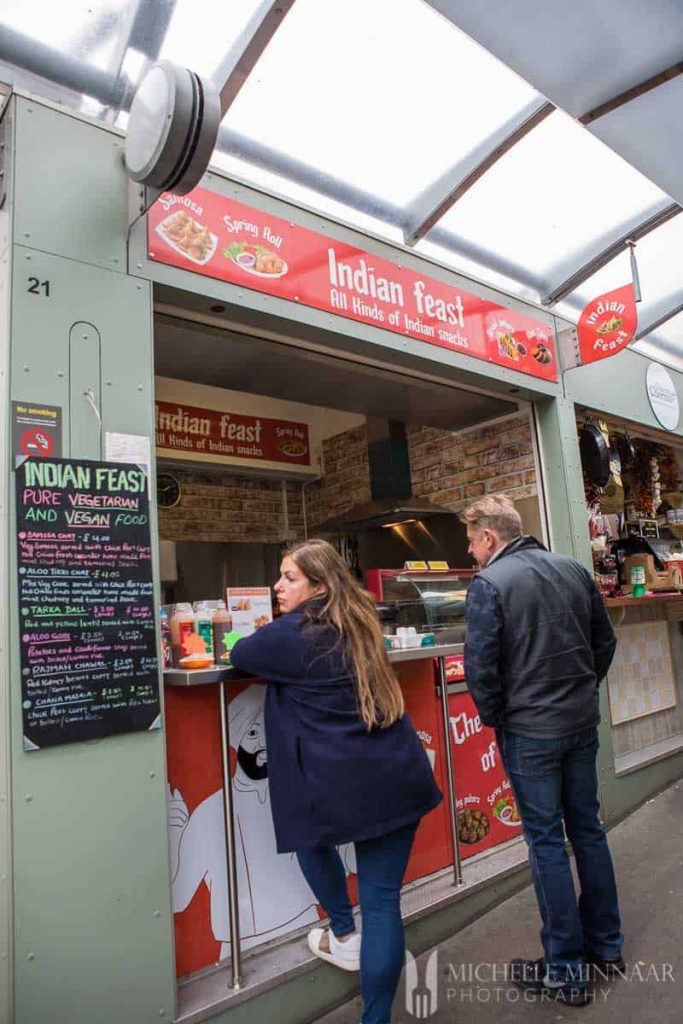
There is definitely plenty to eat there. Chances are that if you happen to pass by Norwich Market you are bound to cancel your lunch or dinner plans, because you simply won’t be able to resist indulging in something yummy. Even more, you’ll enjoy snacking on local quality fish, meats, fresh bread, cheeses, hog roasts and more tasty offerings in the quaint historical surroundings. Also, I have to mention that there are also excellent options for vegans, too.

The market is open from Monday to Saturday. Be aware that it’s closed on Sundays, but you can still take a little stroll and enjoy the historical backdrop to the market.

To learn more about the Norwich Market, click right here.

5.City Hall

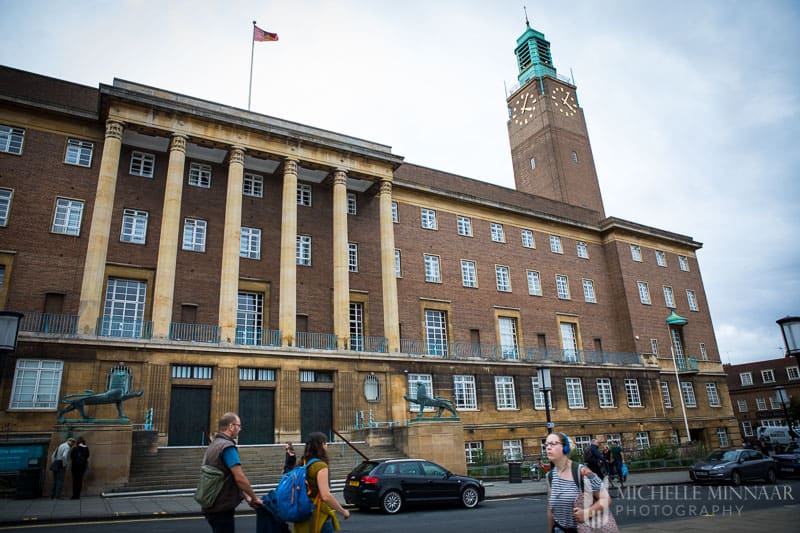
As distinct from most official buildings in Norwich, the City Hall is an Art Deco affair dating from 1938. This makes it an instant historical hit, and it is considered one of the 12 Norwich heritage buildings of cultural importance. The building was specifically designed for national significance, with each brick being specially made to better reflect the building’s proportions. King George VI and Queen Elizabeth officially opened Norwich City Hall on the 29th of October 1939. So, considering the fact that a year later Norwich was severely bombed due to the outbreak of the Second World War, the building did well to survive intact!

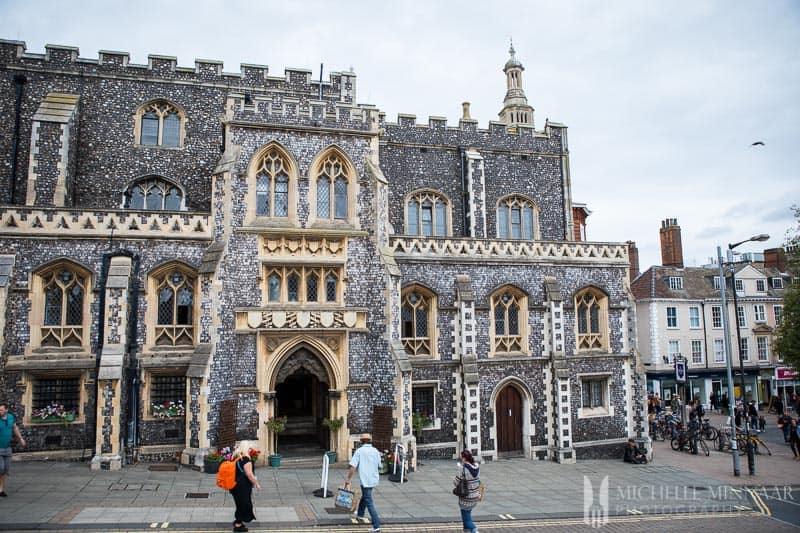
6.Guildhall

The Guildhall, otherwise referred to as Norwich Guildhall is a historic building located on Gaol Hill. Dating back to the early 15th century, this historic gem used to operate as the seat of the city government prior to the City Hall being completed in 1938. During the 15th century, the city of Norwich was one of the wealthiest in England.

The Norwich Guildhall, too, is one of Norwich’s 12 heritage buildings and is a sight to see! It is one of the few extremely well-preserved medieval buildings in England.

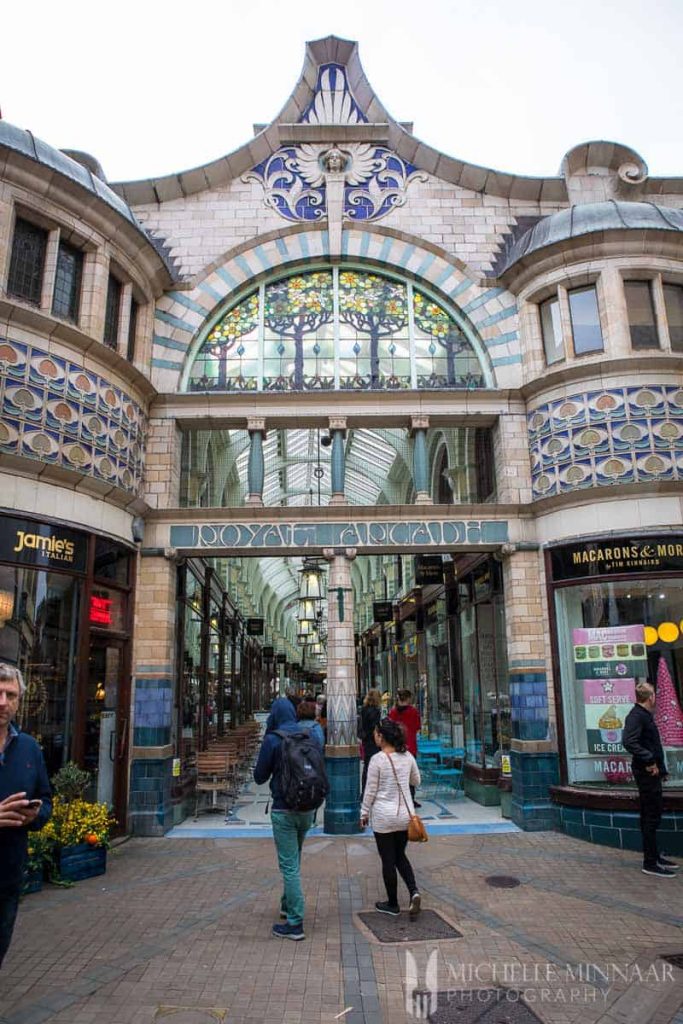
7.Royal Arcade

The Royal Arcade, designed by George Skipper in 1899, is a jaw-droppingly gorgeous covered shopping street. In fact, some say its beauty makes it the most striking shopping street in all of England. The Royal Arcade is certainly one of Norwich’s hidden gems. If you visit the Arcade, you’ll spot the influence of L’Art Nouveau style. Today, it is also considered as a ‘fragment of Arabian Nights’ located at Norwich City Centre.

You’ll also be able to visit many independent boutiques as well as popular brands which you’ll know. To learn more about the Royal Arcade and discover the range of shops, click here.

8.Saint John’s Cathedral

The Cathedral Church of St John the Baptist is the second cathedral in Norwich. Although lesser known than Norwich Cathedral (no.1 on our list) it is actually the second tallest Roman Catholic Cathedral in England. Located on Unthank Road, it was constructed in the late 19th century.

The 15th Duke of Norfolk funded the project and considered the construction of the Cathedral to be a gift to the Catholics of Norwich.

The Cathedral opening hours are 7:30 am to 7:30 pm, daily. In addition, there are specific Cathedral tours available on Saturdays. Here, guides can provide you with in-depth information on the history of the building and much more. A tour takes roughly 50 minutes. Fair warning though, you’ll need comfortable shoes to tackle the 230 steps that lead to the tower. That said, the 360-degree breathtaking views of Norwich are totally worth the climb!

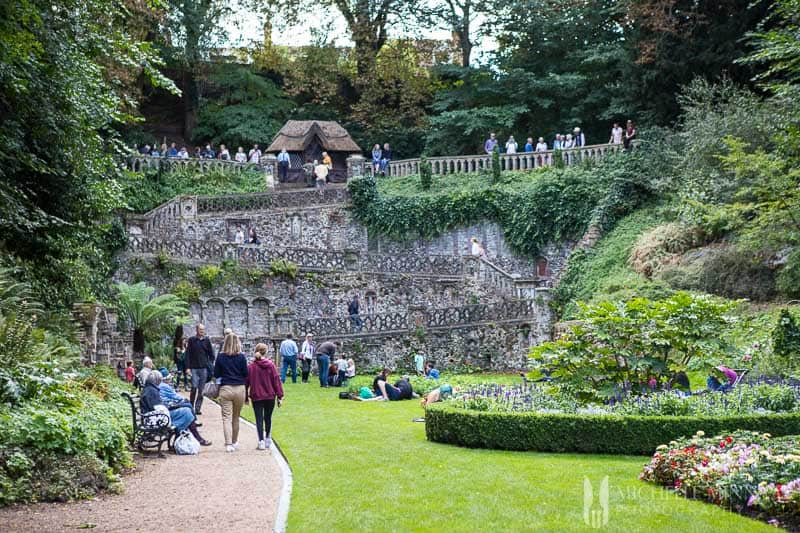
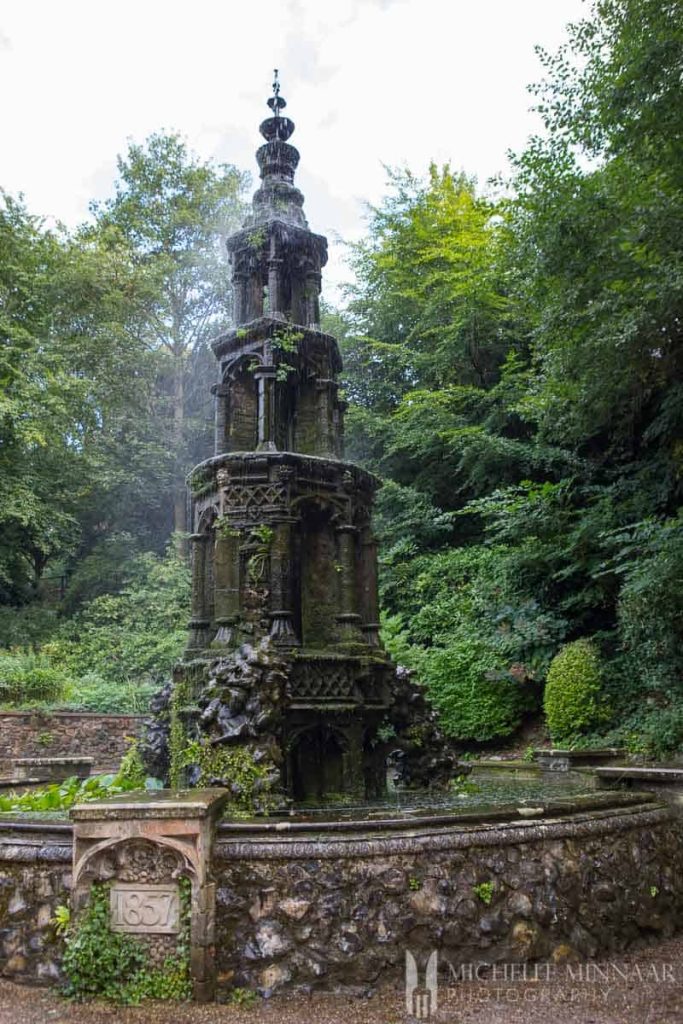
9.Plantation Garden

Plantation Garden is a fabulous idea for an outdoor activity in Norwich. Therefore, keep it high on your list of top 25 things to do in Norwich. The Plantation Garden is over 100 years old and only 600 yards away from the city centre. The garden boasts beautiful Gothic fountains, medieval terraced walls, a Victorian-style greenhouse, a rustic bridge as well as stunning flower beds. It is located right next to Saint John’s Cathedral. Locals refer to it as the Secret Garden. You can also arrange a group tour.

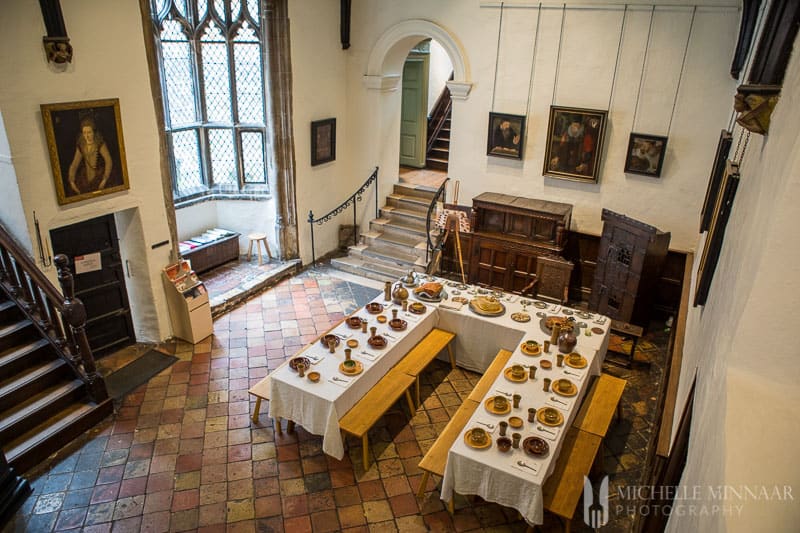
10.Strangers’ Hall

Strangers’ Hall is one of the oldest buildings in Norwich. It used to house Dutch Flemish and Walloon refugees, which gave its name. Strangers’ Hall was also home to many wealthy merchants and mayors whose patronage kept the building beautifully preserved. Inside, you’ll find the Tudor Great Hall, Georgian Dining Rooms as well as narrow passages and magnificent interlinked rooms. In addition, you’ll find the famous Walnut Room, Lady Paine’s bedroom, the Toy Room and more.

11.St Peter Mancroft Cathedral

The Church of Saint Peter Mancroft is located in the heart of Norwich. As you know, the city has two cathedrals which are immensely large in size. However, after those two cathedrals, the Church of Saint Peter Mancroft is the largest church in Norwich. It was built in the middle of the 15th century on slightly elevated ground – making it even more admirable from a distance – although the church has Norman foundations which date to the 11th century. Today, the church displays the country’s finest collection of church silver including the Gleane and Thistle cups.

One of the best things I’ve found is that the church is located right next to the market place. So you can listen to the soft sound of church bells while you take a stroll in the market.

12.City Sightseeing open-top bus tour

If you are a bit pressed for time and find yourself in Norwich, particularly on a sunny day, then don’t hesitate to go on the City Sightseeing Open Bus Tour. The Hop-On Hop-Off Norwich Sightseeing Bus offers you the chance to explore the city’s top attractions with an audio commentary along the way. It is the best way to sightsee as you are able to cover everything in one go! Again, should the weather be agreeable, I highly recommend snatching a spot on the upper floor of the bus so that you’ll have an open 360-degree view of the city!

13.City of Centuries guided tour

For those of you who want to learn more about the intriguing history of Norwich, book this guided tour! The Norwich Tourist Information Centre organised mine – look them up! Our tour guide, Mr John Humphreys, spoke extremely knowledgeably on all interesting buildings and their relevant history. Also, the tour was an excellent way to discover the city as we roamed all over Norwich and got to see hidden historical streets that one would just pass by ordinarily. So I highly recommend this educational City of Centuries Guided Tour.

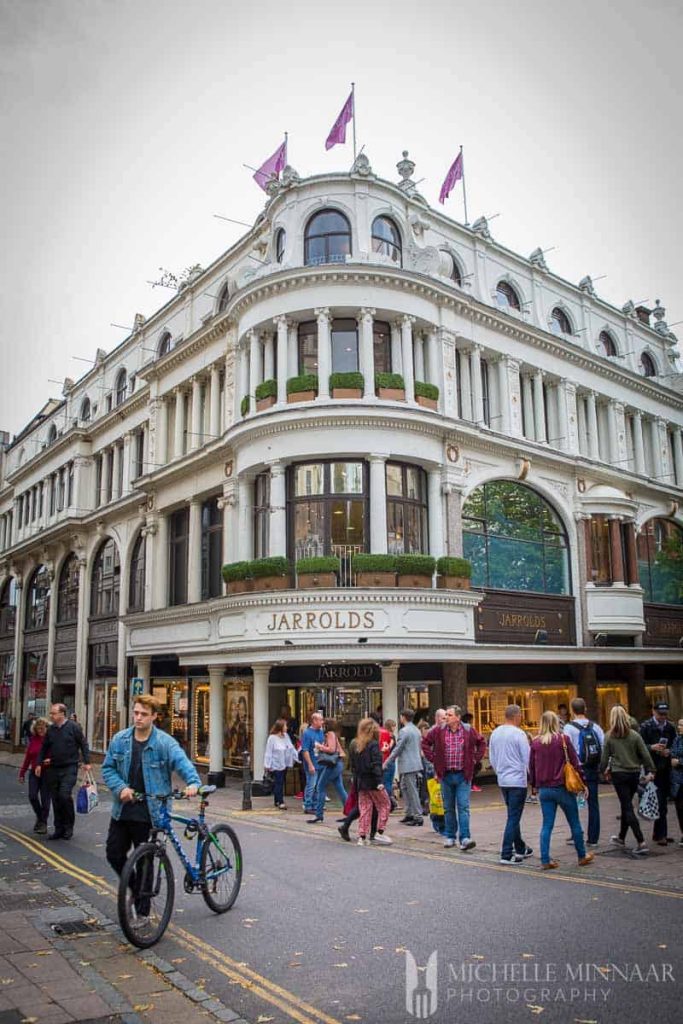
14.Jarrold Department Store, Norwich

If you love taking home some local souvenirs as well as doing a spot of shopping during your vacation, then you should definitely visit the Jarrold Department Store. Jarrold is Norwich’s independent flagship store. It is the two-time winner of the UK’s Independent Department Store of the Year. Ultimately, it remains as one of the local population’s most favourite places to shop in Norfolk.

Offering a wide selection of chic fashion for women and men, books, gifts, kitchenware, cosmetic products as well as furniture – there is plenty to choose from. A fair warning though, you can easily spend hours in the store without even knowing it. Before you know, your entire day has gone.

15.Saint Andrew’s and Blackfriars’ Hall

Saint Andrew’s and Blackfriars’ Hall is a listed set of church and convent buildings. The buildings date back to the 14th century and are made up of several flint structures. These halls are now mainly used for business conferences, fancy weddings, local concerts, beer festivals and so on. Nevertheless, the church is one of the 12 Norwich heritage sites.

16.The Museum of Norwich at the Bridewell

Discover yet more of the city’s history by visiting this museum. You will have a chance to see various objects from the textile trade which brought the city its wealth. Furthermore, you’ll get a glimpse of how chocolate, shoes and mustard were made in the region. Opening hours are from Tuesday to Saturday from 10 am to 4:30 pm. Find out more about the Museum here.

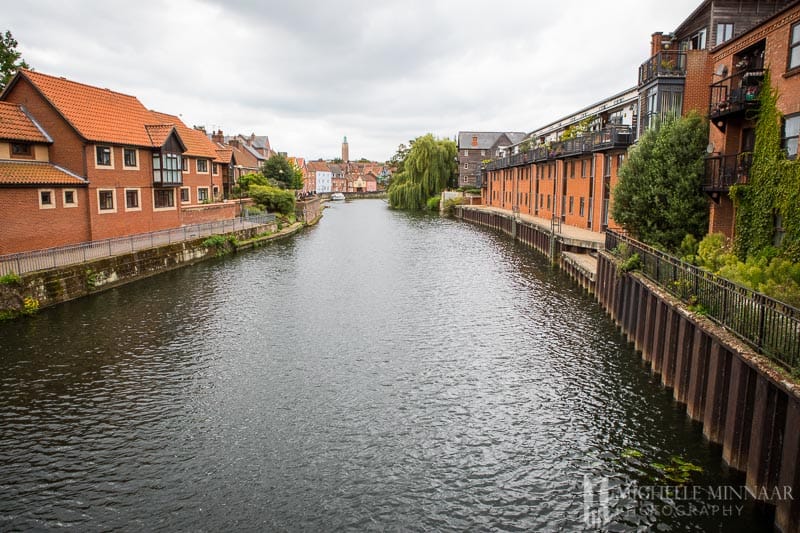
17.Go for a walk along the River Wensum

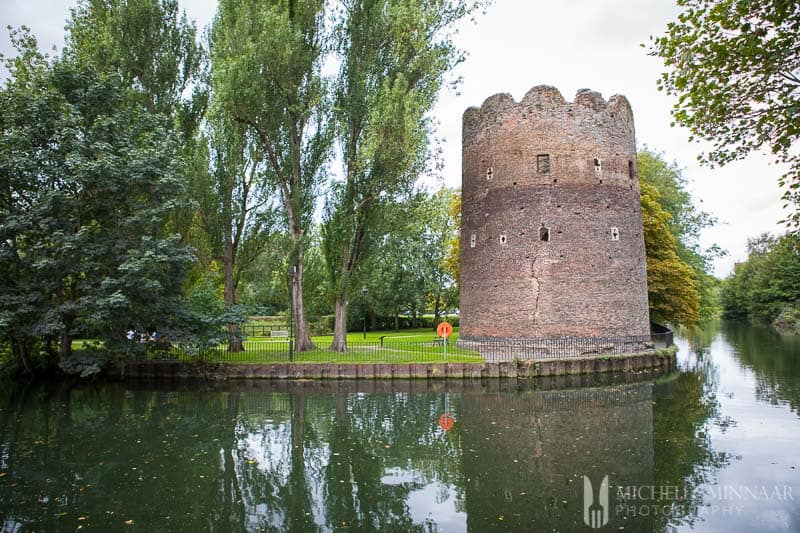
Fancy a romantic stroll along the river Wensum? Doing so offers a fine exploration of the city due to the many monuments that stand on the banks. Along the walking route, you’ll come across the Jarrold Footbridge, Pulls Ferry, Whitefriars Bridge, Cow Tower, Bishopsgate Bridge, the Norwich Marina and the Old Textile Mill.

Foodie things to do in Norwich

Being a travel blogger as well as a food blogger, I couldn’t resist the urge to explore the local food scene. If you ever visit Norwich, make sure you visit one of the below-mentioned restaurants and foodie places.

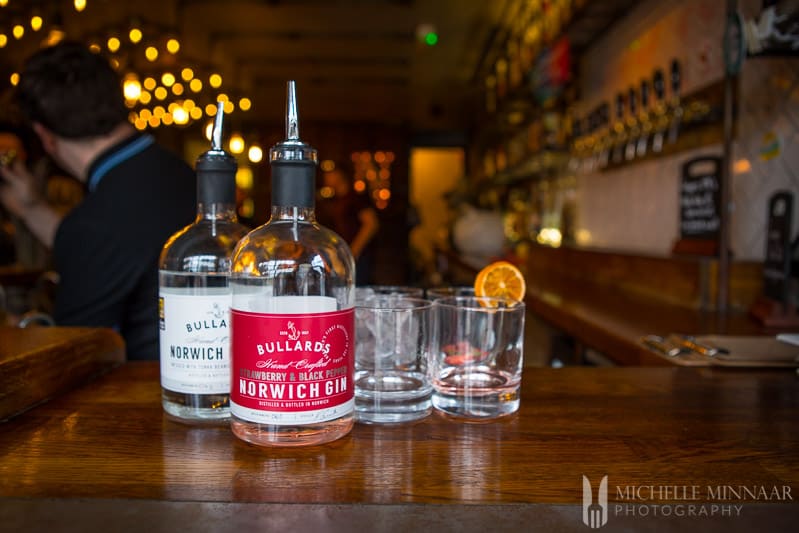
18.Gin tasting at The Ten Bells

Gin tasting at The Ten Bells is definitely a unique experience and should be one of your top foodie things to do in Norwich. The Ten Bells pub has been open since the 1700s and contains over 100 quality gins, spirits and whiskeys. You’ll also find fine ales and wines to whet your appetite, too.

The Ten Bells houses Norfolk’s 1st ever gin distillery. The distillery management offers many tours which also include gin-tasting sessions. You can easily make a booking here.

19.The Upmarket Fleamarket

The Upmarket Fleamarket first opened in February 2015. It is a relatively new market located at the impressive St Andrew’s Hall. It offers a mix of goods, from antiques to collectables and much more. The fair takes place every month on a Saturday. Check out the next event here.

Best places to eat in Norwich

20.Grosvenor Fish Bar, Norwich

If you haven’t already figured it out, this restaurant has the city’s best fish and chips. You’ll also find other hip and quirky items on the menu that will make you salivate in an instant. So check out my review of this amazing eaterie on the Norwich Lanes here.

21.Namaste India

Get your teeth into an authentic Indian meal by dining at the fabulous Namaste India. It is an award-winning meat-free Indian restaurant that’s worth its salt.

22.Benedicts

This is the best restaurant in the entire city, located on St Benedicts Street. It is an upper scale restaurant serving modern cuisine, beautifully presented every time. They cater to all types of special dietary requirements and have an interesting course menu. To date, the restaurant has won multiple awards and is the place to eat in Norwich!

23.Ice Cream at Café Gelato

Indulge in the creamy goodness of the Café Gelato! As the name insists, it is one of the best ice cream shops in Norwich. Don’t miss out on sampling authentic Italian gelato while in Norwich.

24.The best vegan restaurants

A vegan food revolution is taking place in Norwich! Now vegans can easily find a nutritious and delicious meal which is 100% vegan.

25.Top vegetarian restaurants

There are many veggie restaurants to choose from when it comes to eating an excellent meat-free meal! In fact, there are many vegetarian eating places in Norwich for your delight. These include cafés, fine dining restaurants and market stalls.

Best Way to Travel to Norwich, Norfolk, UK

A big thanks to Greater Anglia for providing me with a first-class travel ticket. Admittedly, this was my first time travelling on a first-class ticket and I enjoyed every single moment of my journey. Otherwise, Greater Anglia offers daily train journeys between London, Liverpool Street and Norwich – every 30 minutes! You can get an advanced fare from £10 each way. Altogether, the entire journey takes just under 2 hours.

Best Accommodation Holiday Inn – Norwich City

I was a guest at the Holiday Inn – Norwich City Hotel which was perfectly situated. Elegant rooms and stylish bedrooms make this hotel one of the best accommodations to choose from in Norwich. The hotel has 150 air-conditioned modern bedrooms including 24 Executive Rooms, 4 Suites and 8 Accessible Rooms. All of these offer high-speed internet access, LCD TV, hairdryer and tea/coffee-making facilities. The hotel facilities include a Fitness Centre, Restaurant and Lobby Bar. Finally, the best part is that it is only a 10-minute walk from Norwich city centre, making it almost at the heart of the city.

Also, a big thanks to staff at Holiday Inn – Norwich City Hotel for making our stay very enjoyable.

Holiday Inn Norwich City | Carrow Road | Norwich| NR1 1HU

hinorwichcity.co.uk

P.S. I was a guest of Norwich Tourism Board.

July 1, 2025 Uncategorized

36 Best Things To Do In Gran Canaria

Forget the Trip Advisor list of things to do in Gran Canaria. This list of 36 things to do in Gran Canaria is far more personalised and informative than any other article online. You’ll learn all there is to know about the what to do in Gran Canaria. In addition, here you can read about the top attractions (with price lists included) and the best places to eat on the island of Gran Canaria. This list of 36 things to do in Gran Canaria will prepare you for your next trip to the Canary Islands, no matter what time of year you visit. So, keep reading to find out more.

36 best things to do in Gran Canaria

Many people can’t imagine life without traveling. Especially since money for travel can be taken from au free slots bonuses here.

If you love to plan your trip well in advance, then this list of 36 things to do in Gran Canaria is definitely for you. This list of the best things to do in Gran Canaria is divided into the following sections:

  • top must-see attractions in Gran Canaria
  • top things to do in Las Palmas
  • visit the Gran Canaria beaches
  • top place to stay in Gran Canaria
  • top adventurous things to do in Gran Canaria
  • best foodie things to do in Gran Canaria
  • top vegan restaurants and vegetarian restaurants in Gran Canaria for those who require special-diet menus

The above-mentioned information is from my personal experience visiting the island of Gran Canaria.

about the island of Gran Canaria

The island of Gran Canaria is one of Spain’s Canary Islands located off the northwest coast of Africa. It’s the third largest island and home to the capital city of Las Palmas de Gran Canaria. The island has a hot, desert climate with warm temperatures all-year-round. That’s why Gran Canaria is one of the best vacation destinations, even in the winter time.

I had a lovely time discovering the local gastronomy, learning about the island’s rich history and more. I hope this list of things to do in Gran Canaria will inspire you to visit this lovely island. It’s only a short flight away!

If you want to personally plan your trip as well as be shown around by a professional tour guide, then click here. There are plenty of experiences that were organised by Trip Gran Canaria which are included in this list of top 36 things to do in Gran Canaria. Trip Gran Canaria is the best at organising guided tours around the island, so make sure you check out the different routes and expeditions they do. You’ll have tons of fun exploring different parts of the island.

top must-see attractions and things to do in Gran Canaria

1. Explore the sand dunes of Maspalomas

The Maspalomas sand dunes are one of the most popular attractions on the entire island. They make a stunning sight – 404 hectares of huge sand dunes that one can also enjoy from the nearby beach. I highly recommend taking a walk on the dunes by the sunset. It is truly an extraordinary experience that is very hard to come by on the continent. Dare to ride the sand dunes by camelback or horseback?

2. Watch the sunset from the Maspalomas lighthouse

This is one of the most popular viewpoints when it comes to sunsets. The Maspalomas lighthouse is still in operation today as an active lighthouse. It is located on the southern side of the island. In addition, it is right next to the famous Maspalomas sand dunes and the Maspalomas beach. Today, it is also known for being in the proximity of many bats and shops!

3. Visit the Maipés de Agaete (city of Agaete)

This is one of the most famous Spanish Heritage Sites in the world. Also called the necropolis del Maipes, it is located in the small town of Agaete in the northwestern part of Gran Canaria. The word maipes is derived from the Spanish word which means bad land and, as its name suggest, it is in fact a burial site. It has mounds of earth over graves that date back centuries. Indeed, some of the burial grounds are over 1300-years old and built on lava rocks.

General price: 3€/Reduced price: 2€.
Click here for more information.

4. Go to the Puerto de Agaete

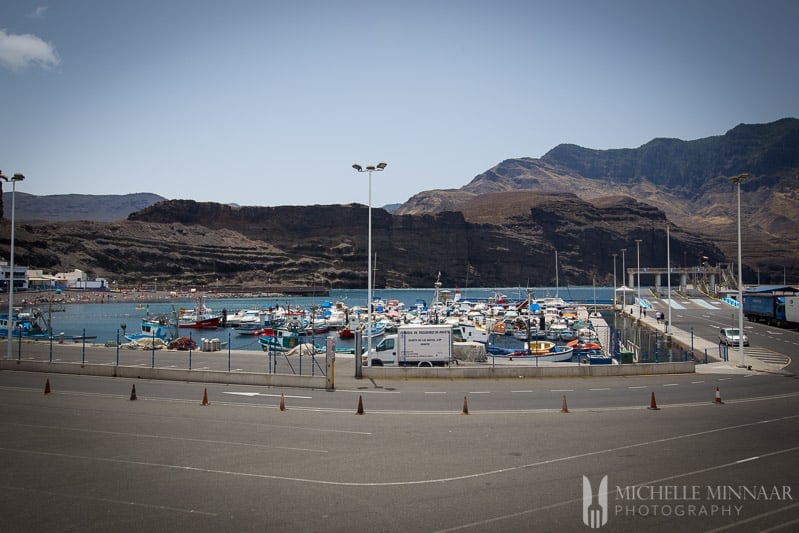
At the Puerto de Agaete, you’ll have the opportunity to take some pictures of the Dragon’s Tail. A stretch of impressive cliffs, seen all together, looks like a dragon’s tail. You can visit this place with the help of Trip Gran Canaria tour guides.

5. See the Roque Nublo

Explore this ancient volcanic rock formation that has become one of the iconic attractions on the island. In fact, it is almost 70 metres tall, and 1,800 m above sea level. In essence, it is a striking geological site that offers many scenic trails along the way. Don’t miss out on Roque Nublo. It’s located at the heart of Gran Canaria.

6. Visit the Caldera de Bandama

The Caldera de Bandama is a 1,000 m volcanic crater that offers breathtaking hiking trails. At the bottom of the crater, one can find different colours and variations of volcanic ash. It is also the meeting point of three different Gran Canaria provinces.

7. Go marvel at the Painted Cave – Archaeological Museum in Gáldar

Located in the town of Galdar (in the northwestern part of Gran Canaria), this Painted Cave Museum is a must-see! Firstly, it is also known as Cueva pintada. Inside the cave, you’ll find paintings from the pre-Hispanic Canaries era. It is considered as the islands’ ‘Sistine Chapel’ by its inhabitants. This museum site also displays artefacts from a group of excavated caves in which aboriginals kept and used products, utensils, etc. A trip to the painted cave can be organised by Trip Gran Canaria tour guides.

General price: 6€/Reduced price: 3€.
For more information, click here.

8. Visit the Archaeological site, Cenobio de Valerón

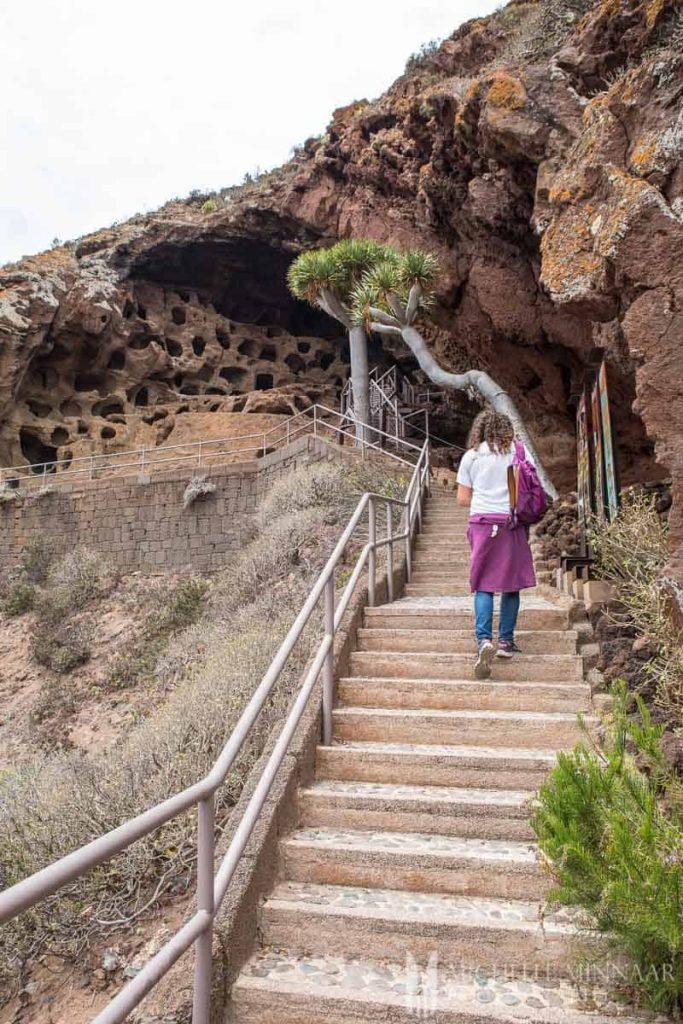
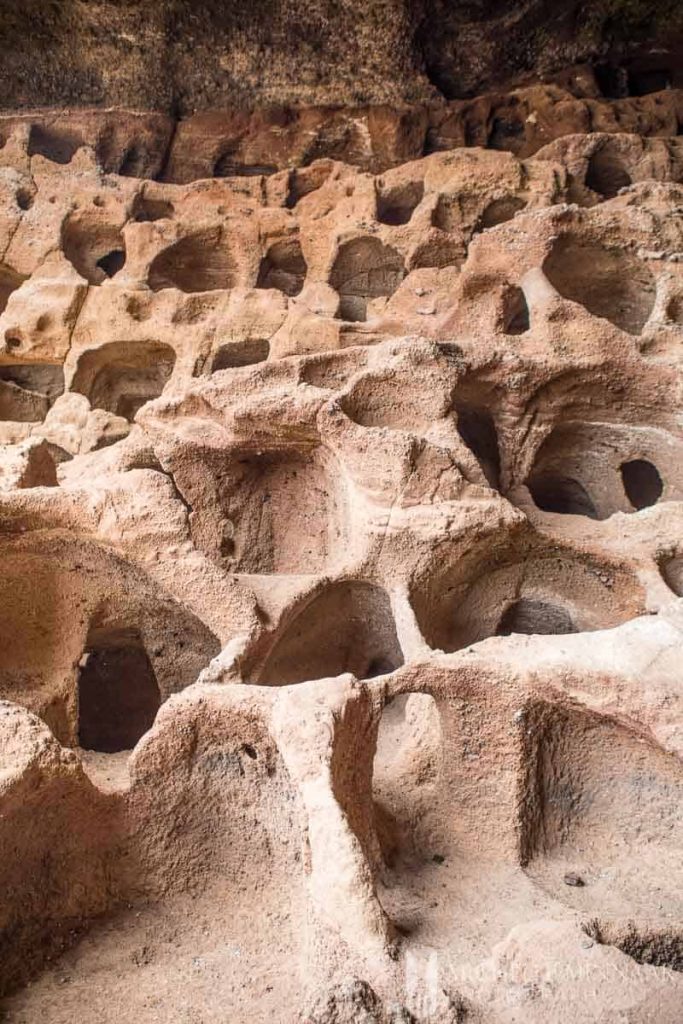
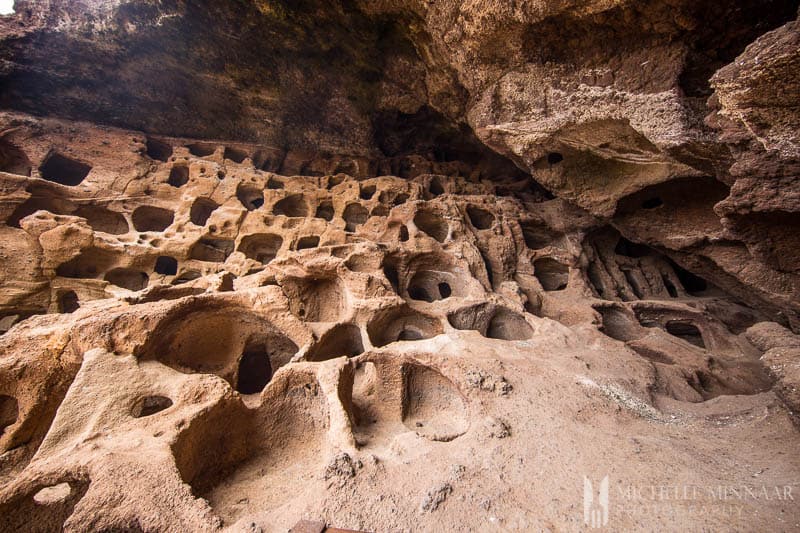
The Caves of Valeron are an archaeological site and a monastery. The caves are located in Santa Maria de Guia. The caves were built before Roman times and today form one of the most popular cultural sites (a collective granary system of caves on several levels). Originally, the Romans believed it to be a location where the harimaguadas (spiritual ladies dedicated to religious life) lived. From that idea comes the name Cenobio (monastery, convent). This trip was organised by the Trip Gran Canaria tour guides.

General price: 3€/Reduced price: 2€. For more information, click here.

9. Visit Gáldar, also known as the City of Kings

When the first conquerors arrived at Gran Canaria, the island was divided in two guanartematos or kingdoms: Gáldar (or Agaldar, as the indigenous knew the area), that controlled the centre, north and west, and Telde, that controlled the south, east and part of the centre. From that division, Gáldar emerged from the strongest and principal kingdom. Today, it is considered one of the best pre-Hispanic villages on the island.

10. Follow Christopher Columbus at the Casa-Museo de Colón

Located in Las Palmas, the Casa de Colon is rumoured to have once housed Christopher Columbus. Today, it remains a popular landmark displaying Canarian architecture, offers views of ancient nautical maps and much more.

11. Visit the Palmitos Park

This is the largest zoological park in the Canary Islands. It is an excellent experience that’s also family friendly. You can enjoy some time petting dolphins and much more. Click here for more information.

12. Visit Poema del Mar

A must-see attraction while you are on this island! It has the world’s largest fish tank and offers breathtaking views in a fish tunnel and more. Explore the aquatic lives of the sea creatures and different marine species.

The Poema del Mar aquarium, one of the things to do in Gran Canaria.

20 best things to do in Las Palmas de Gran Canaria

13. Visit the city of Las Palmas

Check out my list of 20 best things to do in Las Palmas and discover this incredible city. Visiting Las Palmas is a must while you are visiting the island of Gran Canaria.

visit the Gran Canaria beaches

First and foremost, let’s start with the most popular beaches which should be on your list of things to do in Gran Canaria.

14. Sunbathe at Playa del Inglés

This is the island’s 3rd longest beach, with a length of 2.7 km. Furthermore, it’s one of the most popular beaches to visit on the island.

15. Relax at the Maspalomas beach

This is the neighbouring beach to Playa del Inglés. Surrounded by sand dunes, it is one of the most iconic beaches. Perfect for a lovely stroll at sunset.

16. Stay at the Puerto Rico beach

A very relaxing, enclosed beach with stunning views. It carries a Caribbean vibe.

17. Enjoy the Amadores beach

Only 20 minutes away from the Puerto Rico beach is the Amadores beach. The shallow waters and the constant sunshine make this one of the warmest and sunniest beaches in Gran Canaria. Beautiful clifftops right along the beach.

18. Swim at the Las Canteras beach

This is the longest beach on the island – 2.8 km. It is a very lively beach right in the capital city, the busy port of Las Palmas. So, you can enjoy the city of Las Palmas and its beach, too.

19. Enjoy the nature at Güigüí beach

One of the most beautiful natural beaches on the island. Given the difficulty of getting there, this beach is perfect if you like beaches that are less crowded. Stunning views encompass the setting of the beach and cliffs.

20. Feel like royalty at the Anfi del Mar on the Playa de las Teresitas

One of the most beautiful man-made stretches of beach. This is true paradise. Enjoy the turquoise waters, along with palm trees, flowers and much more.

top place to stay in Gran Canaria – visit the best hotel on the island

21. Stay at the best hotel in Gran Canaria

Indisputably, the best hotel thus far in Gran Canaria is the Bohemia Suites & Spa Hotel. This adult-only hotel is perfect for vacationers looking for some peace and tranquility. Luxury and 5 star customer service are exemplified in this hotel and, as such, the Bohemia offers many things to do! It is undeniably the best place to stay (and also to dine) on the island of Gran Canaria.

22. Relax at the Siam Spa

If you are vacationing, then one of the top things to do on the island is to go to a spa. Why don’t you visit the Siam Spa at Bohemia Suites & Spa?

23. Dine at the 360 Restaurant

This is the best restaurant on the island, offering a very high-end dining experience with panoramic views of the ocean – all while sampling local cuisine. Top quality ingredients and top quality food guaranteed!

24. Drink the best cocktail of your life at the Atelier Cocktail Bar

Honestly, this was the best cocktail of my life! They offer interesting twists on classic cocktails. Enjoy and sip away in a modern lounge environment. This is one of the most decadent experiences you will have during your stay in Gran Canaria.

25. Take free masterclasses available to guests of Bohemia Suites & Spa

You can take part in these masterclasses:

  • Photography
  • Cuisine
  • Cocktails
  • Gardening
  • Cava tasting
  • Champagne tasting
  • Distilled drinks tasting
  • Hand massage
  • Homemade lotions

Naturally, I also took part in a cookery masterclass, see the video below. It was here, as well as discovering the local Canarian cuisine and using local ingredients, that I learnt how to gut and prepare fish from scratch. As such, I’ve mastered this grilled bonito recipe and this grilled wreckfish recipe.

top adventurous things to do in Gran Canaria

If you feel like doing something adventurous, the Bohemia Suites & Spa Hotel organises exclusive trips for its guests. Pick one these 36 things to do in Gran Canaria and add a little adventure to your vacation.

26. Go fishing for Bonito

First, I took the opportunity to go on a fishing trip for Bonito with the company Fish On! (organised by Bohemia Suites & Spa Hotel). To sum up, it was an experience of a lifetime during which I learnt how to catch Atlantic Bonito. In addition, I also discovered how to prepare the fish via a masterclass (also organised by the Bohemia Suites & Spa Hotel).

27. Go on an exclusive trip with a chauffeur

Why not indulge in a private tour of the island in the comfort of a chauffeur-driven car? Bohemia Suites & Spa Hotel can organise this for their guests exclusively.

28. Play golf at the Caldera – Real Club De Golf de Bandama

This is the oldest golf course in Spain – the Real Club de Golf de Bandama. It dates back from the end of the XIX century. Due to the presence of the golf course, the huge basin of the Caldera is known as “the nineteenth hole”. The area was named after Daniel Van Damme, a Belgian citizen who in the XVII century planted grapevines in the volcanic soil, known here as picón. This was organised by the Trip Gran Canaria tour guides.

29. Go on a helicopter tour

Do you enjoy looking at the island’s exotic scenery from above? See the entire island in an adventurous helicopter ride and see just how beautiful this idyllic land is. Bohemia Suites & Spa Hotel can organise this for their guests exclusively.

30. Go on a private sailboat or yacht tour

By going on a private yacht or sailboat tour, you are guaranteed to enjoy the best view of the island’s stunning cliffs and nature from the ocean. Also, it is highly likely you’ll encounter dolphins or whales while cruising the waves. Bohemia Suites & Spa Hotel can organise this for their guests exclusively.

31. Go on a buggy tour

Enjoy a buggy tour on the famous Maspalomas sand dunes. This activity rates highly as one of the top things to do in Gran Canaria. Bohemia Suites & Spa Hotel can organise this for their guests exclusively.

32. Go star-gazing

Many people don’t think of this, but since the island is so remote from the African coast, it holds some of the best views for star-gazing. Don’t miss out on this incredible opportunity. Bohemia Suites & Spa Hotel can organise this for their guests exclusively.

best foodie things to do in Gran Canaria

33. Visit the Los Lirios Cellar (Bandama)

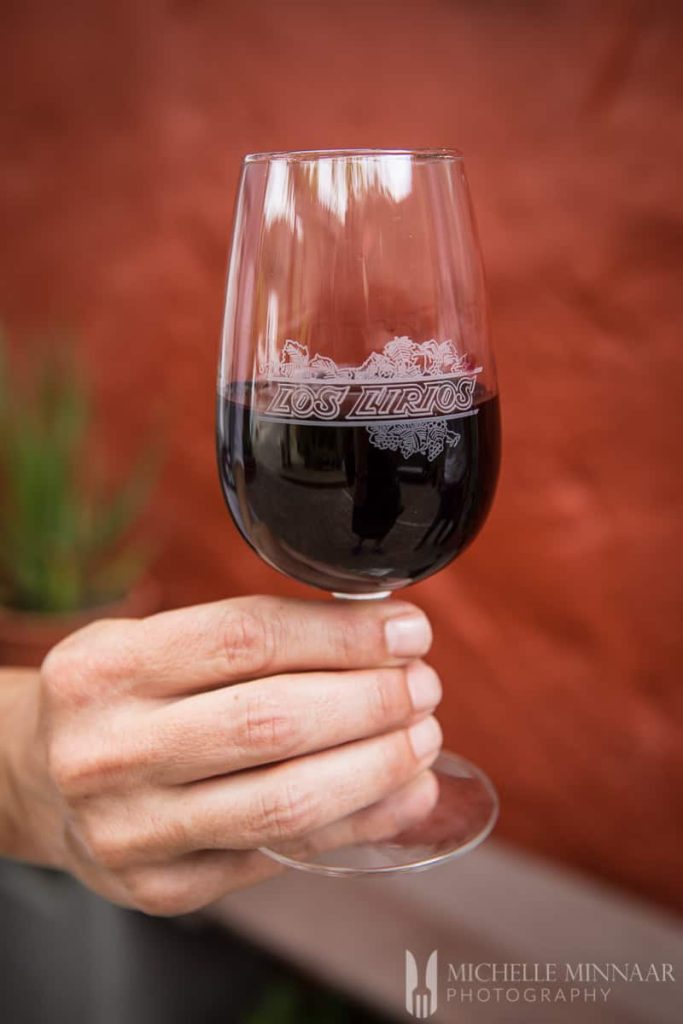
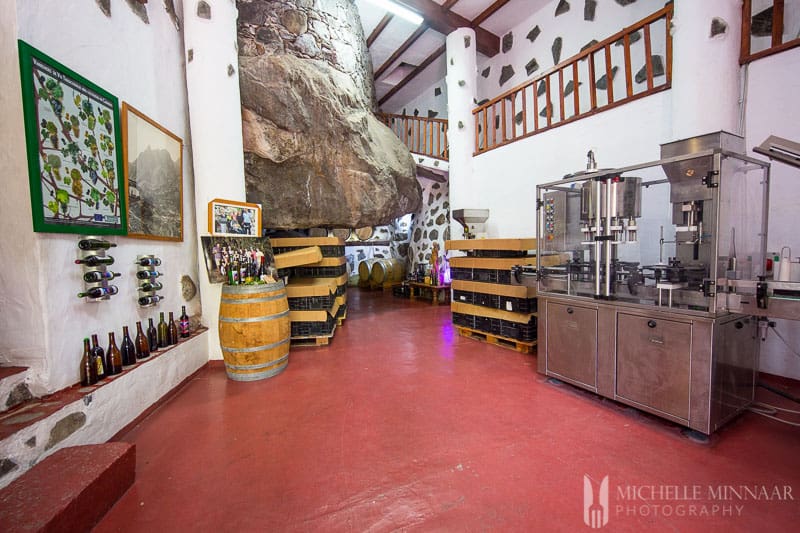
We visited Los Lirios Cellar, one of the biggest on the island at 70,000 sqm. They use two different ways to cultivate the grapes without any use of chemicals. The grapes are planted in the “picón” (common name, lapilli or lapili). Our guide there was called Yurena.

The cellar is close to Bandama Caldera, a crater of 200 m depth and 1000 m diameter, formed between 4000 and 5000 years ago. The caves in it were used by “aboriginals” to store various products. Later, its fertile volcanic soils were found to be ideal for supporting the cultivation of crops such as grapes. The caldera is also recommended for a stiff hike. For more information, see the Santa Brígida cellar and vineyard Los Lirios. This was organised by the Trip Gran Canaria tour guides.

34. Visit the La Laja coffee plantation and cellar in the Agaete Valley

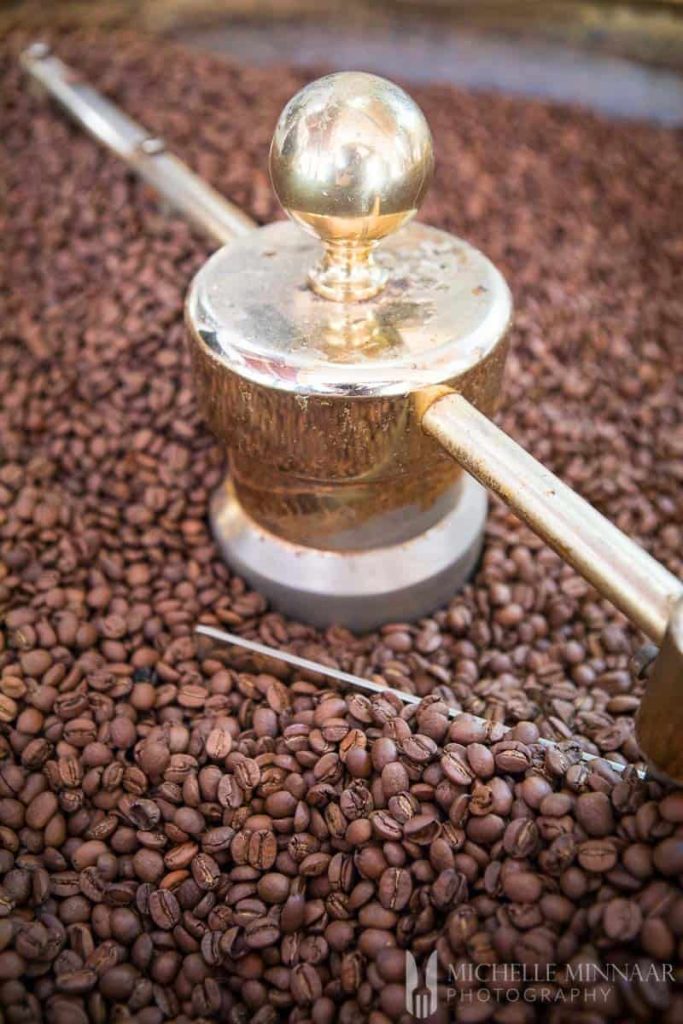
The La Laja plantation is located in Los Berrazales (Agaete Valley). There, we saw some of the various products growing in that plantation, though their principal products are the coffee and wine. The kind of coffee they have is natural and typical Arabica, which is considered as the best. Also, they produce seven different wines. Our guide there was Ulises, and we also met the plantation’s owner, Víctor. Here, I had the opportunity to taste their coffee marmalade with their cheese. This was organised by the Trip Gran Canaria tour guides.

After that, we went for lunch in a restaurant on the north coast. We tried the pepper of Padrón, fried cheese with tomato marmalade, and octopus gallego style. For dessert, we enjoyed a lovely bizcocho de Moya mousse.

For more information,  see the coffee plantation and cellar La Laja. Open every day from 10:00 to 17:00.

top vegan and vegetarian restaurants in Gran Canaria

Again, what could be better than discovering the local cuisine of Gran Canaria as well as other cuisines available to the island? Being a foodie, I took the opportunity to visit some of these vegan and vegetarian restaurants on the islands, proving that the island caters for all appetites. It certainly made my transition to becoming a vegetarian a lot smoother, and I didn’t have to worry about eating out. In essence, there was plenty to choose from.

35. Eat at one of the top vegan restaurants in Gran Canaria

If you are striving to eat vegan-only or you know someone who is vegan, then you needn’t worry, as the island is full of amazing vegan restaurants that cater to all types of special diet.

36. Eat at one of the top vegetarian restaurants in Gran Canaria

Another excellent fact about the island of Gran Canaria is how well it caters for vegans and vegetarians. Particularly of note, even if a restaurant is not specifically vegetarian, many offer vegetarian options on the menu.

July 1, 2025 Uncategorized

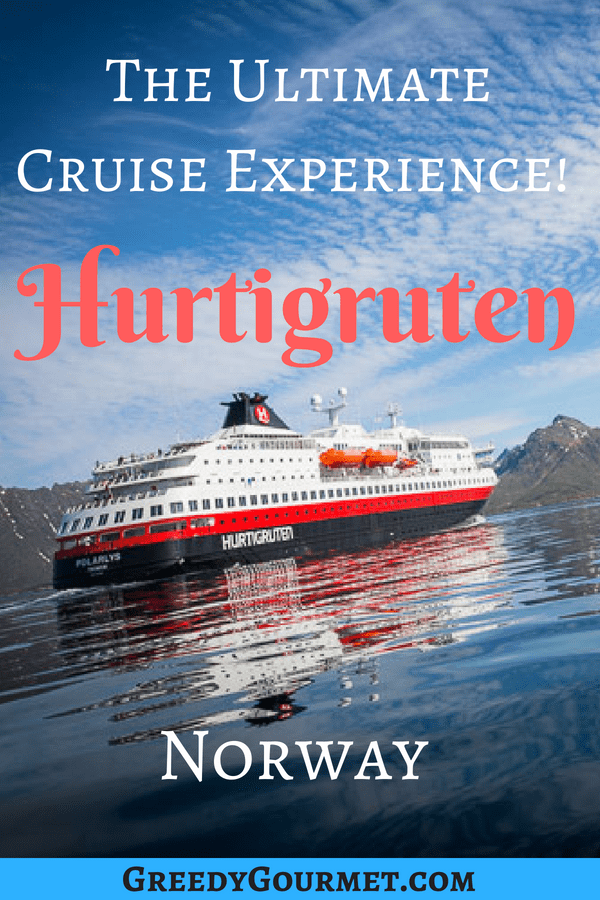
Hurtigruten’s Classic Voyage Cruise

Explore Norway and its raw, rugged and natural beauty with Hurtigruten’s Classic Voyage cruise.

Truth be told, I never would have visited Norway if I weren’t invited. Earlier this year, I had a choice of 16 European cities to travel to. Still reeling from the Beast of the East, I looked for the most southern city on the list, which happened to be Lisbon and traveled there, happy as a clam.

Since UK isn’t renowned for its glorious weather, my natural inclination is to opt for warm destinations.  I don’t know about you, but I certainly recognise that at times I need to expand my comfort zones a bit. In this case I travelled the most north I’ve ever been, well within the realms of the Arctic Circle. Not only did I brave the cold but also lost another virginity – going on a cruise ship.

Amongst younger generations the stereotypical image of a cruise is filled with imagery of retired, old people playing bingo between ports, hoping to squeeze the most out of life before they kick the bucket. As I were to find out, this wasn’t necessarily the case.

Hurtigruten might be well known in Scandinavia and in some parts of Europe, but not so much so in the UK. This isn’t just any kind of cruise company who decided to get in on a quick buck with the growing demand for cruise holidays.

If I had to come up with an analogy it will be to compare Dubai to Rome. A lot of money has been thrown at the middle of the desert to create a booming tourism industry, where entertainment and shopping abound and you can even bizarrely partake in activities such as skiing. Fun? Yes. Does it have a soul? No.

Rome is steeped in history, and if you remove one layer, you’ll find another underneath, and another. History, architecture, food. You can spend a lifetime there and still discover surprising facts about this ancient city.

Huge, purpose-built cruise liners sail the seas all across the world on a daily basis. These floating resorts provide entertainment, in various forms, around the clock serving food that will satisfy every palate. What’s not to like?

Yet, Hurtigruten is where the soul is at. It all started in 1893, coastal steam liners, where transport links were created to create a closer-knit community between the coastal cities. Not only did the boat transport goods, such as skrei (fish) to the different ports, but mail as well. People came later and its onboard facilities improved and organically evolved into what it is today. More specifically, the captain that established these routes from north to south was called Richard With. Today, the history of Hurtigruten celebrates its 125th year!

Hurtigruten’s history

Back in the late 19th century, coastal travel was limited, especially between the cities of Trondheim, Tromsø and Hammerfest. At that time, there were only 28 lighthouses in the area which made travel very difficult and hazardous. Seas can get rough in these areas and lighthouses are needed for guidance.

In 1893, the Vesteraalen’s Steamship Company decided to tackle this problem. With Captain Richard With’s support, they were able to expand the traffic lines from Trondheim and Hammerfest all the way to Bergen and Kirkenes. The trip only took 7 days, therefore it was called ‘hurtig ruten’, meaning “fast route”. Hurtigruten!
In 1896 the Captain helped transport a hotel to Svalbard, outside Longyearbyen, with hopes to increase traffic. The hotel called Hotellneset still stands there to this day. In the same year, he established a “sport route”, carrying passengers from Hammerfest and Svalbard. In 1988, due to its popularity, the route expanded yet again to the south of Norway and in 1908, it was possible to go all the way to Kirkenes, which is near the Russian border. With each passing year, the ships expanded their routes and cites like Lofoten and Vesteralen became permanent stops for the ships. Moreover, each year, as with the expansion, the ships saw vast technical advancements in the design of the ships. For example, the cabins were of the first that were fitted with water and had separate ventilation systems.
The number of passengers grew from 230,000 in 1936 to 500,000 passengers by 1949. Today, there are 15 ships in operation, ready to accommodate you on your next Arctic trip. Don’t worry, today the ships have modern facilities, making the Hurtigruten ships a hallmark with respect to travel on the Norwegian coast.

 Transport today

Locals regularly use this form of transport with one such example being mothers of newborns. The further up north you go, the sparser the population and facilities available. Hours away from the closest hospitals, expectant mothers opt more often than not to stay at the hospital from 4 weeks before birth, ensuring the arrival of their babies in the smoothest and safest way possible. The problem comes in when they want to return home but can’t take babies onboard planes because of the health risks posed. In this case, Hurtigruten saves the day by providing safe passage for mother and child. This is just one example of the functional purpose this company serves for the greater good.

There are 15  boats in the current Norwegian fleet offering the Hurtigruten experience. Believe it or not, but it actually is a large number of ships considering their size and vast service offerings. The Polarlys, which I went on, accommodates 35 cars as well, which makes Norway ideal for an unforgettable, idyllic road trip. Alternatively, you can let Hurtigruten take the lead when it comes to excursions.

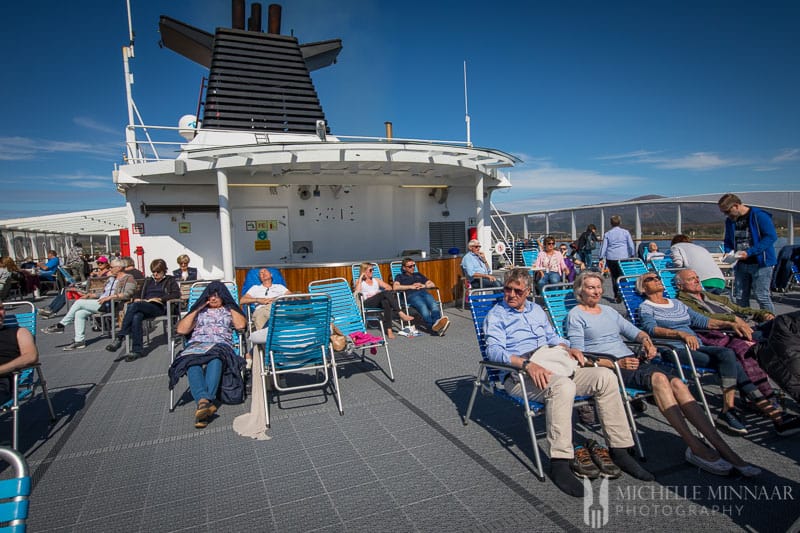
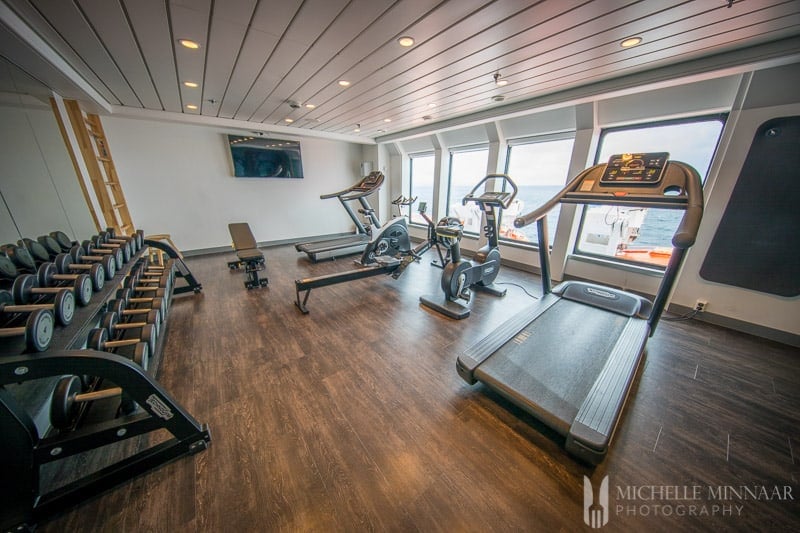
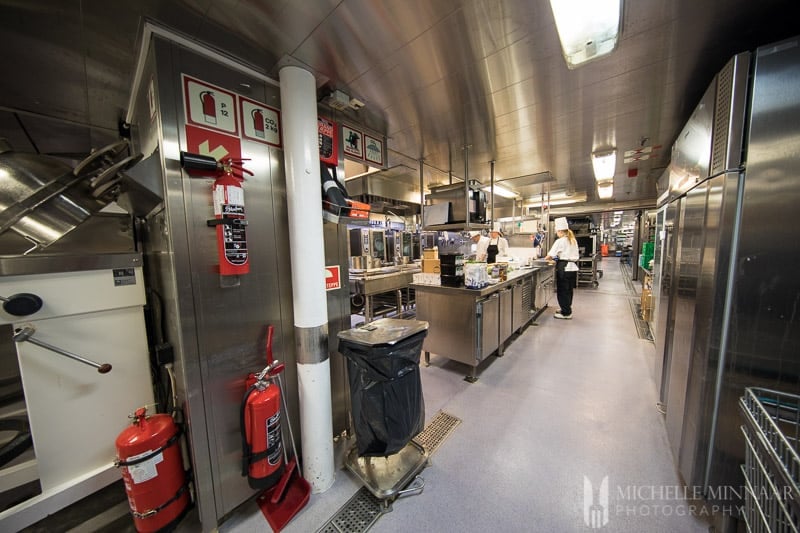
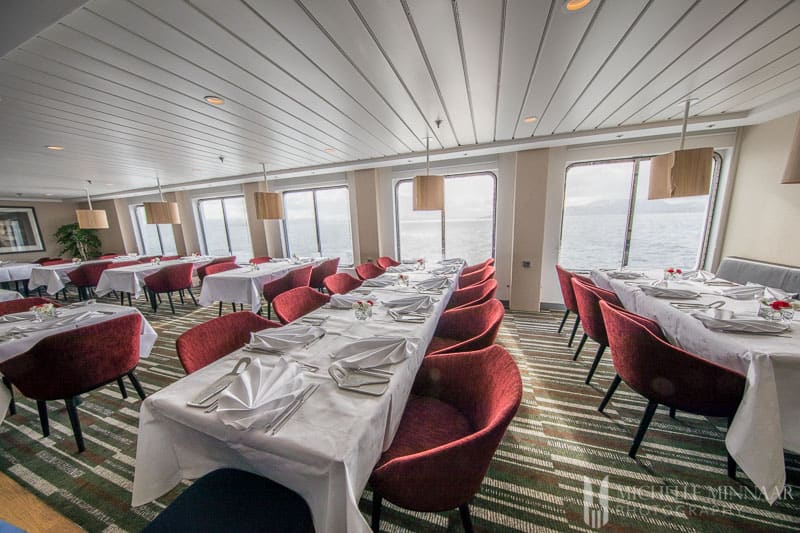
Looking at these photos, you can really grasp just how modern the ship’s facilities are, with hint of true Norwegian authenticity.

Dining on Hurtigruten

The food onboard the Hurtigruten was amazing. First and foremost, there is the open buffet which can accommodate all types of guests. One of my favourite parts was they also had fresh produce from the local cuisine, staying true to its roots! Wouldn’t you want to have freshly caught seafood while you are up there? Only the best!

Some of these delicacies available at the buffet included herring, gravad lax, smoked salmon, cooked salmon and other sea creatures that you can hardly find back home in the UK or on the continent. This is why Hurtigruten is an amazing culinary experience for the biggest foodies and seafood lovers.

Otherwise, the buffet also includes the usual items such as eggs, bacon, baked beans, roasted vegetables, soup, salad ingredients, various sauces, pastas and limited pudding. Overall, the food is overwhelmingly healthy, which is a big bonus.

Hurtigruten also caters for vegetarians, vegans and others on special diets. Even if you are gluten or lactose intolerant, you are covered. The selection is so vast that there is something for everyone to eat. All in all, the buffet is great and it gets a big thumbs up from me.

For a more premium culinary experience,  there is a set menu available at times too where you can indulge yourself in a fancy luncheon or dinner. I had a joint dinner at the ship’s main restaurant “Torget” – enjoying the culinary concept Norway’s Coastal Kitchen.

Norway’s Coastal Kitchen

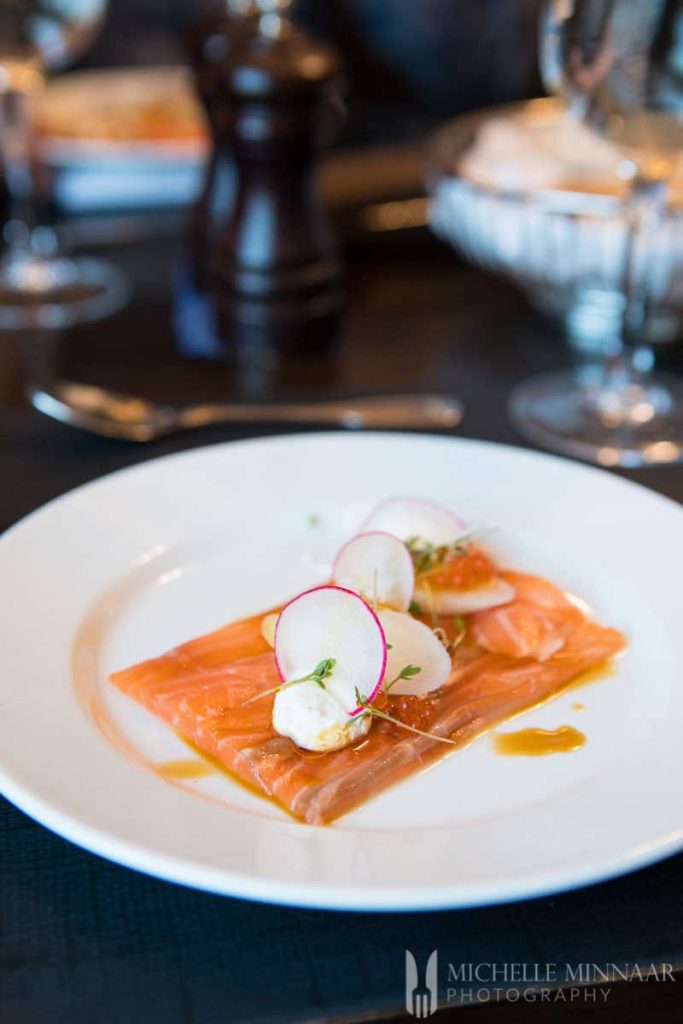
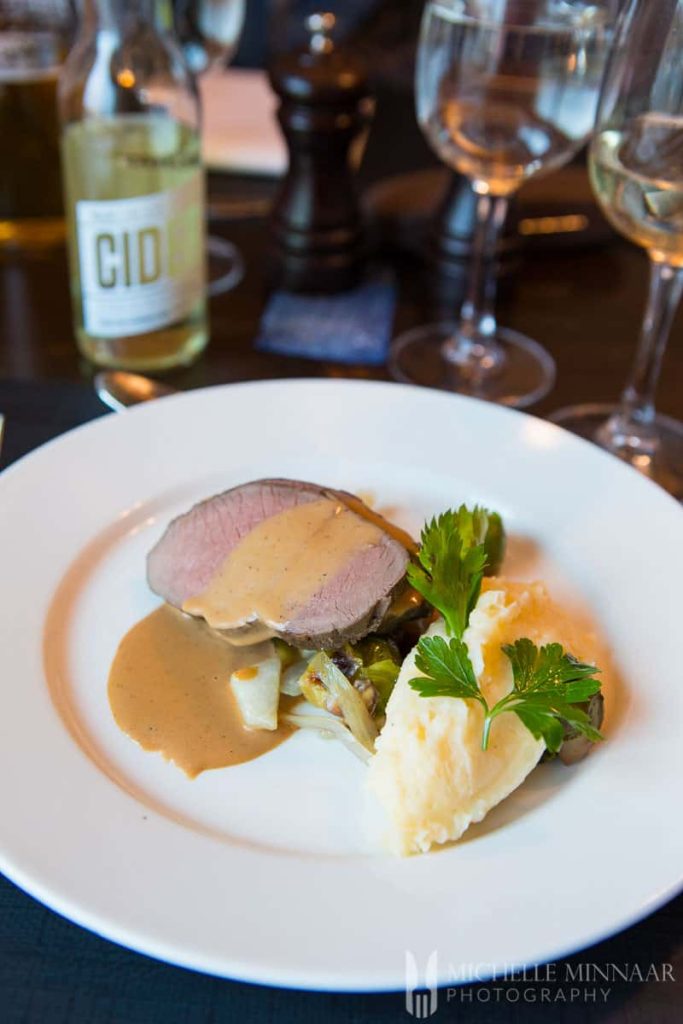
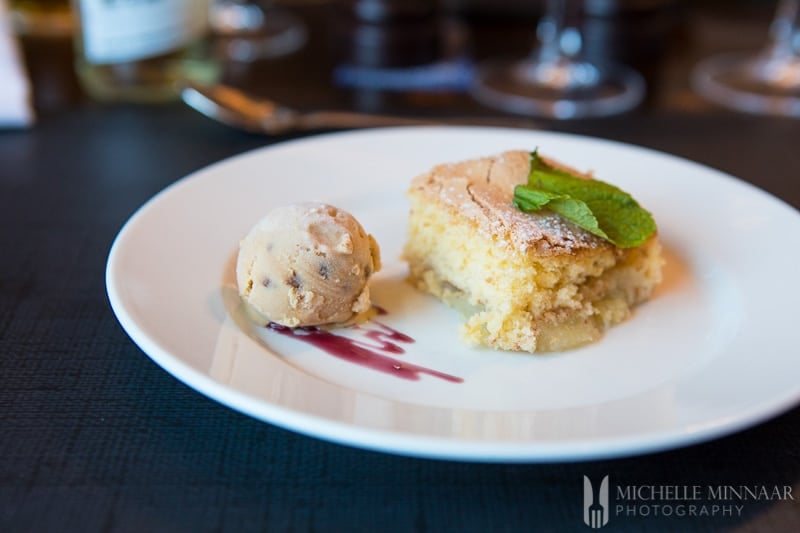
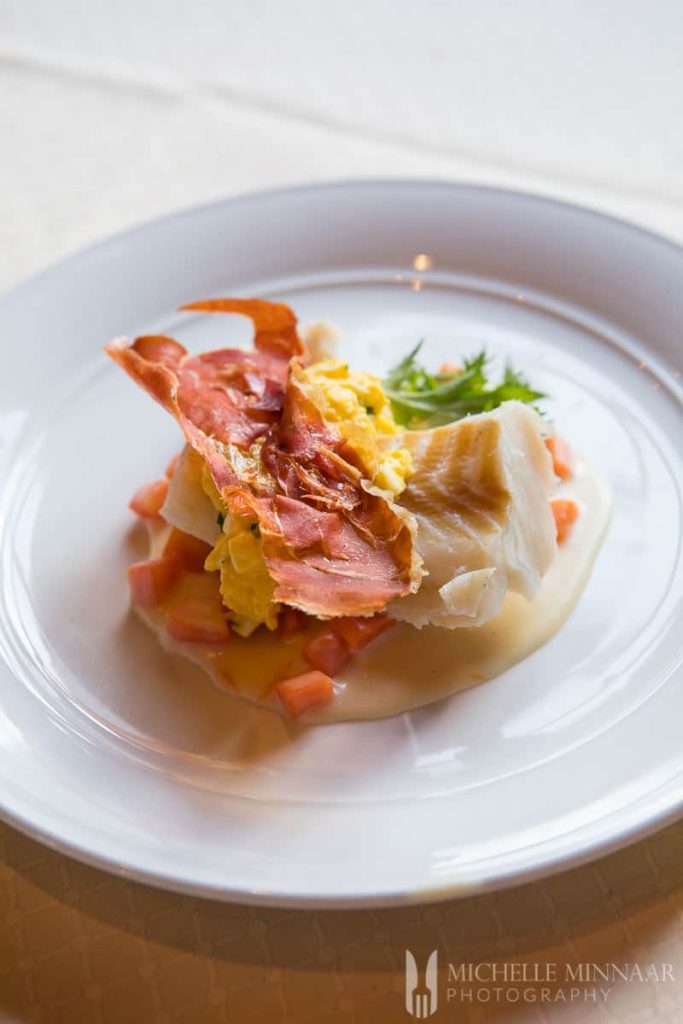
The set menu of the day was cured salmon, venison, and apple cake.

The cured salmon was for a lack of a better word – perfect! The salmon was beautifully cut, showcasing the amazing knife skills of the chefs onboard. Accompanied by some salmon roe, cress and thin slices of radish, this cured salmon disappeared extremely fast from my plate!

Next came the venison main course dish. The venison was cooked just right, with a tender, pinkish center. The gravy was a perfect addition to the meat as well as the potato mash. This is a very common side dish in Scandinavian cuisine.

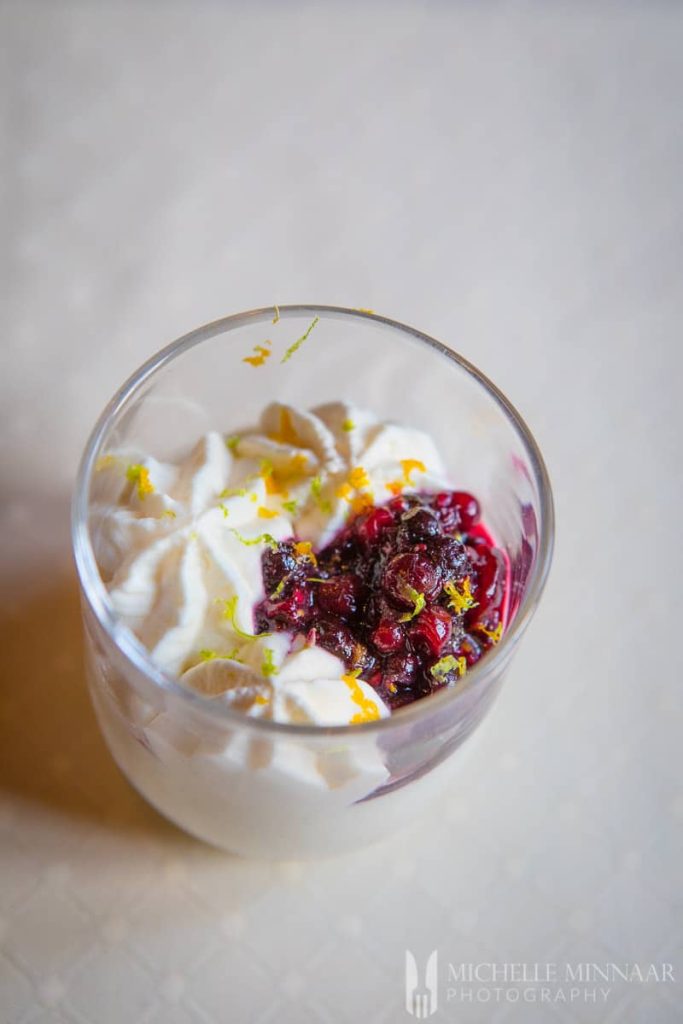
The apple cake was soft in the center, the sponge was moist and it was most enjoyable with a scoop of ice cream.  In my opinion, a very solid restaurant meal onboard a ship.

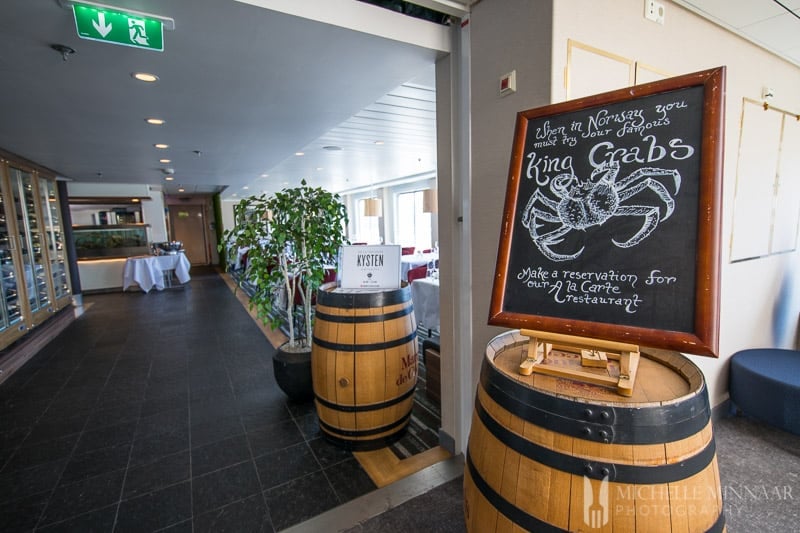
What surprised me even more is the fact that there is an option to go fine dining, where you can order king crab too along with the option of pairing wine with each dish.

Kysten menu

Alternatively, you can also enjoy a dinner at “Kysten”, trying the local specialties and delicacies of the Hurtigruten à la carte menu. Here you’ll find everything when it comes to local cuisine.

Aren’t the views incredible? Imagine a fine dining experience with arctic and coastal views.

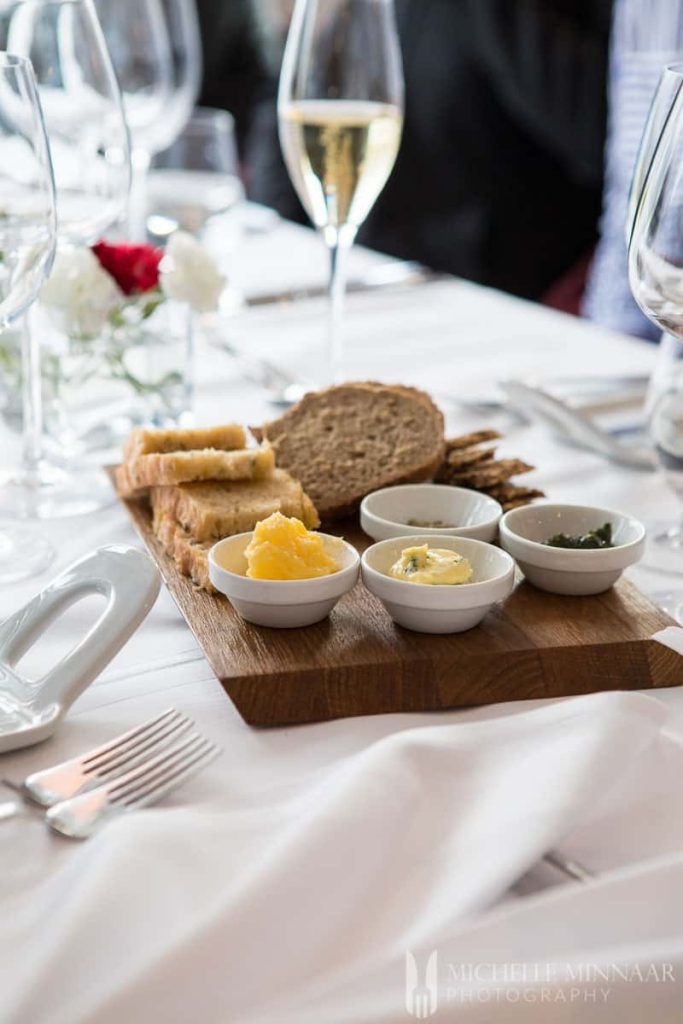
First, it all started with different flavoured butters and fresh bread.

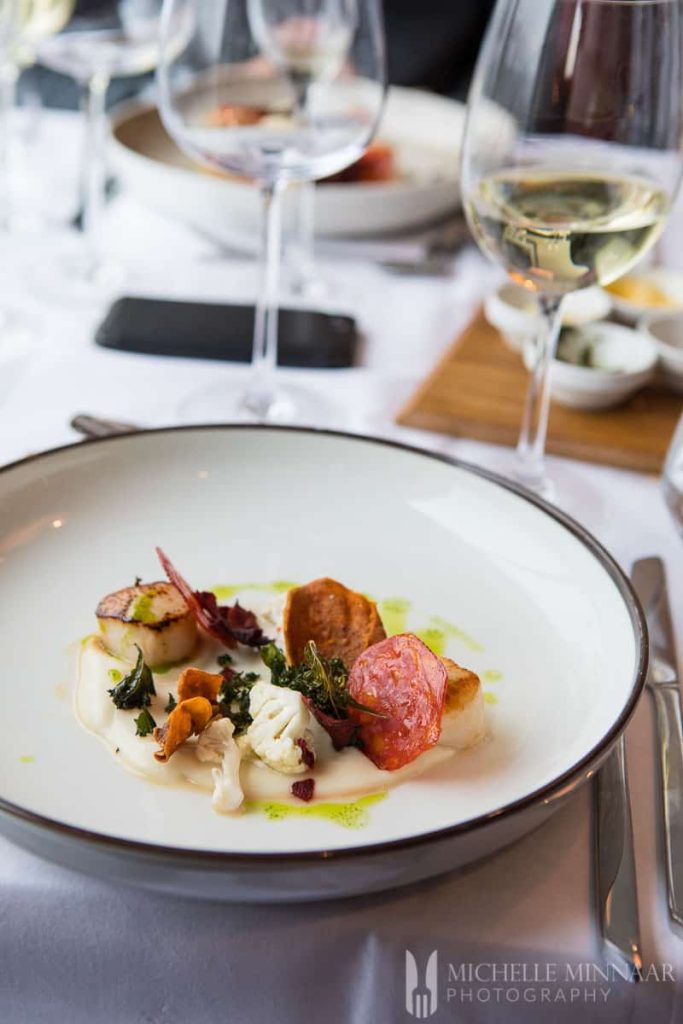
Next came the scallop and chorizo dish which was very well balanced with small portions of seasonal vegetables. Doesn’t this dish look like it came from a Michelin-starred restaurant? Plus, the white wine pairing further enhanced the umami flavours of the scallops and chorizo.

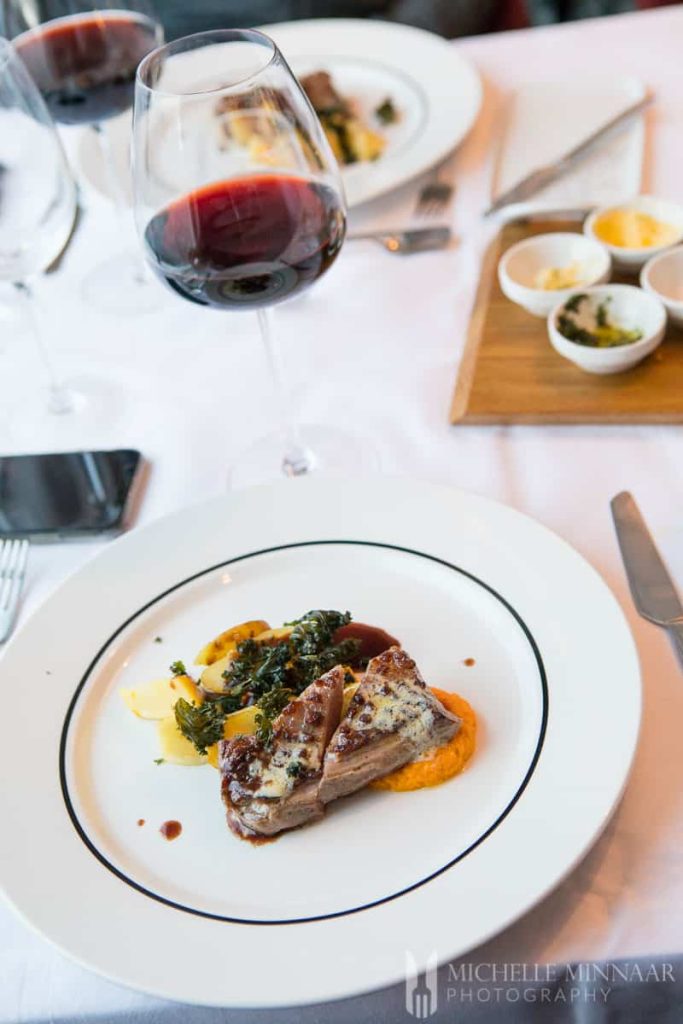
The lamb rump was very memorable and filled me up completely. Don’t be fooled by the portion size, it’s more generous than it appears.

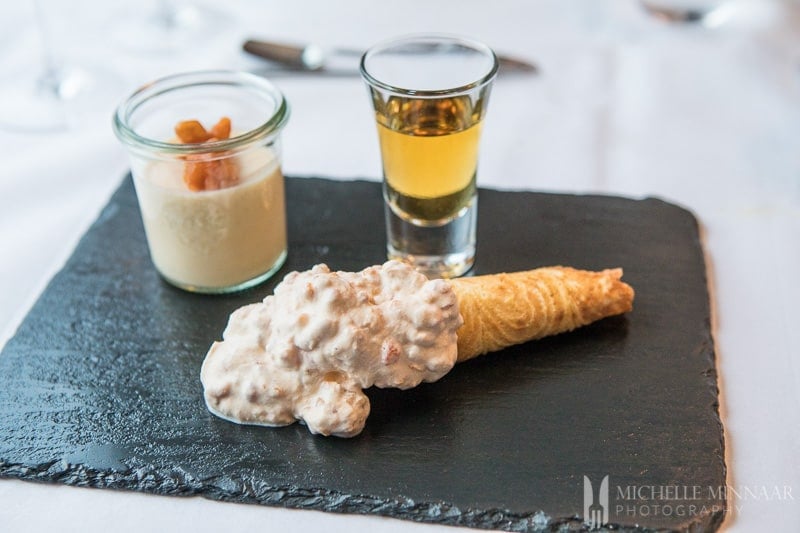
The evening ended with an authentic Norwegian dessert which came with a shot of a little digestive. The waffle was soft and overall the dessert was delicious.

free prawns anyone?

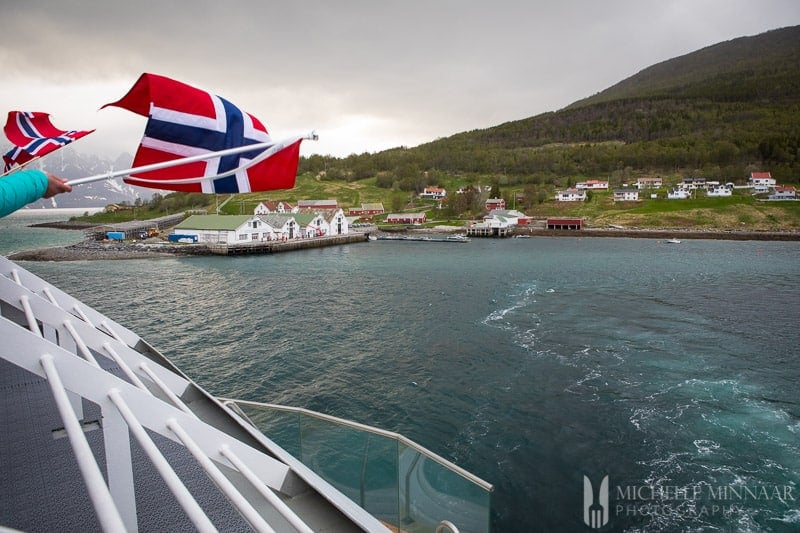
One event I truly enjoyed on board the Hurtigruten was the fact how the passengers were given Norwegian flag. The tourists would then wave at a tiny village, which was a very amicable experience. Traditionally, the villagers wave back at the same time every day of the week and sometimes they even respond with a display of fireworks.

Beforehand passengers are handed a cup of fresh prawns to enjoy on deck.

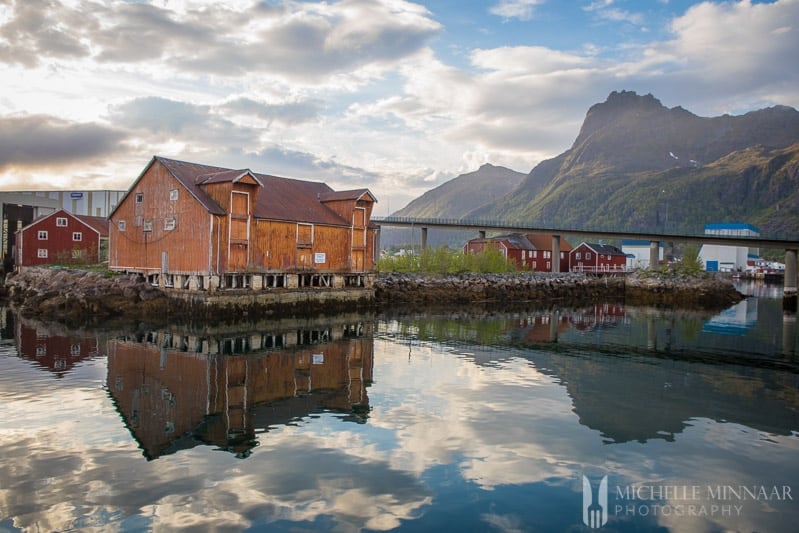
The press trip ended at the MS Polarlys docking at Svolvær where we wished the ship and its crew farewell. In Svolvaer, there was great food and accommodation to be had. For example, I enjoyed a wonderful dinner at the renowned Børsen Spiseri. There again, you have the opportunity to eat amazing local seafood. Just take a scroll through the photos and be the judge yourself.

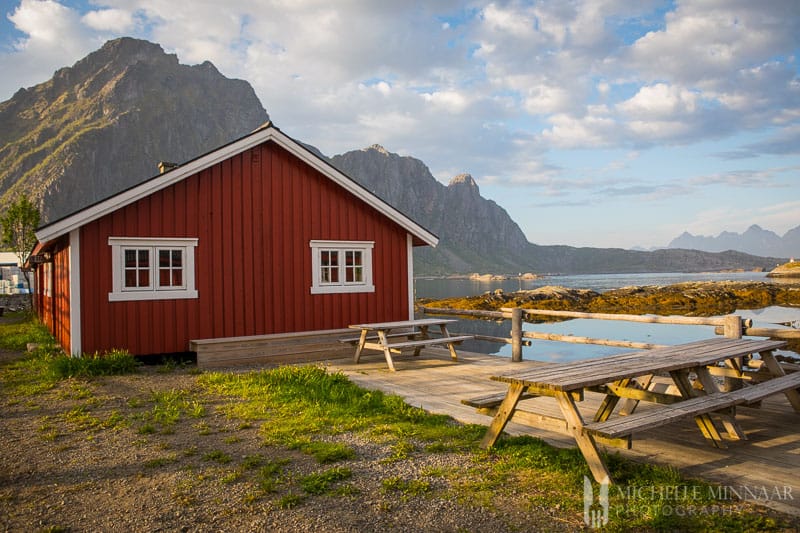
After the meal, I stayed overnight at the cosy and comfortable cabins of Svinøya Rorbu. In my opinion, this little cabin hosted the best views. In the background, as you can see, is a stunning mountain backdrop with scenic views of the lakes.

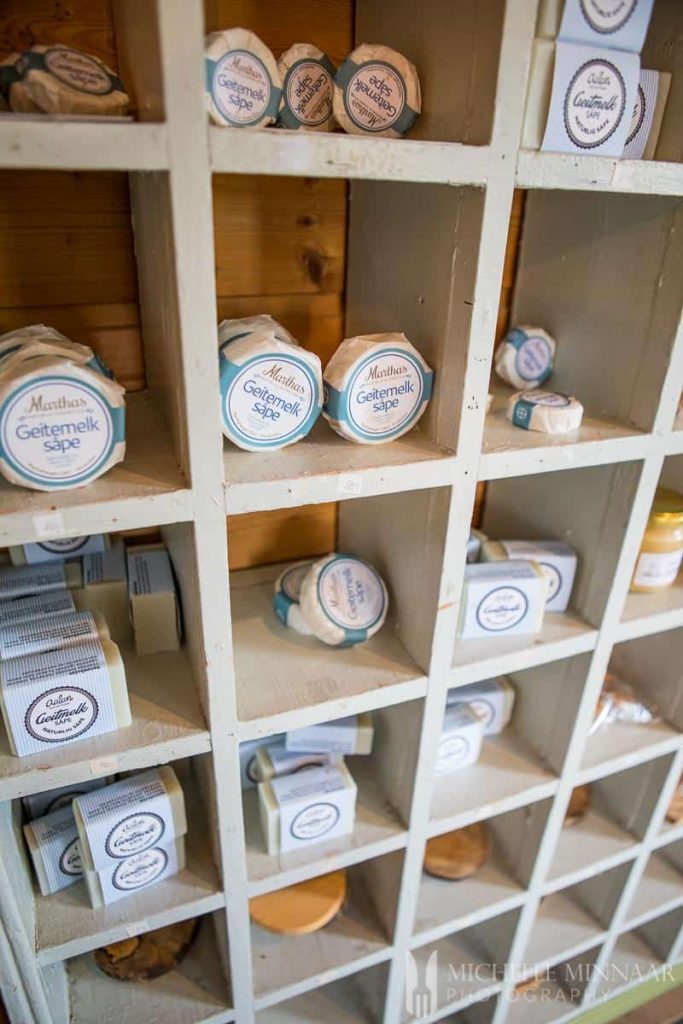
What I really loved about Hurtrigruten is that they are passionate about supporting local producers. These Hurtigruten included Arkt-is and Lofotpils that are both located in Svolvær.

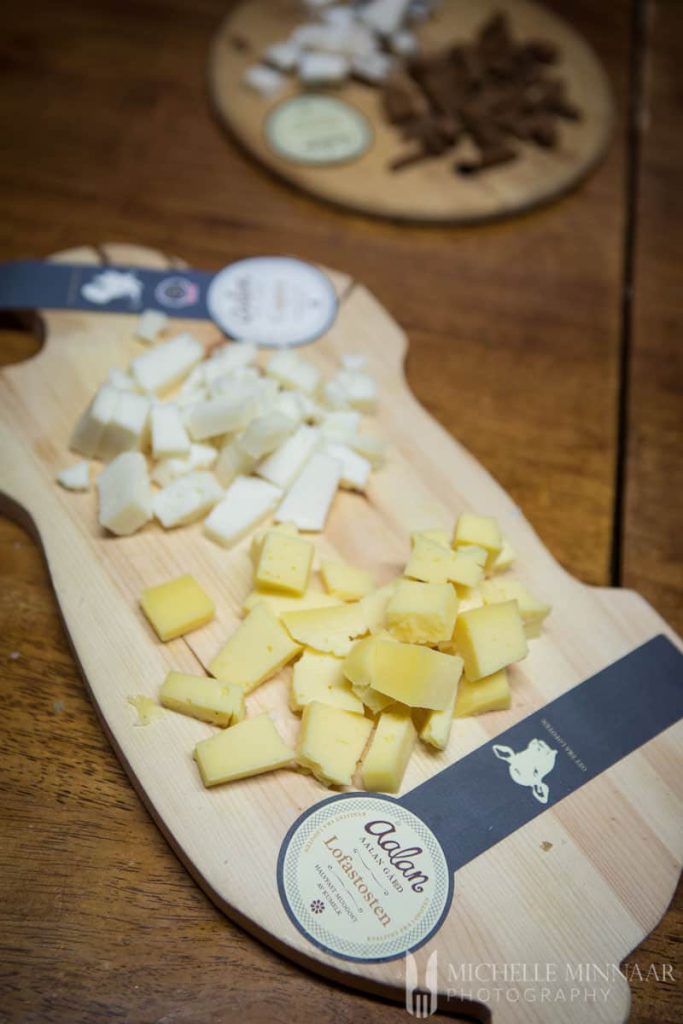
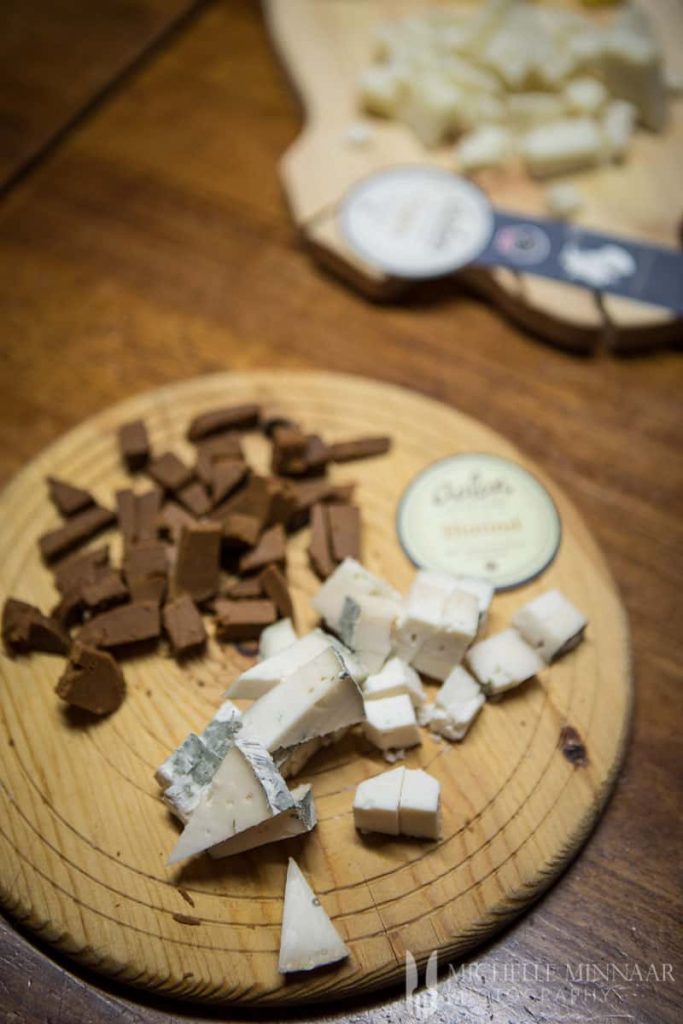
Later, I enjoyed a scenic drive through Lofoten islands to visit Hurtigruten supplier Aalan Gård, a diverse working farm renowned for its herbs and organic cheeses. Just look at this cheese platter below, and check out the brown cheese!

As you can see, Hurtigruten has so much to offer. More importantly, it offers freedom as well to hop on and off anytime you wish. You are free to do your own activities and visit local towns. It’s truly great when you can just head off on your own and make a little adventure yourself. Also, it’s a good chance to getaway from the ship for a while and appreciate the different faces of Norway.

By the way, did you know that Hurtigruten is the world leader in sustainable nature-based expedition travel?

Hurtigruten Excursions

King Crab Safari

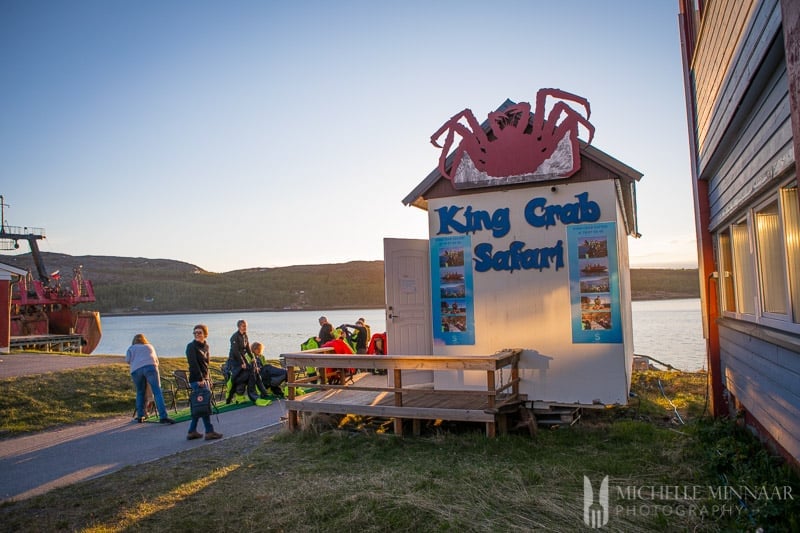
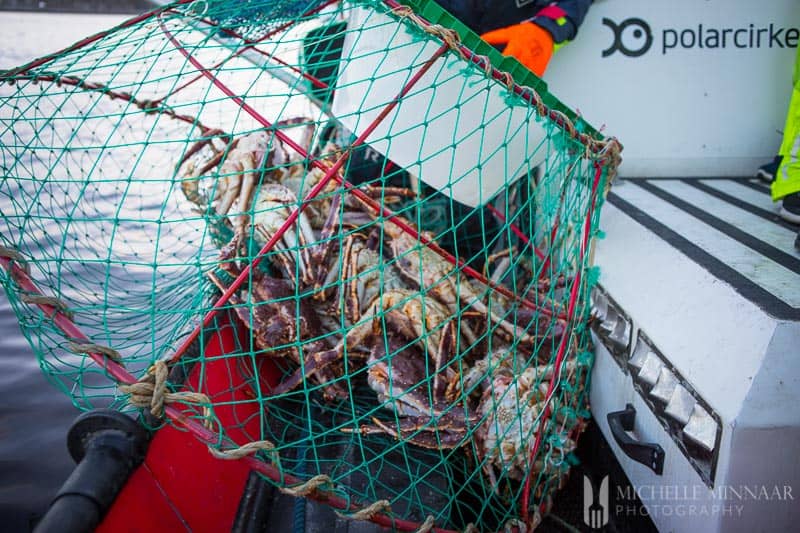
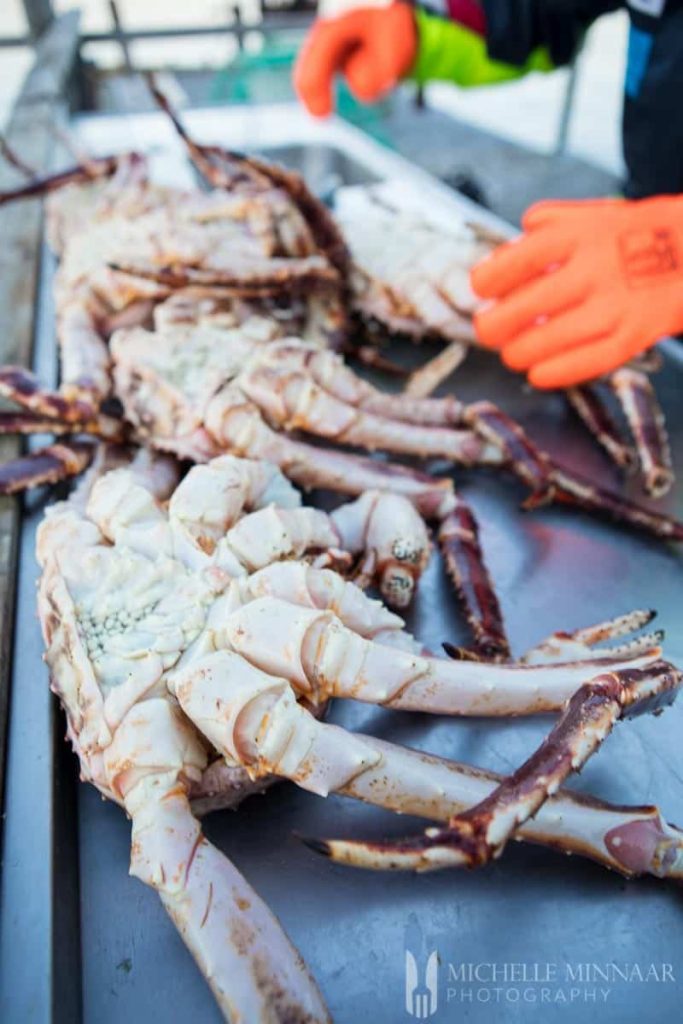
Remember the photo of me holding a massive crab? Well, this was all thanks to the King Crab Safari – you can read all about it in my review of the King Crab Safari here. All in all, it was an experience of a lifetime where I learned all there is to know about crab fishing in Norwegian deep seas.

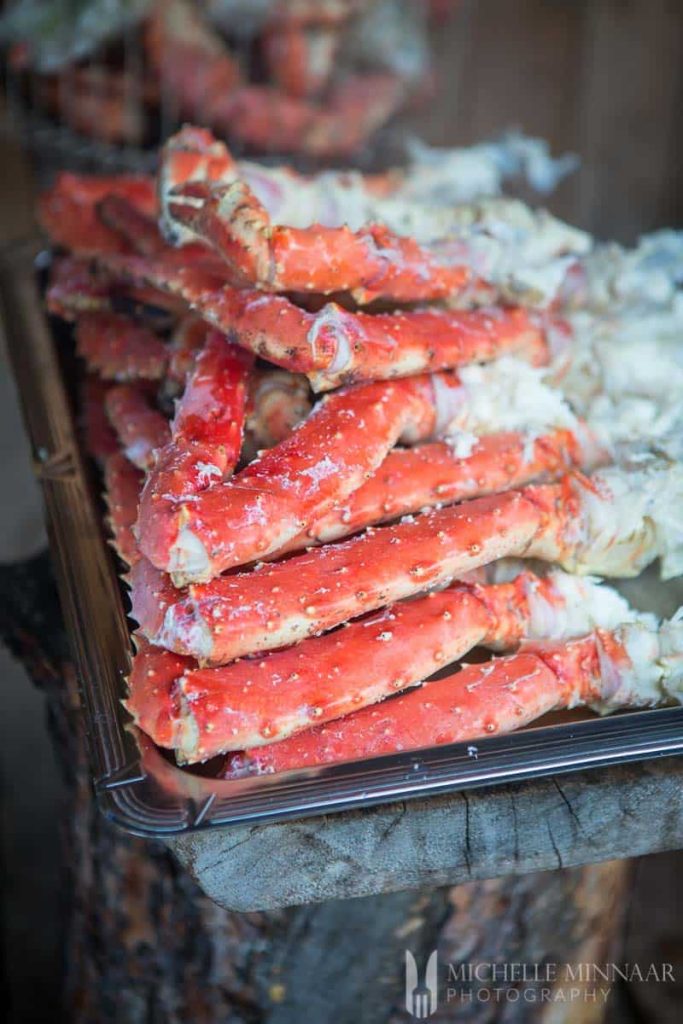
You learn how to prepare king crab and afterward get to eat fresh steamed crab legs! Eating king crab while enjoying magnificent scenery thank to the midnight sun truly is a once in a lifetime experience.

Artic walks

Another one of our trips with Hurtigruten was the Arctic walk. Accompanied by the Hurtigruten Expedition Team, I went on a coastal hike which took around 2.5 hours and it was a relatively easy walk. It’s a good opportunity to stretch those sea legs. Other excursions which you can take part in include:

  • The mountain hike with huskies. It’s perfect if you love dogs as much as I do.
  • The Arctic coastal walk – another scenic walk that holds breathtaking views.

I would have loved to get involved with the huskies but this is primarily a winter activity. I also managed to take part in the traditional activity of taking a break and grilling viennas on an open fire, sipping tea and coffee and eating Kvikk Lunsj. Don’t know what the latter is?

Midnight Concert

Would you be interested in a midnight concert way up north within the realms of the Artic Circle? Imagine yourself in a gorgeous and iconic arctic cathedral Tromsø. You’ll have a chance to experience the impressive interior Nordic architecture while looking at breathtaking stained glass mosaics. All the while listening to the sounds of Norwegian folk music performed by professional musicians. It is a truly moving musical experience where you hear the music within the acoustics of the cathedral.

Unfortunately, I skipped the midnight concert. Instead, I opted to be shown around by a local, which was an adventure in itself. Just take a look below, you’ll see some amazing photos of the local city and the scenery that envelopes it. These people are just so lucky to live here. Really breathtaking views and a memorable experience for all those who love nature!

Polaria Museum

In the meantime, while I was touring the city and clicking away, I had the chance to stop by the Polaria Museum. If you ever have the chance to visit this museum, you’ll see that it has a very specific structure. Actually, it sort of looks like dominoes.
The Polaria Museum has an Arctic aquarium, knowledge-based exhibits, a panoramic cinema and a giant souvenir shop.

RIB BOAT SAFARI

Surprisingly, I truly enjoyed the adventurous RIB boat safari which takes you through beautiful Raftsund and dramatic Trollfjord and we even saw sea eagles! This just comes to show how much freedom Hurtigruten actually gives you so you can discover things that you love.

In the past, the high season used to be in the summer due to the long daylight hours. However, now there is a growing demand for colder months where tourists can enjoy winter activities such as husky sledding. Also, I think that people still want to enjoy viewing the icy glaciers and mountains while they are still there. Yes people, global warming is a really big problem and the problem with plastic is just one factor. If we wish to enjoy more of this natural beauty, we should all act responsibly and take some accountability for the mess we’ve made on the planet.

Nonetheless, Hurtigruten has 15 ships that offer different experiences. Check them out here as well as their destinations. In fact, Hurtigruten offers so many voyages it’s hard to keep track because they all sound so amazing.

Find a cruise that suits your needs and your taste of adventure. Some of these include a 16 day Viking Heritage Trip to Iceland and Greenland, or spending Christmas with penguins in Antarctica. Although, I’ve seen that they also offer some Caribbean trips all over, discovering the warm seas, corals, beaches and reeds. Quite different from the colder excursion of Antarctica and Norway.

the ending

All good things come to an end and it certainly did with Hurtigruten. It was an adventure every single minute, whether it was a culinary adventure or a daring coastal hike with incredible views. This trip really opened my eyes just how amazing colder adventures can be. So, it’s important to keep an open mind and not go for only the exotic paradise stuff, because this was paradise in itself as well.

I highly recommend for you to discover just how beautiful our northern hemisphere is., not to mention the amazing fresh seafood caught the same day as you eat it. I mean, could life even possibly get better than that?

Don’t forget to check out Hurtigruten’s website for availability and the type of cruises they offer. Good luck finding your perfect adventure!

P.S. I was a guest of Hurtigruten.

July 1, 2025 Uncategorized

King Crab Safari

Have you ever heard of a king crab safari? Believe it or not, these types of tours are available if you travel to northern Norway, well inside the polar circle.

After the experience the words that popped into my head were “trappe van vergelyking”, which I then had to google to find the English meaning. Degrees of comparison.

Degrees of comparison

Anyone who knows me would tell you I’m a sucker for seafood. Crab, especially. When long periods of “drought” unintentionally take place, in pure desperation I’ve been known to eat the shellfish straight out of a can. So people, the struggle is real. First world problems and all.

Run of the mill

In third place, or should we say at the bottom, is the type of crab you can buy at UK fishmonger stalls. The small crab has been boiled, the white and brown meat scraped out and egg added before the shell is refilled. In England, this dish is called ‘dressed crab’. It’s tolerable.

(In the UK it’s very rare to find crab on a restaurant menu, so it doesn’t make this list.)

Something special

Four years ago I went to Isles of Scilly, which turned out to be a massive treat because of the memorable meal I had at The Crab Shack. To this day, I still swoon when telling people about the monster crab I enjoyed there. One of the questions commonly asked when people hear I’m a food blogger is where was my favourite meal. The Crab Shack used to be the answer, but no more. There’s a new bad boy in town.

Creme de la creme

Ladies and gentlemen, if you are a crab aficionado with serious urges that strike every now and then, let me introduce to you the king crab. It’s not just a case of being served king crab legs on a plate either, it’s the whole tour you simply have to experience.

King Crab Safari

It all starts with traveling to Kirkenes. At its small port, the words ‘King Crab Safari’ is clearly marked on the back of a tiny building, which is hard to miss. Make sure you wear comfortable shoes, and dress in warm and windproof clothing. Survival suits and life vests are provided but if anything extra is offered, such as goggles and gloves, accept the offer. Trust me.

Riding on a rigid-hulled inflatable boat (RIB) at a high speed will make you cold in five seconds flat and my sunglasses simply weren’t up to the job of protecting my eyes from the icy wind. For one moment I thought my eyeballs were going to freeze and fall out. Don’t be proud. Don’t think you’re a bad ass. Don’t be stupid. Take the goggles. Take the gloves. Take it all!

The trip on the RIB was super fun as we blitzed on Barents Sea along the Bøkfjord, enjoying views of the midnight sun in the pink, hazy sky. An orange buoy clearly marked where we had to stop in order to pull out the crab trap. The average water depth is 230m (750ft) deep and it took quite a while to hoist up the victims. Once they appeared it was a sight to behold.

King Crab Fishing in Norway

Peering through the the netting, all you could see were legs. Loads of them, plus strong claws that can snap off your fingers if you’re not careful. These creatures might be able to run quite fast on the sea bed, reaching a speed of up to 5km/ph, but on land their large, hard bodies become a liability and they struggle to move, limbs waving about helplessly.

A ration of one crab for two people are assigned and volunteers are welcomed to help out with the selection process as well as the handling of the netted container. After the crabs are picked, the remainder are gently and slowly put back into place on the seabed for a later occasion.

King Crab in Norway

The red king crab isn’t native to Norway. It actually originates from the North Pacific Ocean but were released by Russian marine biologists into Murmansk Fjord in the 1960’s. Years later the crab population increased and in the mid-1970’s the first king crab was caught in Norwegian waters. Today they can be found as far south as Tromsø but no further because the water is too warm for them otherwise. The ideal temperature in tanks for them are 5°C or lower.

Norway’s king crab problem

One topic that can potentially raise a heated debate amongst fishermen and ecologists is the impact of king crabs on the environment. Since their introduction to Norwegian waters, some believe these crustaceans have upset the ecological balance in nature because they devour everything and anything in their path. In Barents Sea the schools of herring have all but disappeared. Due to this, in some communities, there are no restrictions as to how much crab can be caught at any given time or season.

King crab sizes

Female crabs are usually released back into the water. A female crab carries her eggs in a clutch under the abdominal flap for up to one year. Due to her pivotal role in the procreation of the king crab species, when she is caught, she is released back into the wild to carry on with her duties.

In the lab it takes around 2 years for a crab to reach the size of a penny. Only after four or five years are  crabs considered mature and ready to mate. Lucky fisherman have been known to catch crabs weighing up to 8kg each with a leg span of over 180cm (6ft).

Crabs are then weighed and tagged. The bigger the leg, the higher the asking price. In Alaska they measure how many legs make up 10 pounds, with 20 considered small and 6 being super-jumbo.

Steamed King crab legs

Our fisherman, Gary, is a man who wear many hats. Not only did he take us out on the boat, caught the crabs, and took us to a traditional boathouse, he even did all the killing, cleaning and cooking of the creatures.

He demonstrated the quickest and kindest way to kill the crabs and drain their blood. Unlike other species, only the legs are used for cooking and he dissected the animals in a jiffy. Next up, he reluctantly, and jokingly, divulged his secret recipe for cooking king crab legs. Water and salt!

At home we would usually boil crab in salted water but here he had super large pots with baskets and steamed the massive pile of unwieldy legs. Surprisingly, it took a long time to cook, approximately 20 minutes but when they came out they were cooked to perfection.

Once we were seated, Gary then proceeded to show us the best way to eat crab. The meal was simple. Sliced white bread, butter, mayonnaise, and more crab legs you can wave a stick at. How we feasted!

Avoiding gluten whenever I can, I opted for just the crab meat. It was a messy, but hypnotic affair, as slivers of the juiciest, fresh crab meat revealed itself after cracking ligaments and gently pulling them apart. After two legs I was full, but opted for a claw to check out the difference between the flesh. Since the claw is a strong muscle, the fibres are more bouncy and robust but nonetheless just as enjoyable as the more manageable leg. Absolute bliss.

I’ve never been a Michelin-meal kind of a girl. A lot of pretension surrounds the subject where the heavy name dropping starts and the number of stars mentioned seemingly indicates your sophistication and zeroes in the bank. Do you know what my answer will be next time asks me about my favourite meal? You guessed it. Eating a rustic meal, comprising freshly caught king crab legs prepared by Gary, in a wooden shack on the fjord in the north of Norway. There you have it.

Want to go on a King Crab Safari too? It costs £162 per person, so go to Hurtigruten’s website to book your trip!

P.S. I was a guest of Hurtigruten. All opinions are my own.

June 30, 2025 Uncategorized

The 15 Best Foods To Try In Amsterdam

Amsterdam is renowned for its incredible culture, gorgeous architecture, and relaxed attitude to life… but what about the food?

Well, in case you didn’t know, it’s fantastic! Today, we take a delicious deep dive into the delicacies of the Dutch capital – from the deep-fried delights of Amsterdam street food to the heavenly old-school baked classics and everything in between. Here are the 15 best foods to try in Amsterdam.

For the best way to discover these 16 excellent local dishes, book an Amsterdam food tour. You’ll get expert insights into the origins and preparation of the city’s most famous dishes!

Best 15 foods to try in Amsterdam

1. Dutch pancakes

Known in Amsterdam as Pannenkoeken, Dutch pancakes are served in pretty much every cafe in town. Large and thin and served with tons of butter, they have a melty, gooeyness that makes them pure comfort food.

These bad boys are wonderfully versatile – the Dutch often serve them topped with herring, salmon or other savory delights, but alternately sprinkled with powdered sugar or stroop (a delicious Dutch syrup).

Learn all about the origin of Dutch pancakes and try the best in town with an Amsterdam walking tour with Dutch pancakes lunch.

Better yet, learn how to make your own with a private Dutch pancake class in the home of an Amsterdam native. Talk about authenticity!

2. Poffertjes (mini pancakes)

These marvelous mini morsels are a festive favorite, both during the summer and at Christmas time. Their light spongy texture makes them taste totally different than a regular pancake, while the gooey and warmth on the inside and a pleasant crunch on the outside will send your taste buds into overdrive!

The secret is yeast and buckwheat flour, which gives them the trademark fluffiness, and the fact that they’re cooked fast and hot in a cast iron pan.

You’ll find Poffertjes in pretty much every Dutch supermarket, but for the real deal visit a local cafe or restaurant. I recommend Poffertjes Albert Cuyp, an old-school street stall specialising in these little beauties.

3. Dutch herring

Okay, now we’re into dangerous territory. That’s because Dutch herring is without the most divisive dish on the list. This is one Dutch food you either love or hate, and you’ll have to try it to find out!

Highly salty and powerful, herring tastes unlike anything else. Although people assume it’s served raw, it’s not. The flavor comes from the fact that it’s kept in brine for up to months, producing a deep, salty, umami flavor and bringing a wonderfully succulent texture.

Dutch herring is generally served in two ways – either cut into pieces and served with onions and pickles or eaten whole in one piece, dangled from above, and devoured in one go. Amsterdammers also eat herring sandwiches called broodjes haring.

4. Kibbeling

Keeping the focus on fish, Kibbeling is one of the most famous street foods in Amsterdam – you’ll find it served up in street stalls and eateries all over the city. This traditional Dutch delicacy consists of deep-fried pieces of cod covered in a crispy spiced batter and served with various traditional dipping sauces, usually garlic mayonnaise, remoulade, or tartar sauce.

You’ll find some of the best Kibbeling in Amsterdam at the Dappermarkt or in the many fish markets around De 9 Straatjes (the Nine Streets).

5. Bitterballen

Another famous Dutch food that you’ll find served by street vendors all over the city, Bitterballen, is a ball-shaped meat croquette that is absolutely out of this world! The creamy, dreamy filling is made from stewed meat that has been thickened by adding a roux.

Generally served with a portion of fries and a dollop of Dutch mustard, Bitterballen is undoubtedly one of the most famous traditional food items you’ll find in Amsterdam. You can even find some amazing vegan bitterballen in Amsterdam.

If you want to eat this traditional Dutch food like a local, try a Bitterballen and croquette tasting.

6. Stroopwafels

These are the most iconic Dutch sweet treats – you’ve most likely tried them before – these irresistible waffles are a must-eat in Amsterdam. Stroopwafels consist of syrupy, buttery cinnamon caramel sandwiched between two wafer-thin waffle layers… yes, it’s as good as it sounds!

Translating as ‘syrup waffles’ in English, you’ll find stroopwafels all throughout Amsterdam – in supermarkets, street corners, cafes, restaurants… everywhere.

Want to find the best stroopwafel in Amsterdam? A private food tour with a local is a great way to find the best Dutch foods when you visit Amsterdam. Or you could take our recommendation and head to Rudi’s Original Stroopwafels – an old-fashioned street stall that’s a stone’s throw from the Heineken Experience.

7. Appeltaart (Apple pie)

With a pastry that’s lighter, sweeter and crunchier than typical apple pie, Amsterdam’s famous baked treat Appeltaart is pure comfort food. Usually served with a generous dollop of whipped cream on top, Dutch apple pie is also a lot deeper than American apple pie.

The apple comes typically with a hint of cinnamon, while the apple is slow-baked to soften it but still with a slight firmness. The star of the show, however, is the pastry. It’s Crumbly, buttery, with just the right amount of sugar, to die for.

Visit Winkel 43, a vibrant cafe/restaurant in Jordaan, for one of Amsterdam’s best slices of homemade apple pie.

8. Kaas (Dutch cheese)

The Netherlands is one of the biggest cheese exporters in the world! Aside from the classics like Gouda and Edam, there are many delicious varieties that you have to sample when in Amsterdam.

Abraham Kef’s cheese tasting room is one of the city’s best cheese experiences, and if you’re into wine, a wine-and-cheese pairing is a must. You’ll also find many cheesemongers and cheese shops throughout the city and bars and restaurants that offer cheese platters.

If you want a fully authentic Dutch cheese experience, take a day trip from Amsterdam to the countryside and sample edam and gouda cheeses from local farms.

9. Ossenworst

A Dutch specialty smoked sausage, Ossenworst, was initially made of ox meat but is made from beef nowadays. Subtle spices such as pepper, cloves, nutmeg, and mace bring a wonderful aroma; this sausage is usually sliced and served with pickles, onions, and a generous helping of Dutch mustard. Oh, and remember the beer for good measure!

Head to the ridiculously cool A. van Wees Tasting Locality, where you can try authentic ossenworst and many other traditional Dutch foods served with their snack platter.

10. Oliebollen

A quintessential Dutch dessert, oliebollen is not only one of the best-tasting snacks in Amsterdam, but it’s also, without doubt, the one that’s the most fun to say. Try saying “Oliebollen” loud and proud without beaming with joy. It’s impossible!

Still, these sweet treats don’t quite translate as well into English – literally ‘oily balls.’ Okay, that’s enough snickering… despite the name conjuring up images of greasy balls, these decadent Dutch doughnuts are pure indulgent heaven. They are a must-try when visiting Amsterdam: sweet and crispy on the outside, tender on the inside, and deliciously soft.

You won’t have to search far and wide either – almost every bakery sells them, particularly during winter.

11. Stamppot (mashed potatoes)

One of the most popular side dishes you’ll find in Amsterdam, stamppot is a dish consisting of mashed potatoes combined with one or more vegetables. Typical vegetables used in stamppot include carrots, onions, sauerkraut, spinach, or turnip greens.

Stamppot is usually served alongside a hearty meat dish, often steak or smoked sausage.

Regarding the best restaurants for this hearty side, The Pantry regularly causes a stamppot stampede with their versions of this traditional Dutch cuisine, including a delicious boerenkool stamppot – kale and mashed potatoes. Delicious!

12. Rijsttafel (rice table)

The influence of Indonesian cuisine in Amsterdam is clear to everyone who visits. There are many Indonesian restaurants throughout the city, and many traditional Indonesian dishes are served in typically Dutch taverns and restaurants. This comes down to the fact that thousands of Indonesians migrated to Amsterdam following WWII, bringing their culture and cuisine.

A collection of small side dishes – like a Dutch table of tapas – Rijsttafel is one of the best-known Indonesian staples. It’s also the best way to sample Indonesian food when in Amsterdam.

Long Pura is a famous Indonesian restaurant in Amsterdam where you can order Rijsttafel, among other delicious delicacies. You could also spend an afternoon doing a Food and History Tour, checking out historical local foodie stops in Amsterdam.

13. Patat friet

Amsterdam’s version of French fries, patat friet, serves broad, chunky chips deep-fried to perfection. Mayonnaise is typically the dip of choice and often comes served up in its own little ingenious sauce holder within the fries’ cardboard cones. You’ll also find Dutch fries topped with chopped onion, tomato sauce, and – in the case of the Dutch Indonesian version patatje oorlog – peanut sauce.

Head to Heertje Friet for the best patat friet in the whole city. You’ll also find many fantastic patat stands and Dutch fries specialists in and around the Nine Streets.

14. Genever

Amsterdam’s favorite drink is a robust and malty spirit from juniper berries. While it’s been likened to gin – even picking up the nickname ‘the grandfather of gin,’ Genever has more of a blended bourbon or scotch malt flavor. If you like your spirits, you have to try this Dutch delight!

Of course, a drink is only as good as the setting in which you drink it. Therefore, head to ‘t Nieuwe Diep, a quirky hidden gem inside an old pump house. It’s a distillery and bar that serves its own brand of genever, which you can enjoy on its tranquil terrace overlooking a pond, fruit trees, and herb garden.

Learn all about genever at the House of Bols tasting experience, where you’ll sample this classic Dutch spirit and its history.

15. Beer

Most of the best things to eat in Amsterdam pair perfectly with a tall, frosty one, and for beer drinkers, sampling the local tipple is a must! The Dutch export more beer than Germany and the U.S. combined – the majority comes from big names like Heineken.

Head to the Heineken Experience for a deep dive into the famous Dutch beer. Big-name beers aside, there are also many delicious local craft beers in Amsterdam.

What is traditional Amsterdam food?

The most traditionally eaten food in Amsterdam is quick to make and delicious. It’s essentially street food!

We’re talking the likes of bitterballen, the delicious croquette balls, the fluffy, buttery Dutch pancakes, and stroopwafels, those little heavenly syrupy caramel wafers.

What is the Netherlands’ national dish?

Many would say herring, which is cured to give it a wonderful salty flavor and is typically eaten in one go. It’s not for everyone – Dutch herring proves divisive! However, those who like it like it!

Regarding desserts, the most famous dish is Poffertjes – the wonderful mini pancakes served in cafes all over Amsterdam.

Does Amsterdam have a good food scene?

Absolutely! You’ll find everything from fine dining restaurants and old-fashioned taverns to sumptuous street food hangouts and cozy coffee shops, all serving outstanding food.

You’ll even find large food halls such as Foodhallen in Amsterdam with various dishes worldwide.

What drink is Amsterdam known for?

The local spirit is jenever (sometimes spelled ‘genever’) – a traditional spirit made from juniper berries, which is said to be the ‘grandfather of gin.’

Although they are both made from juniper berries, jenever is different from gin – it has a far more malty flavor and is more similar to whisky.

The Dutch also love their beer! Amsterdam is home to the world-famous brands Heineken, Amstel, and many other excellent smaller Dutch beers.

What is the weird Dutch breakfast?

An unusual breakfast that many Dutch (especially kids) indulge in is hagelslag. A whole load of chocolate sprinkles poured on top of buttered white bread.

The word hagelslag roughly translates as hail storm – referring to the shower of sprinkles that cover the slice of bread. This quirky breakfast dates back over a hundred years and shows no signs of disappearing!

June 30, 2025 Uncategorized

10 Best Foods to Try in Groningen

During my travels in Groningen, I was simply astonished to find that there are so many foodie things to do there. This was excellent news for a food blogger, as you can imagine. The city of Groningen itself is a vibrant, cultural city filled with lively pubs and lots of hip restaurants. Having a famous university also helps liven up the city.

Altogether, it is known as one of the best Dutch cities with the younger generation. While you stroll down the ancient charming streets of Groningen, you’ll come to find that every corner has its own little food movement going on. In addition, you’ll discover a certain dynamism – every bar is buzzing! Certainly, the city makes you feel much younger.

things to do in Groningen province

On a very positive note, as I am currently undertaking a journey towards becoming a vegan, the vast amount of vegan and vegetarian restaurants in Groningen was also a very pleasant surprise. I am telling you, the city caters for every special dietary need! You can enjoy the freshest of ingredients, modern cuisine as well as indulge in pigging out on traditional recipes (if you’ll excuse my French).

However, the traditional recipes are certainly worth mentioning because Groningen has one of the most amazing traditional cuisines in the world. I will also share recipes so that you, too, can have a little taste of what Dutch culture and traditional Groningen cuisine is all about. Keep reading to find out more.

Top 10 foodie things to do in Groningen

1) Eat Fresh Seafood

This is no ordinary statement. You can truly indulge in some of the freshest seafood that you’ll ever have in your life. The Netherlands in general is known to have amazing seafood because it has an extensive coastline. Still, Groningen is known for having truly fresh fish. I came across vibrant seafood dishes at some of my favourite restaurants to date. So, if you love seafood, you’ll find that visiting the below mentioned restaurants are high up the list of top foodie things to in Groningen while you are there.

Have a look at T’ Kleine Oestertje and make sure to order the seafood platter – simply amazing and totally fresh seafood. I couldn’t get enough.

You should also definitely visit Brussels Lof and order the grilled turbot. Oh so good! So, if you are mad about fresh seafood, you’ll love Groningen. They’ve got it all.

2) Beer Tasting

While I was touring Groningen, I also took an active part in a beer tasting. The city of Groningen has had an enormous beer tradition for many centuries. Would you believe that at one point there were about 80 breweries in the city? Also, some breweries only operated guest houses for consumption of their own products. Isn’t that funny?

Amongst these breweries belonged the Ostrich, ‘t Haantje, the Golden Oliphant, Waldeck and Barbarossa. The large number of breweries had its origin in the fact that brewing beer was only reserved for brewers in Stad en Ommelanden.

In order to continue that tradition take a chance to enjoy beer tasting, together with great food, in the Harbour Café. During a city boat trip, I had the opportunity to taste 4 special beers while listening to fascinating stories about the beers. After the tasting I felt like a real connoisseur.

3) Foraging workshop

On the list of the top 10 foodie things to do in Groningen, definitely take time to go on a foraging workshop. Absolutely loved it! I learned about wild plants such as wormwood, samphire, sea plantain, sea aster, milkwort, sea rocket and rosehips and all their uses.

4) Get served by a cocktail robot

I kid you not, this is real. If you go to Mr. Mofongo’s, you’ll be surprised to see that you get served a Dutch and Stormy by a cocktail robot. Delicious! I am pretty sure you’d find this interesting.

5) Visit Teafabrique, also called De Theefabriek

You should know that Groningen is very famous for its teas. De Theefabriek is Groningen’s only tea museum. The building itself started life as a church, which De Theefabriek bought for an astonishing 45 euro cents. Great deal! Inside, you’ll get a chance to get amazing tea in charming tea rooms. De Theefabriek is also known for one of the most extensive and exclusive tea menus in the world.

It is a tea paradise for all the tea lovers out there in the world. Click here to find out more.

6) Mustard Soup

If you ever visit Groningen, you’ll get a chance to try the famous Groningen mustard soup. Yes, a soup made out of mustard! Above all, eat it with a good piece of toasted bread on the side.

Mustard soup originated from a province called Overijssel. Today, there are literally hundreds of mustard soup recipes. So, if you would like to try this delicious soup, which is by the way the original recipe, click right here. Again, it’s actually a very easy recipe.

7) Poffert

Poffert is a must-try for those seeking out the sweeter side of Groningen. It is a sweet cake that one would usually pair with coffee or that famous Groningen tea. In neighbouring Friesland, the locals know it as Boffert. To learn about the history of poffert and its significance, check out my recipe for more information.

8) Eierbal

Traditional Dutch dishes include frikandel, which is a sort of deep-fried meatball. However, what’s native to Groningen is the Groninger eierbal. First, it means egg ball. Second, it’s actually a deep-fried egg coated with meat and breadcrumbs. Again, so good!

9) Bitterballen

Bitterballen are simply delish! They are Dutch mmeatballs usually made with veal or beef. Similarly to the eierbal, you would typically serve them as a snack with a spicy dip or some mustard. A fabulous beer snack to munch away at on the side. If you have kids, try to make these. I guarantee that they will go nuts for them.

Next, if you want to find out more about the traditional Groningen and Dutch cuisine, you can also try these:

  • stroopwafels
  • potatoes, vegetables and meat
  • boerenkool
  • hutspot
  • snert
  • zoute haring
  • witlofsalade

10) Fish Market

Finally, for one of the best foodie things to do in Groningen, you can also visit the famous Fish Market. You’ll find everything from salmon to octopus, or even stingray! Most noteworthy. In fact, I would say that this was my favourite of all the foodie things to do in Groningen. Hence, don’t wait to try out all of these fantastic foodie adventures!

June 30, 2025 Uncategorized

The 26 Best Things To Do In Amsterdam

Few European cities are as charming as Amsterdam. For the estimated 20 million visitors to the city each year, there’s so much to see and do – world-class museums, quirky markets, glorious canals, and incredible architecture are just some of the things that make Amsterdam one of the most visited cities in Europe.

While some regard it as a liberal paradise and one of the premier party destinations, the Dutch capital has much more to offer, with a treasure trove of historical and cultural landmarks to discover and plenty of stunning natural beauty on the city’s outskirts.

Best Things To Do in Amsterdam

Let’s take a virtual wander through the streets of the city known as “the Venice of the North” to break down the best things to do in Amsterdam.

1. Buy an I Amsterdam Card

The I Amsterdam Card is a must-have for tourists visiting Amsterdam. For a fixed price, it offers unlimited access to public transportation, free entry to major attractions, discounts at museums, restaurants, and shops, and a complimentary canal cruise.

Save money, skip queues, and explore Amsterdam hassle-free with the Iamsterdam Card!

Prices range from €60 for 24 hours to €125 for 120 hours per person.

2. Marvel at the Van Gogh Museum

A fascinating glimpse inside the life and work of one of the world’s most renowned artists, the Van Gogh Museum is an essential experience for anyone visiting Amsterdam. The museum contains more than 200 paintings, 500 drawings, and 700 letters from the great man and various other artists who influenced him; the museum is great for art lovers and the more casually curious visitor.

Keep in mind that you’ll need to pre-book tickets online! Better yet, pre-book a private guided museum tour to skip the lines and get an expert’s insight into Van Gogh’s most iconic masterworks, as well as the lesser-known gems.

3. Be moved by the Anne Frank house

The Anne Frank Museum is the former residence and writer’s house of legendary Jewish wartime diarist Anne Frank. Visiting the house is an incredibly moving, unforgettable experience, giving a unique perspective on how the city’s Jewish population suffered during the Second World War.

Anne Frank’s story is told through an audio tour that helps further immerse you in the house’s history. It was a very emotional visit for me, yet it was essential to understand the history of Amsterdam and Europe in general.

Again, like most museums in Amsterdam, the Anne Frank House can only be visited by pre-booking a ticket bought online for a specific time slot.

4. Get regal at the Royal Palace Amsterdam

The former home of the Dutch Royal Family, the Royal Palace was also once the city’s town hall, and it still hosts many prominent events and is open to visitors throughout the year. If you’re a fan of jaw-dropping façades and majestic interiors, it’s a must-see – particularly the stunning central hall, with its Ancient Rome-style columns and marble flooring.

Although it’s one of Amsterdam’s most popular tourist attractions, wandering around the spacious Royal Palace – otherwise known as the Koninklijk Paleis – is quite a tranquil experience – especially in spring or late summer, when the crowds are less intense.

Prebook your Royal Palace tickets with an audio guide for a deeper insight into one of Amsterdam’s most iconic historic buildings.

5. Take a canal cruise

An all-inclusive canal cruise should be right towards the top of your list of things to do in Amsterdam. Cruising the canals and taking in the city’s beautiful sights is Amsterdam’s most popular tourist activity, with an estimated 3 million passengers a year.

The historic canals were formed in the 17th century and today are a UNESCO-listed landmark. You can learn all about the history of the canal ring and stories of all the major cultural attractions in Amsterdam as you pass by while sipping drinks and enjoying snacks as you soak up the city’s beauty.

You could also escape the crowds and enjoy a private canal cruise, ideal for those traveling as a couple.

6. Discover national history at the Dutch Resistance Museum

One of Amsterdam’s most increasingly popular attractions, the Dutch Resistance Museum – also known as Verzetsmuseum – tells the story of how the Dutch resisted the Nazi occupation during World War II. It recounts the horrors of life in Amsterdam under the Nazis and the ingenious efforts to break free from the oppressors – from underground newspapers and strikes to creating secret hideouts for those persecuted.

The Resistance Museum comes with archive film and audio that evoke the hopes and fears of the Dutch population at the time and many other interactive elements that make it a highly immersive historical experience.

7. Get cultural at the Rembrandt House Museum

A celebration of one of the most famous Dutch painters, the Rembrandt House Museum is a restored 17th-century house that reconstructs Rembrandt’s rooms and art workshop.

Just like the Van Gogh Museum, Rembrandt House is an art lover’s dream, with selections of some of Rembrandt’s best works as well as many pieces from other artists who the Dutch master influenced.

Be sure to pre-book your Rembrandt House Museum tickets, including a free audio guide. Remember that the museum is set over four stories, and there is no lift between floors, so the museum might not be fully accessible for some visitors.

8. Explore the Rijksmuseum

Amsterdam has incredible art galleries and museums, and the Rijksmuseum is one of the best. While the Van Gogh and Rembrandt museums focus on those specific masters, the Rijksmuseum showcases the work of many of the best painters in the Golden Age of Dutch art, including Vermeer, Steen, Asselijn and Rembrandt.

The Rijksmuseum has recently been the art world’s focus with the announcement of the historic Vermeer Exhibition, the largest exhibition of the artist behind one of the world’s most famous paintings, ‘Girl With a Pearl Earring.’ Although the exhibition is completely sold out, you’ll be able to see some incredible works of art in the museum’s permanent collection.

Buy your Rijksmuseum tickets ahead of time to guarantee your spot at this beautiful Amsterdam art gallery.

9. Get spooked at the Amsterdam Dungeons

If you’re into fun interactive experiences, you can’t get much better than the Amsterdam Dungeons. A deliciously dark journey through 500 years of history, the Amsterdam Dungeons uses live actors, make-up, and special effects to tell the chilling story of life and death in the Dutch capital.

Tales of torture, plagues, the Spanish Inquisition, and insights into the origins of the Grim Reaper myth are sure to keep you gripped from beginning to end. This is the ideal Amsterdam activity if you’re into weird and wonderful tales and horrible histories. It’s also great for families with older kids, as there’s so much fun! Of course, if you’re squeamish, you should miss this one.

Don’t forget to pre-book your Amsterdam Dungeon tickets to save time at the turnstiles.

10. Go deep at the NEMO Science Museum

The biggest and best science museum in the Netherlands, the NEMO Science Museum, looks like a giant green ship rising out of the ocean at Amsterdam’s dock —the iconic exterior hints at the creative activities inside, which will fascinate visitors of all ages.

The interactive nature of Amsterdam’s premier science museum makes it particularly appealing for kids – especially those ages six to twelve. Those visiting the museum should also check out the rooftop terrace with its magnificent city center views.

Overall, it is a fantastic experience, particularly for families visiting Amsterdam. My daughter loved this venue and pleaded to go back the next day but we ran out of time!

Remember to pre-book your tickets for the NEMO Science Museum!

11. Take in the beauty of Westerkerk

This Renaissance-style church is the biggest in Amsterdam and a must-see for those looking for beautiful buildings and exciting architecture in Amsterdam. Located next to the Anne Frank Museum, Westerkerk – which means ‘West Church’ in Dutch – was built in the 17th century and has a stunning ornate interior. You’ll even have the chance to learn about the church’s history and the surrounding area as you take in the sumptuous visuals.

If you’re brave enough, climb to the top of the bell tower for a breathtaking panoramic view of Amsterdam and its outskirts – it’s one of the best views in the city!

12. Stedelijk museum

Another of Amsterdam’s long line of impressive art museums, the Stedelijk Museum is regarded as the most important museum of modern and contemporary art and design in the whole of the Netherlands.

With works by the likes of Dumas, Matisse, Chagall, Picasso, and Malevich, as well as 20th-century Dutch artists such as Rietveld and Mondrian, the Stedelijk showcases art that is rebellious, imaginative, humorous and inspirational.

Get your Stedelijk museum ticket ahead of time with priority access, or combine the entry ticket with a 1-hour canal cruise to make the most of your time in Museumplein.

13. Relax at the Hortus Botanicus

With all the incredible museums, galleries, and cultural locations in and around the city, it’s essential to catch a little respite. Luckily, there are places like the Hortus Botanicus in central Amsterdam.

Amsterdam’s botanical gardens are full of various weird and wonderful plant species and prove to be the perfect inner-city nature escape for those tired of the busy city center streets. This is one of the oldest botanical gardens in the world, giving it an extra historical context.

Aside from all the different plant species, the Amsterdam Hortus Botanicus also contains a butterfly house. This zoological museum showcases microorganisms and a planetarium, where you can enjoy a virtual, interactive solar system tour.

14. Escape the hustle at Vondelpark

Every good city has a beautiful park, and Amsterdam’s is as good as it gets. The largest park in Amsterdam and the most famous in the country, Vondelpark is a sprawling 47-hectare park in the city’s center with lakes, lawns, water features, and a beautiful rose garden.

With a beautiful atmosphere, particularly during summer, Vondelpark is a trendy hangout for locals and visitors alike. If you’re looking for the perfect picnic spot between trips to Amsterdam’s top tourist attractions, this is the place!

Experience the tranquillity of Vondelpark as part of a guided walking tour of Amsterdam.

15. Get merry at the Heineken Experience

Beer lovers rejoice! Amsterdam is home to one of the world’s most popular beers, and visitors can discover its origins and learn everything about how it’s made with an interactive tour at the Heineken Experience.

As well as discovering the story of the first Heineken brewery and learning everything about the beer and its history, you’ll get to whet your whistle at the tasting room finale. You’ll even have the chance to show your bar skills with the Pour the perfect pint challenge!

Overall, it’s great fun – especially with a big group. If you’re keen to make it a centerpiece to your Amsterdam visit and go all out… get a guided Heineken Experience VIP Tour Ticket and make it all the more memorable!

16. Hit the heights at the A’DAM LOOKOUT and THIS IS HOLLAND

A 22-story, 80-meter-high observation deck with the best views of Amsterdam, the A’DAM LOOKOUT is a great way to cap off a visit to Amsterdam. You’ll learn about the history of Amsterdam through an interactive exhibition while you make your way up to the top-floor lookout. You’ll find Europe’s highest swing, which dangles 100 meters above the ground. Dare to have a go?

The adrenaline rush doesn’t end there, though. At THIS IS HOLLAND you’ll find four different attractions, including a 5D flight simulator that takes you for a bird’s eye tour of the whole city of Amsterdam.

Experience the thrills of these two attractions by pre-booking A’DAM LOOKOUT and THIS IS HOLLAND tickets.

17. Our Lord in the Attic Museum

Down an unassuming street near the Amsterdam docks is a hidden gem that tells just one of the many incredible stories in the city’s history. The ordinary façade of the building doesn’t give much away, yet in the attic of this incredible museum you’ll find a full-size hidden church, built during the years when practicing Catholicism in public was forbidden.

A free audio guide at the Our Lord in the Attic Museum will help to immerse you in the story of the Protestant and Catholic divide in the city. It’s a fascinating museum.

18. Awaken the senses at the floating flower market

For a quintessential Dutch experience, a visit to the world’s only floating flower market is a must. Located onboard the houseboats that line the picturesque Amstel riverside, the Bloemensingel dates back to 1862 and sells all kinds of typical Dutch flowers, including the famous tulips.

Many of the flowers at the market are approved for import to other countries, meaning visitors can buy perfect sensory souvenirs to take home.

19. Go shopping in the Nine Streets

The Nine Streets, or De Negen Straatjes, is a mini-neighborhood located in the center of the Jordaan canal belt and consists of a network of narrow cobblestone streets, each with its unique charm. With independent boutiques, vintage stores, artisanal cafes, and hip restaurants, Amsterdam’s coolest shopping district is the perfect place to pick up a handmade souvenir when visiting the Dutch capital.

Explore the Jordaan neighborhood and the Nine Streets as part of an Amsterdam walking tour, learning about the history of the hidden courtyards and cobbled streets of one of Amsterdam’s most charming areas.

20. Visit the National Monument

Located in the city’s center in Dam Square, the National Monument is a 22-meter-high stone cenotaph that pays tribute to the people who lost their lives during World War II. It’s the centerpiece of Dam Square, which is like the heartbeat of Amsterdam.

Visit the National Monument as part of a private walking tour in Amsterdam and dive deeper into the history of Amsterdam in the 20th century, gaining a better understanding and perspective of life for those before, during, and after World War II.

21. Take a tour of the world-famous home of Ajax Football Club

A fantastic experience for lovers of the beautiful game, a trip to the home of Ajax Football Club gives you behind-the-scenes access to one of the most revered teams in Europe.

You’ll get to enjoy pitch-side views, a trip to the dressing room and boardroom, plus you’ll be entertained with tales of the history of Ajax – including the most famous player, the legendary Johan Cruijff (whom the stadium is named after), as well as a complimentary drink and souvenir scarf.

Book your VIP tour of the Ajax Amsterdam football stadium before you arrive, and skip the crowds.

22. Escape to the picturesque outskirts of Amsterdam

While there’s so much to see and do within the city limits, many people overlook the beauty of the surrounding areas of Amsterdam. A full-day tour through the countryside allows you to fully immerse yourself in Dutch culture, going beyond the regular tourist experience to discover what local life is like in the Netherlands.

When escaping to the capital’s outskirts, rural windmills, cheese factories, antique clog shops, picturesque villages, and stunning waterways are just some things to expect. A guided day-trip bus tour offers an unforgettable experience when visiting Amsterdam.

City attractions might be why you come to Amsterdam, but a countryside visit could well end up providing your trip’s most memorable moments.

23. Take a stroll along the Damrak

When you think of Amsterdam, you think of the Damrak. You may not realize you do… but trust me. You know that image of Amsterdam, with the line of pretty and colorful buildings that line the canals? That’s the Damrak. Running between the central station and the Dam Square, in the very center of the city, this gorgeous avenue is Amsterdam at its most iconic.

You’ll usually find the Damrak all hustle and bustle – it’s the tourist center of Amsterdam, with all manner of souvenir shops, fast food stops, and cafes dotted along the way. Still, strolling along this pretty avenue can be a relaxing experience, particularly in the autumn/fall, when the colors are vivid and the crowds are less dense.

The Damrak is one of the first ports of call during a small group walking tour in Amsterdam – an ideal place to start your adventure through this enthralling city.

24. See the sunset at Pllek

Okay, so Amsterdam isn’t the place to go for a beach holiday. That said, there’s a great urban beach in the city where many locals and visitors hang out, and it’s the perfect place to watch the sun go down, particularly in the summer.

Pllek may not be suitable for swimming, but this is the city’s number one place when it comes to waterside hang-out spots. Beach parties with top DJs, group yoga sessions, outdoor cinema screenings, and live concerts are just some of the activities you’ll find here.

Yes, it can be crowded during the summer, but if a party atmosphere is what you’re looking for, it’s a place you should head to when visiting Amsterdam.

25. Flip the script at the Upside Down Museum

Hands down, Amsterdam’s quirkiest museum, the Upside Down Museum, is billed as one of Europe’s most popular interactive social-media museums. The crazy optical illusions and incredible art-themed rooms create a highly photogenic experience – hence the ‘social media friendly’ tag. One thing’s for sure… you won’t be boring anyone with vacation snaps from this place!

The Upside Down takes the museum experience to a new place, making it an ideal alternative to Amsterdam’s many history museums and art galleries. Pre-order your tickets for the Upside Down Museum and save time at the turnstiles, giving you more time to get lost in the weird and wonderful world of this fun, original museum.

26. Take an Amsterdam bike tour

The Dutch are Europe’s undisputed bike kings and queens – if we all cycled like them, global emissions would drop nearly 700 million tonnes. So, it’s no surprise that one of the best ways to experience the Dutch capital is on two wheels.

Experience this wondrous city’s highlights and hidden gems with an Amsterdam bike tour. You’ll cover much more ground than you ever could on foot with a personalized experience that gives you more of an immersive insight into Amsterdam’s history and major landmarks.

What is Amsterdam best known for?

Amsterdam is perhaps best known for its world-famous canals, a significant city feature. It’s also renowned as a liberal, tolerant, lively city with a rich history and culture. This is showcased in some genuinely world-class museums, such as the Van Gogh Museum.

What is Amsterdam’s most visited museum?

The Rijksmuseum is the most visited museum in Amsterdam. Known as the National Art Gallery, it has over 2.5 million visitors annually. The Van Gogh museum is a close second, with just over 2 million visitors.

Are museums free in Amsterdam?

Most museums in Amsterdam charge an entry fee. However, there are some museums that you can visit for free. These include the Rijksmuseum Gardens and the Open Space Contemporary Art Museum (OSCAM).

Also, head to the Our Lord in the Attic Museum on a Sunday morning, and you’ll have a chance to experience services in this incredible Catholic church. Even if you’re not religious, it’s a very spiritual experience.

Is Amsterdam suitable for couples?

Yes, Amsterdam is most definitely suitable for couples. There are many romantic things to do in Amsterdam, none more so than a private canal cruise. It’s also generally a beautiful, picturesque city with stunning architecture and a romantic feel.

Visiting during the spring is an ideal time of year for couples looking for a romantic getaway. At this time of year, the temperatures are warm, and the city parks are full of color as the tulips, daffodils, and crocuses bloom.

What is the most romantic part of Amsterdam?

The sections of the city center beside the Amstel River are very romantic. The buildings are cute and colorful, with plenty to see and do. Head to the Jordaan neighborhood and take a romantic stroll along the narrow cobblestone streets – it’s the perfect place for couples to experience the best Amsterdam offers.

What is the Red Light District in Amsterdam?

The most infamous area in Amsterdam, the Red Light District, is home to ‘the world’s oldest profession.’ While prostitution is legal in some parts of the world, few places are quite as open and upfront. In Amsterdam’s Red Light District, known as “De Wallen” in Dutch, sex workers can be seen advertising their services in windows, and there are many sex shops, strip shows, and other adult attractions.

There are also many cannabis cafes, cool bars, and quirky museums in the Red Light District. While it was once considered an unsafe part of the city, things have changed significantly.

Now, the Red Light District is one of the most visited parts of Amsterdam, with over 2.5 million tourists going every year. A private tour of the Red Light district is an increasingly popular activity for those visiting Amsterdam.

Is Amsterdam good for nightlife?

It’s a fantastic city for nightlife. There’s something for everyone in Amsterdam, with large nightclubs with resident and guest DJs and live music venues that feature everything from rock and roll to jazz, swing, hip hop, and funk.

Head to Paradiso – a converted church hosting monumental music nights, or for something more elegant, try Bimhuis – one of the most renowned jazz clubs in Europe. There are a ton of other great bars and clubs in Amsterdam… most are located around the Nine Streets area of the city.

Is Amsterdam suitable for children?

While the city has a reputation for nightlife and hedonism, it’s a great place to visit if you have children. There’s so much for kids to see and do in the Dutch capital!

For a start, it’s a beautiful city! Kids appreciate the sights of the colorful and playful architecture, as well as the beauty of the canals. A private family canal cruise is a great family activity and allows kids to get to know the city in a fun, relaxing setting.

There are also many excellent interactive museums in Amsterdam that children love! The NEMO Science Museum should be at the top of your list of things to do in Amsterdam with kids, while there’s also the A’DAM LOOKOUT for older kids, with the highest swing in Europe!

Older kids will appreciate the culture and history on offer in Amsterdam. The Anne Frank House and Museum is a unique learning experience, and the Van Gogh Museum showcases the work of one of the greatest and most influential artists in history.

How many days do you need in Amsterdam?

Typically, you’ll need about 3 to 4 days to see the best of Amsterdam. Once you’ve seen all the most essential places in the city’s center, you can even spend a day visiting the outskirts, with the likes of the Keukenhof Gardens and a full-day tour of Giethoorn and the Zaanse Schans windmills.

Is it easy to get to Amsterdam city center from the airport?

Yes, it’s straightforward. A train goes directly from Amsterdam’s Schiphol International Airport to the city’s center. Trains run day and night, and the journey takes around 15 minutes. Train tickets are approximately €5.50 per person.

Is Amsterdam worth visiting?

Absolutely! It’s an incredible city with friendly people, beautiful architecture, a fun-loving vibe, and so much culture. A visit to Amsterdam will be an unforgettable experience!

Would you like to explore more of the Netherlands? Check out my foodie guide to Groningen, where I tasted Mustard Soup and Poffert for the first time!

« Previous Page
Next Page »

Primary Sidebar

Recent Posts

  • 21 Best Things To Do in Fuerteventura
  • Lobos Island day trip from Fuerteventura
  • 16 Best Things To Do in Bangkok in 2026
  • 25 Best Things To Do In Tenerife in 2026
  • The Ultimate Guide To Renting a Car in Tenerife

Recent Comments

No comments to show.

Copyright © 2026 Nibbling Nomad on the Cookd Pro Theme